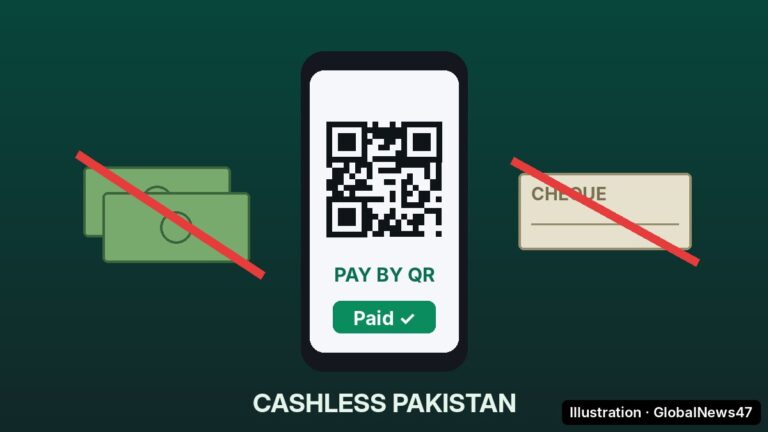
Prime Minister Shehbaz Sharif has ordered a clear roadmap for a fully cashless economy in Pakistan, with fixed timelines and targets. He gave the instruction on Friday while chairing a review meeting in Islamabad, Radio Pakistan reported. In addition, officials told the meeting that cheque payments into Asaan Assignment Accounts will end on 15 November.
The push matters for millions of people who still rely on cash for daily payments. It also affects government offices, utility customers and small shops across the country.
What the PM ordered for a cashless economy in Pakistan
According to the Prime Minister’s Office, Shehbaz said promoting digital payments is among the government’s top priorities. He added that positive results had started to appear.
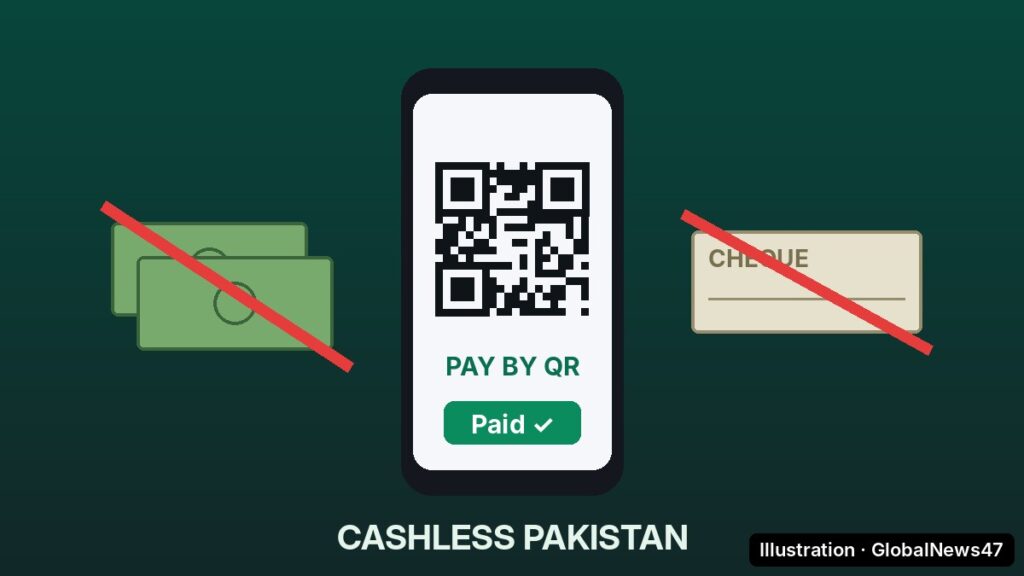
He directed the relevant authorities to present a plan for a 100 percent digital payment system across the country. The plan must include specific timelines and targets, Radio Pakistan said.
The prime minister also issued several other instructions:
- Ensure internet access across Pakistan and easy public access to technology.
- Resolve customer complaints about digital payment services without delay.
- Keep promoting shop and customer payments through the Raast QR code system.
- Launch a media campaign urging people to pay electricity and gas bills using the QR codes printed on their bills.
- Ensure all ministries and government departments fully implement the cashless economy plan.
Cheques to end for Assignment Accounts
One change takes effect very soon. The meeting was told that payments by cheque into Asaan Assignment Accounts will stop from 15 November. From 16 November, all payments into these accounts nationwide will be made through the Raast digital system, The Express Tribune reported.
Government offices use assignment accounts to make official payments. Therefore, the government has already trained drawing and disbursing officers, who handle these payments, for the new system, according to the statement.
Progress so far
Officials said digitising payments in federal and provincial institutions is moving quickly. Most institutions are expected to finish the process by December this year.
The meeting was also told that all payments under the Benazir Income Support Programme (BISP) are now made through digital wallets. BISP is the country’s largest cash support scheme for low-income families. As a result, its full shift to digital wallets is a significant milestone.
However, internet access remains a challenge in many parts of the country. Officials said work is under way on an advanced digital payment option for areas without internet. Meanwhile, they said the government is also building infrastructure to widen internet coverage.
What is Raast?
Raast is Pakistan’s instant payment system, run by the State Bank of Pakistan (SBP). It lets people and businesses send money between bank accounts and wallets in real time. The Raast QR code allows a customer to pay a shopkeeper by scanning a code on their phone.
For consumers, paying utility bills by QR code can save a trip to the bank. For the government, digital payments can improve record-keeping and help bring more transactions into the formal economy.
Wider push for digital finance
The meeting is part of a broader drive this week. On Wednesday, Finance Minister Muhammad Aurangzeb said the government was determined to expand digital payments and improve access to financial services. He also stressed that cybersecurity and fraud prevention must stay central, Radio Pakistan reported.
On Friday, the SBP also marked the launch of a new core banking network and data centre, built with US firm Cisco. Officials said the project would help ensure secure and reliable digital banking services across the country, The Express Tribune reported.
What comes next
The next milestone is 16 November, when Assignment Account payments move fully to Raast. After that, attention will turn to the promised roadmap. Its targets will show how fast the government expects shops, offices and households to move away from cash.
Still, the shift will only work if digital payments are safe, cheap and easy to use. Fast complaint handling and reliable internet will be key tests for the plan.
Related on Global News 47: PM Shehbaz Orders Action Against Pumps Denying Fuel Subsidy · KSE-100 Index Surges Nearly 4,000 Points After US Midterms
Sources & References
- Radio Pakistan: PM directs to ensure nationwide internet access for cashless economy
- The Express Tribune: PM directs authorities to map out cashless economy transition
- Radio Pakistan: Govt determined to expand digital payments: Finance Minister
- The Express Tribune: US, SBP celebrate deployment of new core banking network and data centre