
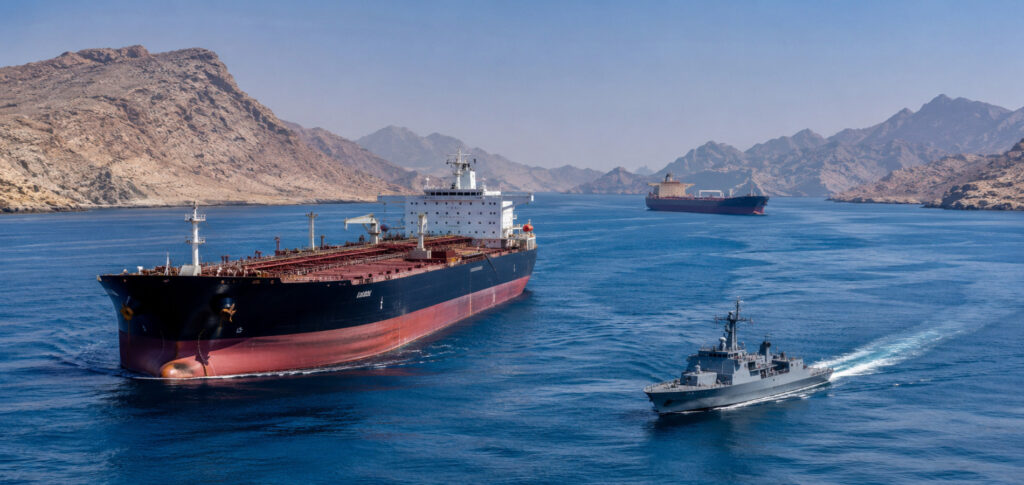
The Iran Hormuz plan has faced a major setback after Tehran rejected an Omani proposal for managing commercial shipping through the Strait of Hormuz.
Iran reportedly raised national security concerns over the proposed arrangement, particularly regarding maritime monitoring and its ability to oversee vessels entering the strategically important waterway.
The Omani proposal was supported by several Gulf countries and was intended to improve maritime safety, reduce congestion and ease tensions surrounding one of the world’s most important shipping routes.
Why Iran Rejected the Hormuz Proposal
According to Sultan Barakat, Professor of Public Policy at Hamad Bin Khalifa University, Iran may have moved too quickly by rejecting Oman’s proposal.
Barakat suggested that Tehran could have used the proposal as a starting point for further negotiations with Oman and other Gulf countries.
He argued that continued discussions might have produced a compromise addressing Iran’s security concerns while also improving the movement of commercial vessels through the Strait.
Oman’s Proposal for the Strait of Hormuz
The proposed Iran Hormuz plan included two designated shipping lanes for inbound and outbound vessels.
Under the proposal, shipping companies would voluntarily pay transit fees. Commercial vessels would then select the most convenient route based on factors such as distance and navigation.
The arrangement could eventually direct much of the commercial traffic closer to Oman’s territorial waters, potentially reducing congestion and improving maritime safety.
Iran Raises Maritime Security Concerns
Iran’s main objection reportedly concerns its ability to monitor vessels entering the Strait of Hormuz.
Tehran wants separate inbound and outbound routes while maintaining control over the inbound shipping lane.
Iranian officials argue that greater oversight would allow the country to monitor foreign military vessels entering the waterway and better protect its national security interests.
The disagreement reflects the broader strategic importance of the Strait, where commercial and military vessels operate close to one another.
Iran Presents a Counterproposal
Rather than accepting Oman’s proposal, Iran has reportedly submitted an alternative arrangement.
Under Tehran’s counterproposal, Iran would seek control over one complete shipping lane and partial control over the return route.
Iran believes this structure would address its security concerns while allowing commercial shipping to continue operating through the Strait.
Tehran has reportedly rejected the idea of an equal 50-50 division of maritime control, arguing that such an arrangement does not sufficiently protect its strategic interests.
Regional Tensions Complicate Negotiations
The dispute comes amid heightened tensions between Iran and the United States.
Barakat warned that recent military confrontations have increased instability across the Middle East and demonstrated how fragile existing diplomatic understandings remain.
He said stronger diplomacy will be necessary to prevent further escalation and create a sustainable arrangement for shipping through the Strait.
Iran Warns of Possible Closure
Iran has also warned that the Strait of Hormuz could remain closed if Oman rejects its counterproposal.
Deputy Foreign Minister Kazem Gharibabadi said Tehran is prepared to take stronger measures if its security concerns are not addressed.
Any prolonged closure or major disruption would have significant consequences because the Strait of Hormuz is a critical corridor for global energy shipments.
Global Energy Markets Remain at Risk
The Strait of Hormuz carries a substantial share of the world’s oil exports, making its security important far beyond the Gulf region.
A prolonged disruption could increase shipping costs, raise insurance premiums and place upward pressure on global oil prices.
For now, the Iran Hormuz plan remains unresolved. The key challenge for negotiators will be finding a compromise that preserves commercial shipping while addressing Iran’s security concerns and Oman’s maritime interests.