
At least 124 land and environmental defenders were killed worldwide in 2025, according to a new Global Witness report. Latin America accounted for 85% of the documented deaths, highlighting the risks faced by people protecting land, forests and natural resources.
The report recorded 105 killings across Latin America. Colombia remained the country with the highest number of documented deaths, while Brazil recorded a sharp increase.
Environmental defenders often protect Indigenous territories, farmland, forests and waterways. They can face threats linked to mining, logging, agribusiness, organized crime and disputes over land.
Colombia Remains a Major Hotspot
Colombia recorded 39 killings in 2025, making it the deadliest country in the report for the fourth consecutive year.
Brazil followed with 26 deaths, while Honduras and the Philippines each recorded 12.
Together, Colombia and Brazil accounted for more than half of all documented killings worldwide.
However, Global Witness warns that the figures do not represent the full scale of the violence. The organization says many attacks remain unreported or difficult to verify.
Indigenous People and Farmers Face High Risks
Indigenous communities and small-scale farmers made up a large share of those killed.
According to the report, more than three-quarters of the victims in 2025 were Indigenous people, small-scale farmers or Afro-descendants.
Land disputes were connected to 84 killings, while mining and extractive industries were associated with 11 deaths. Logging was linked to eight killings, and agribusiness was connected to six.
Organized crime and suspected contract killers also featured prominently in the cases documented by Global Witness.
Brazil Sees Killings More Than Double
Brazil recorded 26 environmental defender killings in 2025, more than twice the 12 documented the previous year.
Eleven victims were small-scale farmers, while seven were Indigenous people.
Many cases involved demands for recognition of ancestral territories or land reform. Several killings occurred in the Amazon states of Rondônia and Pará, where illegal logging, mining, cattle ranching and agricultural expansion have contributed to long-running land disputes.
Global Witness has tracked defender killings worldwide since 2012. Its database now records thousands of killings and disappearances over more than a decade.
Cauca Remains a Dangerous Area in Colombia
Colombia’s southwestern department of Cauca recorded 13 killings in 2025.
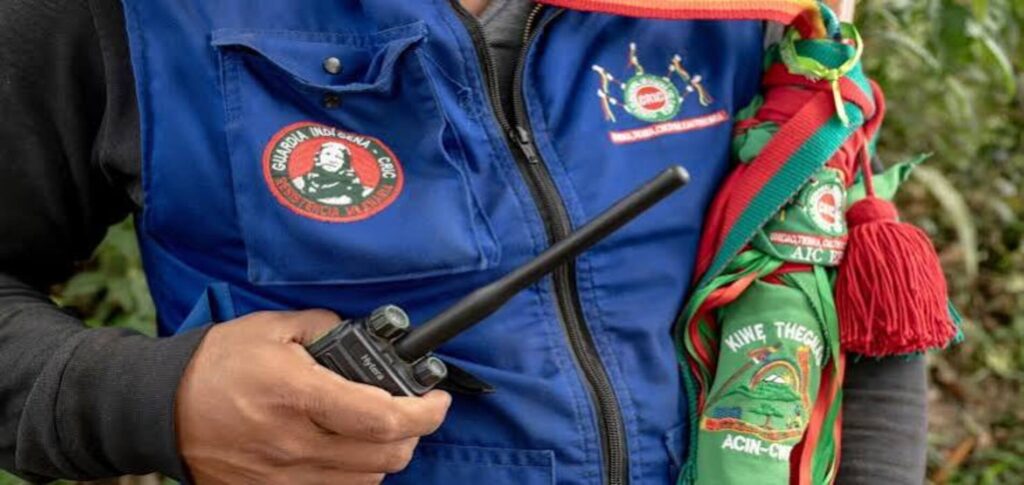
Four of the victims belonged to Indigenous Guard groups. These community-led organizations patrol Indigenous territories and help protect local communities.
The report links many of the killings in Cauca to land conflicts and organized crime.
Astrid Torres of Colombian advocacy group Somos Defensores said armed groups can challenge Indigenous authorities as they seek control of territory for drug trafficking and other illicit activities.
The region’s location near the Ecuadorian border and Pacific trafficking routes adds to its strategic importance for criminal groups.
Violence Extends Beyond Latin America
Although Latin America accounted for the majority of documented killings, the threat also appeared elsewhere.
Global Witness recorded killings in 15 countries during 2025.
Asia accounted for 12% of the global total. The Philippines recorded 12 deaths, the highest number outside Latin America.
The report also documented killings in countries including India, Indonesia, Turkey, Ecuador, Nicaragua and France.
In Africa, Global Witness verified three killings. Two occurred in Tanzania, while one occurred in the Democratic Republic of Congo.
Community Groups Protect Their Territories
Despite the violence, Indigenous and local communities continue developing ways to protect their land.
These efforts include territorial patrols, early-warning systems and community monitoring networks.
In Peru, for example, the report highlights the Kakataibo Indigenous Guard. Its members patrol Amazonian territory threatened by illegal coca cultivation and organized crime.
Such community-led systems can provide an early warning when outside groups enter protected territories.
Environmental Defender Killings Remain Underreported
The number of documented deaths fell for a second consecutive year. However, Global Witness cautions against interpreting that decline as proof that defenders are becoming safer.
The organization says violence remains difficult to document in areas affected by armed conflict, criminal activity and restrictions on civil society.
Its methodology relies on information from partners, media reports, judicial records and other sources. Global Witness works with more than 30 organizations in more than 20 countries to verify cases.
The organization also says its figures are likely an underestimate because some cases cannot be documented or verified.
A Continuing Global Threat
The latest figures show that protecting land and natural resources can carry serious risks for Indigenous people, farmers and community activists.
Latin America remains at the center of that violence. At the same time, cases in Asia and Africa show that environmental defenders face threats across several regions.
For communities protecting forests, farmland and ancestral territories, the challenge involves more than environmental disputes. Land conflicts, illegal economies and organized crime can overlap, creating dangerous conditions for those who speak out.
The environmental defender killings documented in 2025 therefore provide another measure of the risks faced by communities seeking to protect their land and natural resources.