

A network of scenic hiking trails along Norway’s Russian border is giving travelers a rare view of one of Europe’s most closely monitored frontiers. The routes pass through Arctic forests and tundra, with surveillance cameras, watchtowers and military patrols visible along the way.
The trails lie near Kirkenes in northeastern Norway, close to the point where Norway, Russia and Finland meet. The area has become increasingly popular with visitors who want to experience the landscape and understand the history of a region shaped by decades of relations between Norway and Russia.
Hiking Along Norway’s Russian Border
One popular three-hour trek follows the Pasvik River before reaching an 8-meter-wide cleared strip known as the border corridor. Travelers cannot enter the area, which marks the sensitive zone between the two countries.
The route eventually climbs Russehøgda, a hillside overlooking the Storskog crossing. Storskog remains the only legal land crossing between Norway and Russia.
Tour guide Henrik Hoffmann said security measures have increased on both sides since Russia launched its full-scale invasion of Ukraine in 2022. He also advises hikers to remain aware of their surroundings and respect the marked boundary.
Even small actions can cause problems. Authorities have fined people for throwing objects toward Russia, while others have faced detention after crossing international boundaries.
Why Tourists Are Visiting the Border
The unusual setting has attracted growing interest from cruise passengers arriving in Kirkenes. Many older visitors have memories of the Cold War and want to see the border for themselves.
Local tourism operators say visitors are increasingly interested in learning how the border has influenced everyday life in the region. Several companies now offer excursions that combine hiking with historical information.
Kirkenes itself reflects the area’s close ties to its neighbors. Some street signs appear in both Norwegian and Russian, while local museums document the area’s complicated history.
The Russia War Monument commemorates the Soviet Red Army’s liberation of Kirkenes from Nazi occupation in 1944. Nearby, the Borderland Museum explores centuries of interaction between Norwegians, Finns and Russians.
Arctic Scenery Meets Tight Security
Despite the security presence, the landscape remains the biggest attraction for many hikers. Birch and conifer forests surround the Pasvik River, while rocky hills offer views toward the Russian side of the frontier.
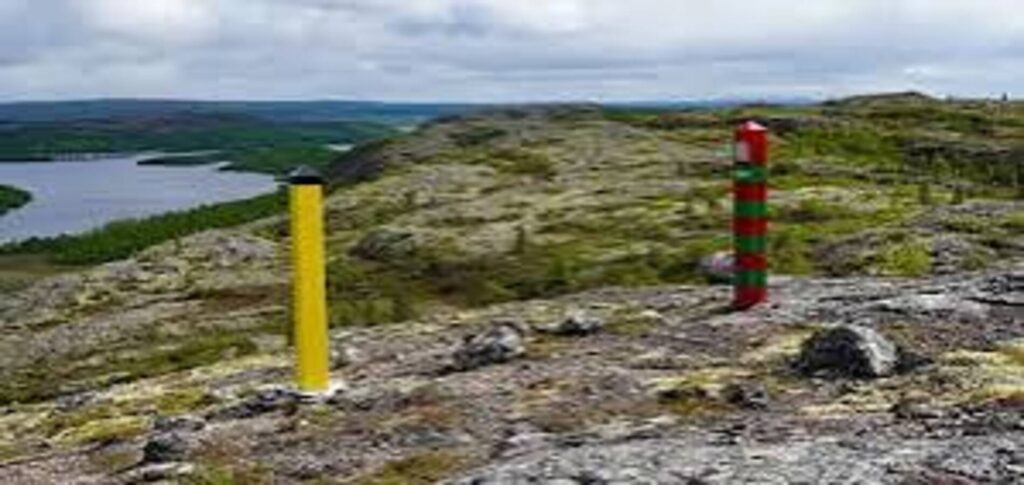
From Russehøgda, visitors can see the Storskog crossing and occasional trucks traveling along the E105 toward Russia. The yellow Norwegian and red Russian border markers provide a striking reminder of the international boundary.
The nearby Boris Gleb Church adds another layer of history. The Russian Orthodox church dates back centuries and sits close to the modern border.
For visitors, hiking the route offers more than an Arctic adventure. It provides a firsthand look at a frontier where nature, history and modern security measures meet.