
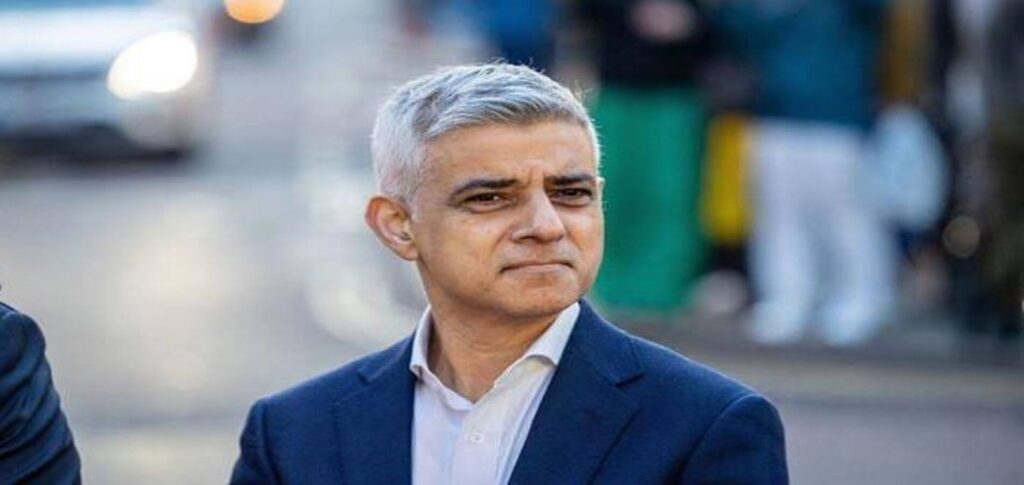
London Mayor Sir Sadiq Khan has been convicted and fined after the DVLA accused him of failing to tax a 24-year-old Nissan Micra.
Khan’s team says the case resulted from a scam. They insist the mayor did not own the vehicle.
A magistrate convicted the 55-year-old Labour politician last month through the Single Justice Procedure. The court ordered him to pay a £220 fine, £85 in costs and £35.84 in unpaid vehicle tax.
Khan was not present at the hearing.
Letters were sent to wrong address
Court documents show that letters about the unpaid tax were sent to a restaurant owned by chef Gordon Ramsay in east London.
The vehicle was a blue Nissan Micra first registered in 2002. The car did not belong to Khan.
The DVLA said government records listed Khan’s name and date of birth against the vehicle. The agency also said a letter seeking confirmation of the owner’s identity went unanswered.
The vehicle had reportedly been untaxed since September last year. DVLA records showed that authorities identified it as untaxed on January 24.
The agency then brought a criminal prosecution against Khan after it received no response.
Mayor’s team calls case a scam
A spokesperson for Khan said the mayor had become the victim of a deliberate scam.
“This is a scam, which is a crime,” the spokesperson said.
The spokesperson also claimed that people had previously tried to falsely register vehicles in Khan’s name.
Khan’s adviser told BBC London that the DVLA was urgently examining the case. The agency is considering an application to reopen the prosecution and withdraw the charge.
The DVLA also plans to investigate how Khan’s details became linked to the Micra.
Ulez protests provide possible background
The case comes after years of controversy surrounding Khan’s expansion of London’s Ultra Low Emission Zone, known as Ulez.
After Khan expanded the scheme across the capital, the mayor faced strong opposition from some motorists.
Some protesters reportedly threatened to register vehicles in Khan’s name. Their alleged aim was to make him responsible for charges linked to those vehicles.
However, it remains unclear whether the Micra case had any connection to those previous threats.
What happens next?
The court sent the conviction notice to the Gordon Ramsay restaurant. It ordered Khan to pay a total court bill of £340.84 within 28 days.
The notice warned that failure to pay could lead to higher fines, bailiff action or a warrant requiring him to appear in court.
People convicted in their absence can normally ask the magistrates’ court to reopen their case. They may need to appear before a judge and make a statutory declaration explaining why they did not know about the proceedings.
Khan could argue that he never received the relevant letters because they went to the wrong address.
If the court reopens the case, Khan could ask the DVLA to withdraw the prosecution if investigators confirm that he was wrongly identified as the vehicle’s owner.
He could also enter a not guilty plea.
The DVLA could separately ask the court to reopen the case while it investigates how the false vehicle registration occurred.