

Trump Canada Wildfire Smoke Tariffs Threaten Fresh Trade Tensions
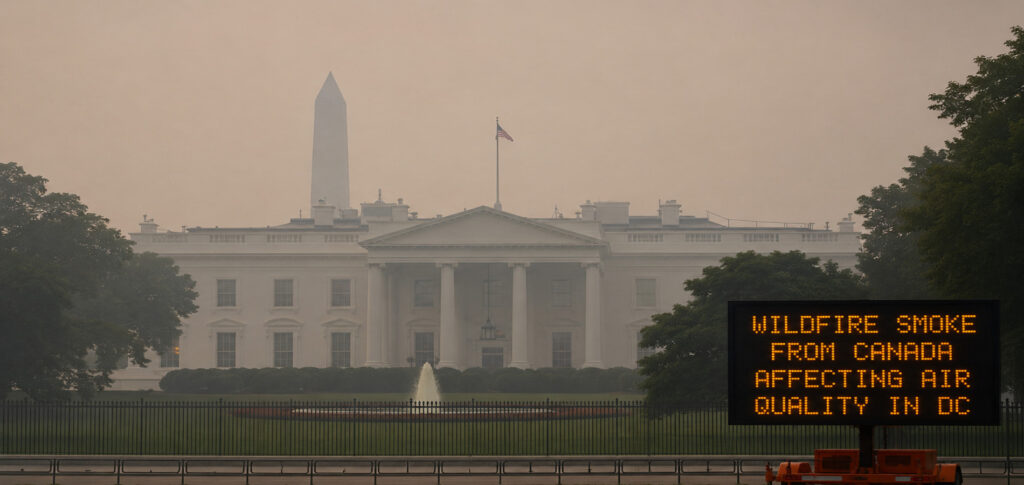
Trump Canada Wildfire Smoke Tariffs have become a new source of tension between Washington and Ottawa after US President Donald Trump criticized Canada over its severe wildfire season. Trump warned that smoke drifting across the border could eventually influence future tariff decisions on Canadian imports if the situation continues.
The comments add another issue to the already complex trade relationship between Canada and the United States.
Trump Canada Wildfire Smoke Tariffs Raise Trade Concerns
Trump criticized Canadian authorities over their handling of the country’s wildfire crisis.
Writing on Truth Social, Trump argued that Canada had failed to manage its forests effectively. He claimed smoke from Canadian wildfires had crossed into the United States and affected millions of Americans.
Trump described the smoke as “filthy, polluted, and unhealthy” and blamed poor forest management for allowing it to spread across the border.
He also said he planned to discuss the issue with Canadian Prime Minister Mark Carney.
Although Trump did not announce a specific tariff, he suggested that the economic impact of wildfire smoke could become part of future trade discussions. His comments raised concerns that Washington could consider additional tariffs on Canadian imports.
Canadian Wildfires Send Smoke Across the Border
Canada continues to face a severe wildfire season, with hundreds of active fires producing large amounts of smoke.
Winds have carried smoke into several US states, prompting air-quality alerts across parts of the Midwest and Northeast. Local authorities have urged residents to monitor pollution levels and limit prolonged outdoor activities when conditions worsen.
Health officials have also warned that wildfire smoke can pose serious risks, particularly for children, older adults and people with respiratory or cardiovascular conditions.
Wildfire Crisis Becomes a Political Issue
Wildfires have become an increasingly serious challenge across Canada. Large fires can destroy forests, threaten communities and send smoke across international borders.
Smoke from Canadian fires has entered the United States during previous wildfire seasons. However, Trump’s latest comments have added a political and economic dimension to the environmental crisis.
Canadian officials have not publicly responded to Trump’s latest remarks.
Meanwhile, authorities in both countries continue monitoring air quality, public health and potential transportation disruptions linked to heavy smoke.
Climate Change Raises Wildfire Risks
Experts say changing climate conditions are contributing to longer and more intense wildfire seasons across North America.
Hotter temperatures, dry conditions and prolonged drought can increase the likelihood of large and difficult-to-control fires. These conditions can also increase the amount of smoke that travels long distances.
As a result, cooperation between Canada and the United States remains important for wildfire preparedness, emergency response and public health protection.
Canada-US Trade Relationship Under Pressure
The Trump Canada Wildfire Smoke Tariffs controversy comes as Washington and Ottawa continue navigating broader trade disagreements.
Any new tariffs could affect businesses, consumers and supply chains on both sides of the border. Canada and the United States maintain extensive economic ties, making trade policy particularly important for industries that depend on cross-border commerce.
For now, Trump has not announced specific tariff measures linked to wildfire smoke. However, his comments have raised fresh concerns about whether environmental disputes could influence future trade negotiations.
As wildfire conditions continue to evolve, officials on both sides of the border are expected to monitor the situation closely. The combination of worsening wildfire risks, public health concerns and trade tensions could make Canada-US relations more complicated in the months ahead.