
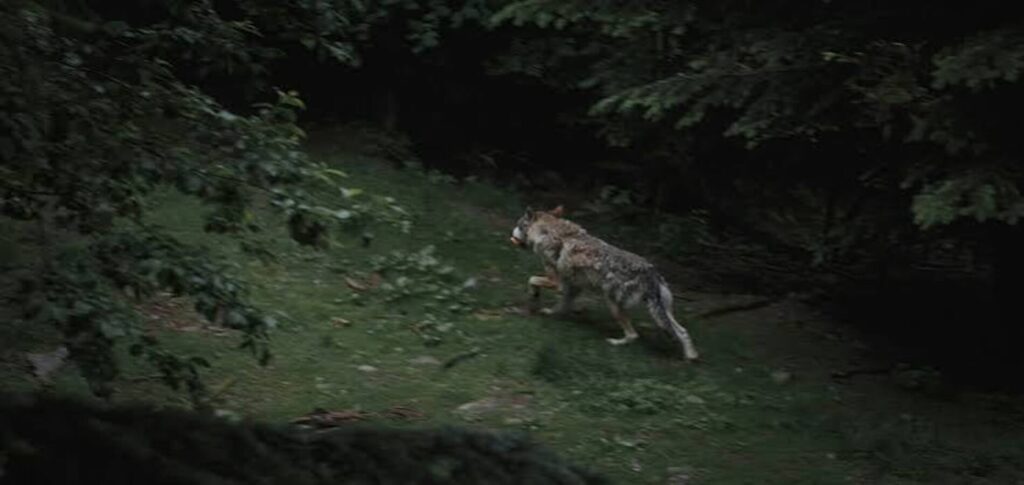
Wolf sightings in Italy have increased following several suspected attacks in populated areas.
Authorities in the southern region of Puglia have recorded five suspected attacks. Several people, including children, suffered injuries in recent incidents.
Officials have launched efforts to identify and capture the animals involved.
One of the latest incidents happened on August 20 in Punta Pizzo, near Gallipoli.
Three tourists, including a 52-year-old woman and her 12-year-old daughter, reportedly encountered an animal believed to be a wolf while staying at tourist accommodation.
All three went to hospital for treatment.
The woman and her daughter later left hospital with a reported recovery period of 14 days.
Animal First Attacked a Dog
Initial reports said the animal first targeted a small dog at the property.
It then attacked the three tourists.
The Carabinieri are investigating the incident with support from veterinarians from the local health authority.
Authorities are working to determine whether the animal was actually a wolf.
Several other suspected attacks have occurred in Puglia since the beginning of August.
Three children have reportedly suffered injuries during incidents involving animals believed to be wolves.
Six-Year-Old Boy Injured Near Bari
A six-year-old boy suffered injuries in another suspected attack on August 15 in Noicattaro, near Bari.
The boy was with his family in a municipal park when an animal reportedly approached at about 11 p.m.
The animal bit the child before adults scared it away by shouting.
The boy suffered chest injuries and received treatment at the Giovanni XXIII hospital’s pediatric surgery department.
Early reports described the animal as a stray dog.
However, Noicattaro Mayor Raimondo Innamorato rejected that explanation.
Images of an animal believed to be a wolf appeared on social media several hours after the incident.
Authorities Launch Wolf Search
The Bari Prefecture and Puglia regional authorities have created a task force to locate the suspected animal.
Teams will use drones, thermal cameras and capture snares during the search.
Regional President Antonio Decaro has authorised authorities to capture and remove the animal.
Officials have also received reports of possible wolves near Brindisi.
In that area, a French bulldog and two emus were reportedly killed.
Wolf Sightings Spread Beyond Southern Italy
The reports are not limited to Puglia.
Residents in Riccione, in Emilia-Romagna, have also reported seeing a wolf moving through the city.
The local authorities have ordered three parks to close at night until September 3 while officials try to drive the animal away.
Residents have received advice to avoid leaving food outside.
They have also been urged to keep organic waste inside bins and clear vegetation around their homes.
In Umbria, authorities continue searching for a wolf that reportedly attacked a four-year-old girl in Arrone on July 9.
Italy’s Wolf Population Has Recovered
Italy’s wolf population has increased significantly over recent decades.
A national survey by the Italian Institute for Environmental Protection and Research estimated around 3,300 wolves in Italy during 2020 and 2021.
About 950 lived in the Alpine regions, while approximately 2,400 lived elsewhere on mainland Italy.
The recovery marks a major change from the 1970s.
At that time, fewer than 100 grey wolves were believed to remain in Italy, mainly in the Apennines.
Legal protection and conservation efforts helped the population recover.
Across Europe, wolf numbers also increased from roughly 12,000 in 2012 to more than 21,000 in 2022, according to a study covering 34 countries.
Human Attacks Remain Rare
The growing wolf population has contributed to more livestock attacks across Europe.
Wolves kill tens of thousands of farm animals each year, with sheep among the most frequently affected.
However, attacks on people remain uncommon.
The WWF says Europe has recorded no fatal wolf attack on a human during the 21st century.
The European Union has also changed the wolf’s protection status from “strictly protected” to “protected”.
The change gives member states greater flexibility to manage wolf populations.
However, governments must still maintain healthy and sustainable wolf populations.
As wolf numbers continue to recover, Italian authorities now face the challenge of protecting residents while preserving one of Europe’s most important wildlife species.