
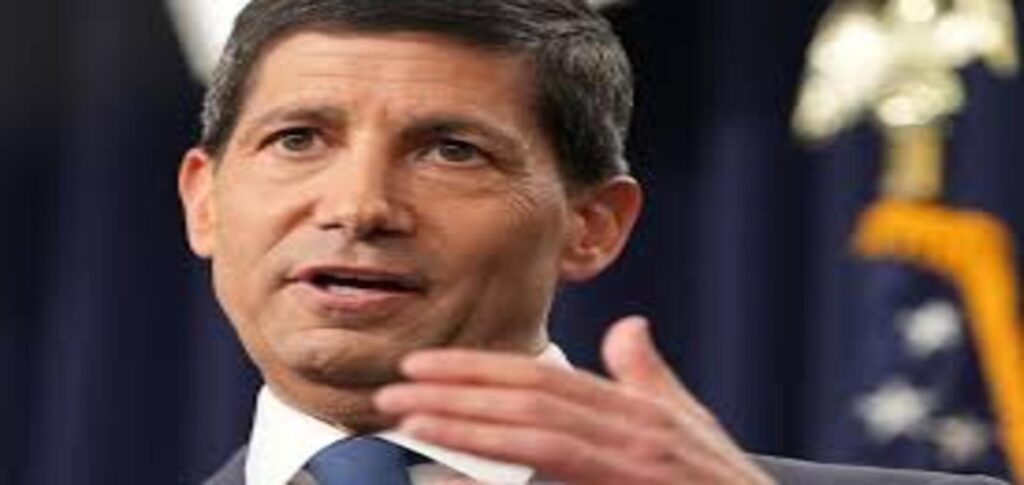
New Federal Reserve Chair Kevin Warsh faces growing pressure to explain how he plans to tackle inflation and manage interest rates when he delivers a closely watched speech in Jackson Hole, Wyoming.
Warsh has taken a noticeably different approach to communication since taking charge of the U.S. central bank. Unlike his predecessors, he has offered fewer details about his economic outlook and his thinking on inflation.
However, economists and investors have grown increasingly uneasy about the lack of clarity.
Warsh will have a major opportunity to address those concerns on Friday when he speaks at the Federal Reserve’s annual economic symposium in Jackson Hole.
Economists Want Clearer Inflation Signals
Investors and economists are watching for a clearer explanation of how Warsh views the stubborn inflation that remains above the Fed’s 2% target.
Although inflation has cooled from earlier increases, prices for everyday essentials continue to worry many Americans. Gas, groceries and housing remain major concerns for households, particularly as the country heads toward the midterm elections.
At his previous press conference on July 29, Warsh avoided giving a direct answer when reporters repeatedly asked whether the Fed would raise interest rates if inflation remained elevated.
That response left some market participants searching for clues about his policy approach.
David Wilcox, a senior fellow at the Peterson Institute for International Economics, said Warsh needs to explain the framework he plans to use when making monetary policy decisions.
Warsh Rejects Forward Guidance
Warsh has made it clear that he does not want to provide traditional “forward guidance” about upcoming Fed decisions.
In his view, telling markets whether the central bank plans to raise, cut or hold interest rates can restrict its ability to respond to changing economic conditions.
He also believes financial markets have become too reliant on signals from the Federal Reserve about future policy.
Nevertheless, some economists say Warsh can explain his broader thinking without committing himself to a specific interest-rate decision.
The question now is whether his Jackson Hole speech will provide that clarity.
Last month, Warsh said he wanted to focus on broader economic issues, including artificial intelligence, productivity, demographic changes and how the global economy responds to shocks from the Iran war.
Investors Look for Clues
Warsh’s comments matter beyond Wall Street because the Fed’s decisions influence borrowing costs for millions of Americans.
Mortgage rates and other long-term borrowing costs can respond to changes in expectations about monetary policy.
Interest rates rose after Warsh’s July 29 press conference, pushing mortgage borrowing costs higher after the Fed kept its benchmark rate unchanged.
Gennadiy Goldberg, head of U.S. rates strategy at TD Securities, said Warsh emphasized the need to bring inflation down but failed to explain clearly how he would accomplish that goal.
Warsh did offer one important clue. He said a central banker would be more inclined to raise rates when underlying inflation moves higher.
However, he has not clearly explained whether he believes underlying inflation is currently worsening or which specific measure he considers most useful.
When reporters asked how he would determine whether inflation had reached the Fed’s 2% target, Warsh pointed to the personal consumption expenditures price index, the central bank’s preferred inflation measure.
At the same time, he suggested the Fed could reconsider its approach next year after several task forces complete reviews of inflation data and other issues.
Higher Rates Could Remain an Option
Warsh also left the door open to higher interest rates if inflation remains stubborn.
When asked whether rate increases could help fight inflation, he said they “could well be part of that solution.”
However, he added that rate increases would not necessarily work “in isolation.”
Some Fed watchers interpreted those comments as a sign that Warsh could consider other tools. One possibility involves reducing the Federal Reserve’s large holdings of Treasury bonds.
Selling those bonds could put upward pressure on longer-term borrowing costs, although the effects would likely take more time to appear.
Political Pressure Adds to Challenges
Warsh also faces a difficult political environment.
President Donald Trump has repeatedly called for lower interest rates and has criticized Fed officials who support keeping rates higher.
Trump appointed Warsh, who took office on May 22, and has continued to defend him. At the same time, the president has renewed his efforts to remove Fed Governor Lisa Cook, who received her appointment from former President Joe Biden.
A successful effort to replace Cook could give Trump greater influence over the seven-member Federal Reserve Board.
Economists say those political tensions make Warsh’s Jackson Hole speech even more important.
Diane Swonk, chief economist at KPMG, recently argued that political pressure has added to concerns about the Fed’s credibility. She said the speech gives Warsh an opportunity to demonstrate his independence and reinforce the central bank’s credibility.
Markets Await Warsh’s Jackson Hole Speech
Economists say Warsh does not need to announce a major policy change to calm markets.
Instead, they want him to explain how the Fed would respond if inflation remains above its target.
A clearer framework could reassure investors without forcing Warsh to reveal exactly what he will do at future policy meetings.
Long-term interest rates have climbed in recent weeks for several reasons, including large U.S. government deficits and heavy borrowing by technology companies investing in artificial intelligence infrastructure.
The yield on the 30-year Treasury bond recently reached its highest level in 19 years. Treasury Secretary Scott Bessent has even taken the unusual step of buying back government bonds in an effort to push yields lower.
Derek Tang, an economist at Monetary Policy Analytics, said markets may consider it a success if Warsh can simply prevent long-term yields from rising further.
For Warsh, therefore, Friday’s speech represents an important test. Investors want to understand how the new Fed chair views inflation, interest rates and the central bank’s role in an increasingly complicated economic and political environment.