
Canada is preparing to explore the future of military aviation by joining the Global Combat Air Program (GCAP) as an observer while the federal government continues reviewing its planned purchase of F-35 fighter jets.
The move represents another step in Canada’s effort to modernize the Royal Canadian Air Force (RCAF) while expanding defence cooperation beyond North America.
Canada to Join GCAP as Observer
The federal government is expected to announce that Canada will participate in GCAP as an observer.
The program is led by the United Kingdom, Japan and Italy, which are working together to develop a next-generation combat aircraft.
Observer status would allow Canadian officials to study the program’s technology, development plans and industrial opportunities without immediately making the financial and industrial commitments required of a full partner.
Defence Minister David McGuinty is attending a major international air show in the United Kingdom and has expressed interest in learning more about the program.
What Is the Global Combat Air Program?
GCAP is designed to develop a sixth-generation fighter aircraft that will eventually replace the Eurofighter Typhoon operated by Britain and Italy and Japan’s F-2 fleet.
The aircraft is expected to incorporate advanced stealth capabilities, sophisticated sensors, artificial intelligence and networked systems.
It is also being designed to operate alongside autonomous drones, allowing crewed and uncrewed aircraft to work together during combat missions.
The program remains in development, but it is considered one of the most ambitious military aviation projects currently underway.
Canada Continues F-35 Review
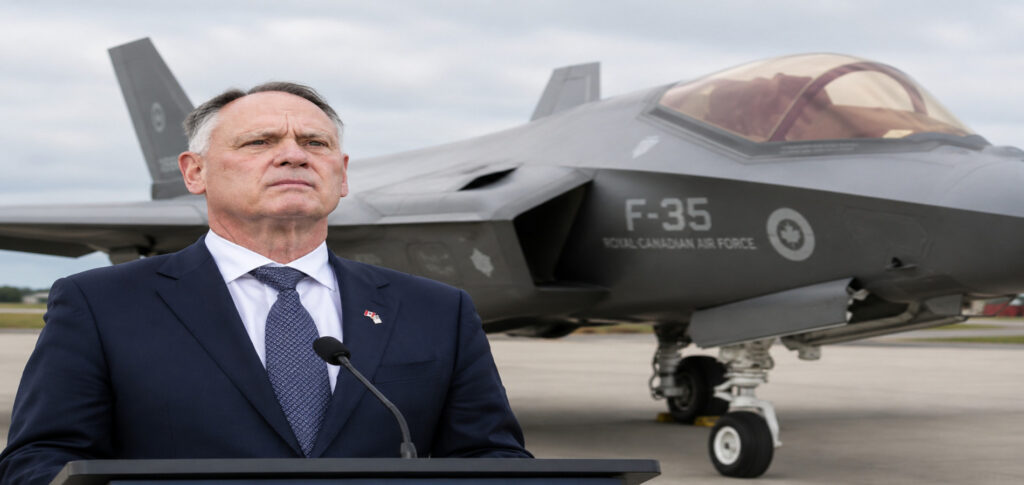
At the same time, Ottawa continues to review its planned acquisition of 88 F-35 Lightning II fighter jets.
Prime Minister Mark Carney ordered a review earlier this year as the government reassessed Canada’s defence requirements and spending priorities amid growing tensions with the United States.
Officials have yet to determine whether Canada will proceed with the entire F-35 purchase or explore alternatives.
The review has therefore added another layer of uncertainty to Canada’s long-term fighter aircraft strategy.
Experts Urge Canada to Move Carefully
Defence analysts stress that observer status does not mean Canada has committed to becoming a full GCAP partner.
Canadian officials have also not confirmed whether domestic aerospace companies would eventually participate in developing or manufacturing the aircraft.
For Ottawa, observer status provides an opportunity to evaluate the program’s capabilities, costs and industrial benefits before making a major long-term commitment.
However, GCAP itself faces significant technical, financial and political challenges. The three partner countries are still working through development schedules, budgets and industrial arrangements.
Other Fighter Programs Remain Under Review
Canada is also monitoring next-generation fighter projects being developed in the United States.
Boeing is developing the F-47 under the US Air Force’s Next Generation Air Dominance program, while the US Navy is pursuing its separate F/A-XX fighter project.
Canada’s close defence relationship with the United States and its role in NORAD could remain important factors in any future fighter decision.
Canada Keeps Its Options Open
By joining GCAP as an observer, Canada can gain insight into emerging sixth-generation fighter technology without immediately committing to the program.
At the same time, Ottawa can continue assessing the F-35 purchase and monitor developments in competing American programs.
For the RCAF, the decision could ultimately shape Canada’s air defence capabilities for decades. For now, observer status gives the government greater flexibility while it determines which aircraft and partnerships best meet Canada’s future defence needs.