
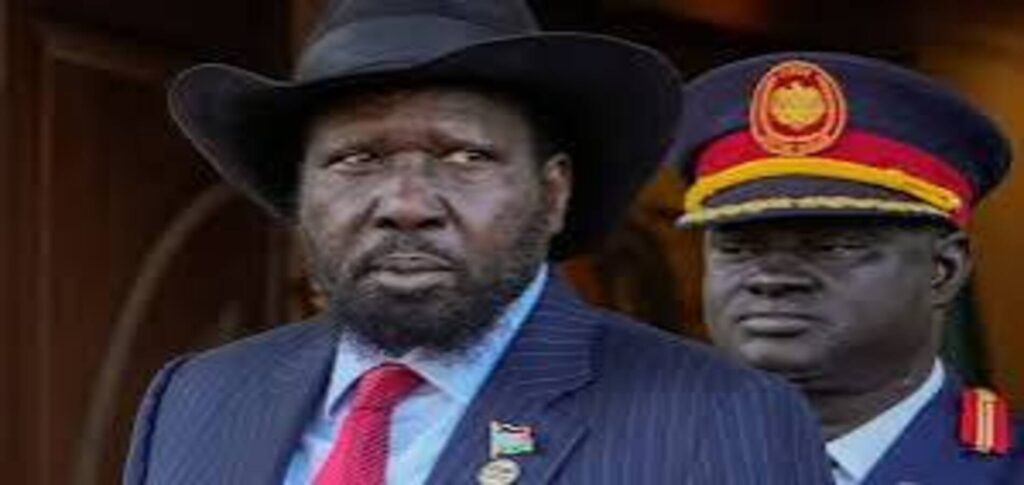
South Sudan President Salva Kiir has removed the head of the country’s electoral commission, just three months before the nation is scheduled to hold its first election.
Kiir announced the decision on Tuesday night. He did not give a public reason for removing Abednego Akok Kacuol as chairperson of the National Elections Commission.
Gabriel Bol Deng Majok will take over the position. He previously served as the commission’s secretary general.
Akok, 71, first became chairperson in August 2012. He returned to the position in November 2023 after South Sudan reconstituted the commission under the 2018 peace agreement.
The agreement ended a five-year civil war. However, South Sudan has repeatedly delayed elections since gaining independence in 2011. Authorities have cited delays in implementing the peace agreement.
South Sudan Election Plans Face Another Test
The transitional government has extended the current political arrangement several times. Under the latest road map, the transitional period should end on September 22.
The country has scheduled elections for December 22. The transitional period itself is due to expire in February.
The sudden change at the electoral commission has raised concerns about preparations for the vote. Political analysts say the new chairperson will need time to understand the role and make important decisions.
Abraham Kuol Nyuon, a political analyst and dean of the University of Juba graduate college, said the move could create further delays.
“This is a delay tactic,” Kuol told The Associated Press. He also said South Sudan’s people should not expect the December 22 election to go ahead.
Kuol said the new chairperson would need time to become familiar with the commission. That could affect preparations such as voter registration.
Questions Over Electoral Chief’s Removal
The decision has also prompted questions about whether the government followed the legal process.
South Sudan’s National Elections Act establishes procedures for removing the chairperson of the electoral commission. The law lists several possible grounds, including proven partiality, inability to perform official duties and gross misconduct.
Policy analyst Boboya James Edmond said the president cannot remove the commission’s chairperson without following those procedures.
“The president has no sole authority under the law in South Sudan to remove the chairperson of the National Electoral Commission unless the detailed procedures are followed,” Boboya said.
He serves as chief executive officer of the Institute of Social Policy Research in South Sudan.
Boboya also warned that the decision could create more uncertainty around the election process.
“The president is acting now as a referee rather than as a player and participant in the electoral process,” he said.
UN Warns About Election Risks
The United Nations Commission on Human Rights in South Sudan also raised concerns last week.
The commission warned that elections without adequate safeguards and inclusive political dialogue could increase the risk of renewed conflict.
Commission chairperson Yasmin Sooka said South Sudan now faces an important choice. She said the country could move toward elections in a way that increases political divisions.
However, she also said the election process could provide an opportunity to restore political dialogue, protect civilians and establish safeguards for a peaceful transition.
The leadership change at the National Elections Commission adds another challenge to South Sudan’s election preparations. With the December vote approaching, questions remain over whether the country can complete the necessary preparations on schedule.