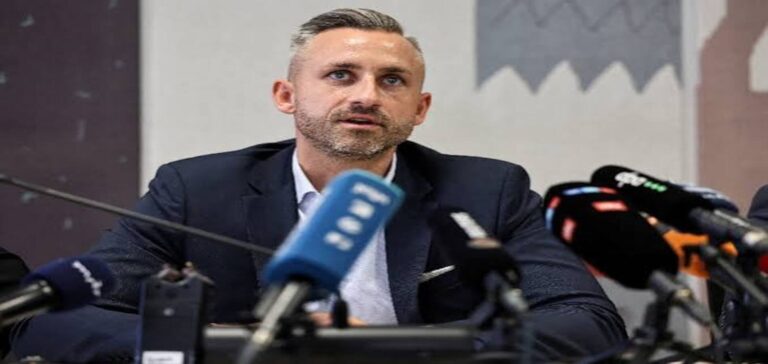

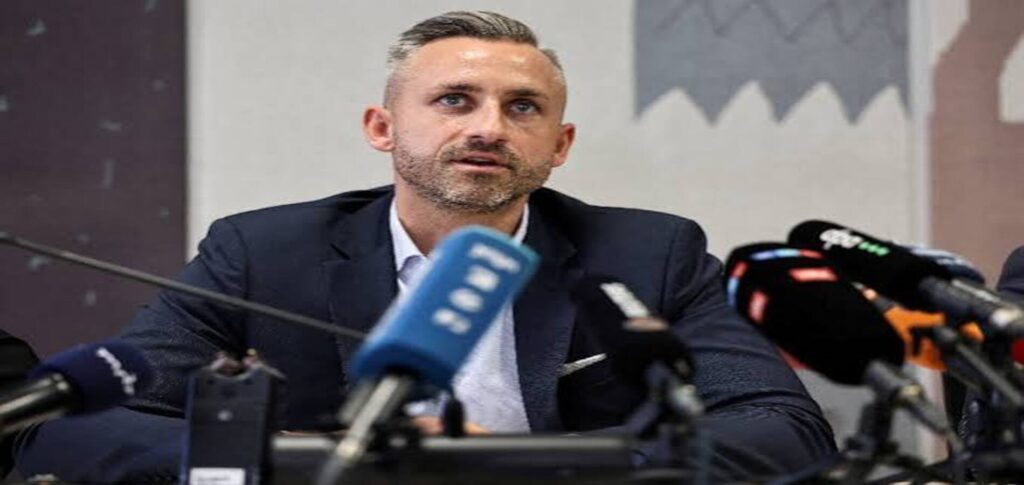
AfD lead candidate Ulrich Siegmund has faced fierce criticism after linking arms production in Saxony-Anhalt with his party’s plans for deportations and “remigration.”
The controversy followed the AfD’s strong victory in the state election. The party won 43.8% of the vote and became the largest force in the new state parliament. However, it fell short of an outright majority.
Siegmund Links Arms Production to Deportations
Siegmund made the comments while discussing a possible production site for Israeli defence company Elbit Systems in Sangerhausen.
He said the AfD did not reject arms production in general. Instead, he argued that military equipment could support national defence and domestic security.
Siegmund then connected that position to the party’s migration policy.
He said future “remigration and deportation offensives” would need suitable equipment. His remarks quickly triggered criticism from political opponents.
The comments raised particular concern because of the word “remigration.” The AfD uses the term for its plans to increase deportations and return migrants.
AfD Politician Tries to Clarify Remarks
Siegmund later sought to explain what he meant.
He said arms production covers much more than weapons. According to him, the sector also includes vehicles, protective equipment and other technology used by the Bundeswehr, police and security agencies.
Siegmund argued that Germany should strengthen those capabilities. He said they could help authorities enforce the law and carry out deportations.
He also described support for such production as a “state duty” when it serves national defence and domestic security.
At the same time, Siegmund said the AfD opposed supplying military equipment for foreign wars. He said his party wanted to examine what Elbit would produce in Sangerhausen and under which conditions.
Elbit Project Remains Controversial
Elbit Systems has already faced opposition over its possible Sangerhausen site.
The Israeli defence company produces military technology, including drones and communication and protection systems. Elbit already works with Germany’s Bundeswehr.
The planned industrial site covers about 130 hectares. However, local officials have said the project does not involve the final assembly of drones, artillery shells or ammunition.
Elbit has also not made a final decision on the location. The company has discussed a facility that could create hundreds of jobs, while the exact production plans remain under consideration.
SPD and BSW Condemn Siegmund
Siegmund’s comments drew criticism from both the SPD and the Sahra Wagenknecht Alliance, or BSW.
SPD parliamentary leader Katja Pähle said the remarks crossed a serious line. She argued that connecting military equipment with mass deportations raised the issue of violence as a political tool.
BSW co-leader Fabio De Masi also attacked the AfD’s position. He accused the party of using provocation instead of presenting a credible governing approach.
The BSW’s response carries added political weight. The party is the only group in the new Saxony-Anhalt parliament that has indicated a willingness to discuss possible cooperation with the AfD.
AfD Faces Challenge to Form Government
Despite winning the election, the AfD cannot govern alone.
Siegmund has nevertheless reaffirmed his ambition to form a government. He has not ruled out trying to govern with an extremely narrow majority.
Meanwhile, the CDU, SPD, Greens and Left Party have continued to reject cooperation with the AfD.
As a result, Siegmund’s latest remarks have added another political dispute to an already difficult coalition picture in Saxony-Anhalt. The debate over arms production, migration and possible cooperation with the AfD is likely to remain a major issue as talks over the state’s future government continue.