

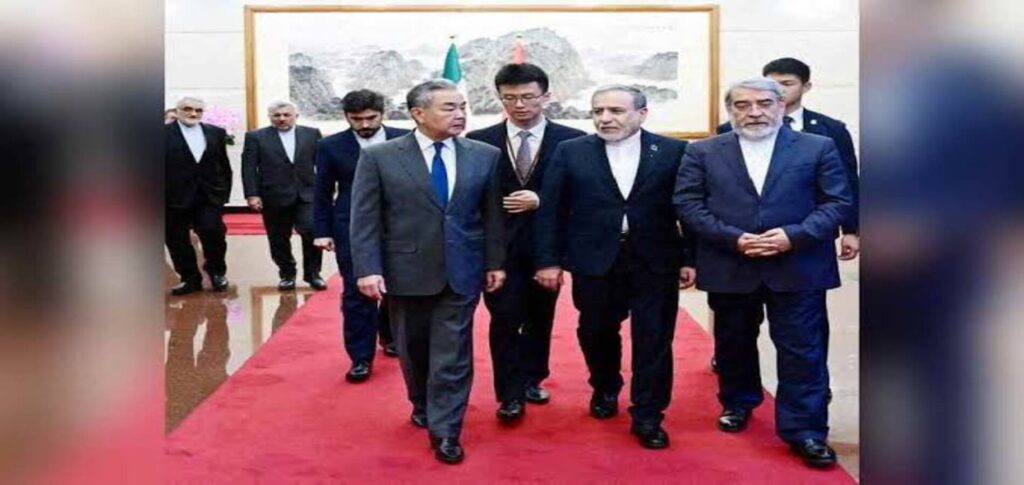
China Iran Houthi tensions have gained a new diplomatic dimension after Beijing privately asked Tehran to use its influence to restrain Yemen’s Houthis, according to three Iranian sources cited by Reuters.
The reported message came after Saudi Arabia appealed to China for help following rapid Houthi advances along Yemen’s Red Sea coast and around the strategic Bab el-Mandeb Strait.
Those developments have increased concerns over Saudi oil exports and international shipping.
China has publicly called for restraint, dialogue and safe navigation. However, the Iranian sources said Beijing’s private message to Tehran went further.
China Wants Red Sea Conflict Contained
According to the sources, Beijing wants Iran to use its relationship with the Houthis to prevent the conflict from spreading across major energy routes.
China has a major economic interest in keeping those routes open. It remains Iran’s largest oil customer and bought more than 80% of Iran’s seaborne oil exports in 2025, according to Kpler data cited by Reuters.
The sources did not explain exactly how Beijing delivered its message.
They also did not confirm whether the request was discussed during Iranian Foreign Minister Abbas Araqchi’s visit to China.
Iran Links Regional Stability to War
The Iranian sources said Tehran responded that lasting regional stability depends on ending the conflict between Iran and the United States and Israel.
They also said Beijing did not issue an explicit threat or indicate that it would impose economic pressure if Iran failed to influence the Houthis.
China’s Foreign Ministry confirmed its public position.
It said Beijing does not want regional tensions to spread further into Yemen and the Red Sea. China also called for respect for national sovereignty and urged the parties to resolve disputes through dialogue and negotiation.
Iran’s Foreign Ministry and the Saudi government’s media office did not immediately respond to Reuters’ requests for comment.
Houthi Advance Raises Shipping Concerns
The latest Houthi gains have increased pressure around the Bab el-Mandeb Strait.
The waterway connects the Red Sea with the Gulf of Aden and serves as a major route for international trade.
Reuters reported that Houthi forces have advanced along the Red Sea coast and captured territory and islands near the strait. The developments have raised concerns about Saudi energy infrastructure and shipping.
At the same time, commercial traffic through the Strait of Hormuz has also fallen sharply amid the wider regional conflict.
That combination has increased concerns about disruptions affecting two major maritime routes at the same time.
China Faces a Difficult Balancing Act
Beijing has close relationships with both Iran and the Gulf Arab states.
China has been Iran’s largest trading partner for more than a decade. At the same time, China relies heavily on oil supplies from the wider Middle East.
Analysts therefore see Beijing as having an interest in preventing further disruption.
Alex Vatanka of the Middle East Institute said China’s regional interests extend beyond its relationship with Tehran. He noted that roughly half of China’s oil imports come from the Middle East and that China-Gulf Cooperation Council trade is worth about $300 billion a year.
Iran Needs China’s Economic Support
The relationship also matters greatly to Tehran.
Iran continues to face economic pressure from sanctions and the wider conflict. China remains one of the few countries with the financial capacity to invest heavily in Iran’s energy sector.
Beijing has also played a diplomatic role in the region.
In 2023, China helped broker an agreement that restored diplomatic relations between Iran and Saudi Arabia after years of hostility.
However, China’s influence over Tehran has limits.
Some critics in Iran have previously questioned the level of Chinese investment outside the energy sector, particularly compared with Beijing’s expanding economic relationships with Gulf Arab countries.
Beijing’s Influence Over Tehran Faces a Test
The latest request could therefore test the limits of China’s influence.
The three Iranian sources said it remains unclear whether Tehran will act on Beijing’s concerns.
Iran has several strategic and political priorities to consider, including its relationship with the Houthis and its confrontation with the United States and Israel.
At the same time, Beijing wants secure shipping through the Red Sea and the Strait of Hormuz.
That creates an overlap between China’s economic interests and Iran’s regional strategy.
Red Sea Conflict Could Affect Global Energy
Any prolonged disruption around the Red Sea could have consequences well beyond the Middle East.
The region carries a significant share of global energy supplies and commercial shipping.
Recent Houthi advances have already raised concerns about Saudi oil exports. Meanwhile, reduced traffic through the Strait of Hormuz has added further pressure to global energy markets.
The renewed fighting has also created a humanitarian cost.
The UN refugee agency said more than 100,000 people had been displaced inside Yemen as renewed conflict disrupted communities and humanitarian operations.
China Iran Houthi Tensions Could Shape Next Steps
The reported Chinese request highlights the increasingly complicated diplomatic picture surrounding the conflict.
Beijing wants to maintain its strategic relationship with Tehran while protecting access to vital energy and shipping routes.
Iran, meanwhile, has to balance China’s concerns against its own regional priorities.
Whether China is willing to use its economic leverage more forcefully could become an important question in the coming weeks.
For now, China Iran Houthi tensions reflect a wider struggle to keep the Red Sea and Gulf from becoming even more deeply involved in the regional conflict.