

The Fed raises rates again as US policymakers respond to stubborn inflation and stronger economic activity. The Federal Reserve increased its benchmark interest rate by a quarter percentage point to a range of 3.75% to 4%.
The decision was unanimous. Moreover, updated economic projections showed that 16 of the Fed’s 18 policymakers expect at least one more quarter-point increase by the end of the year.
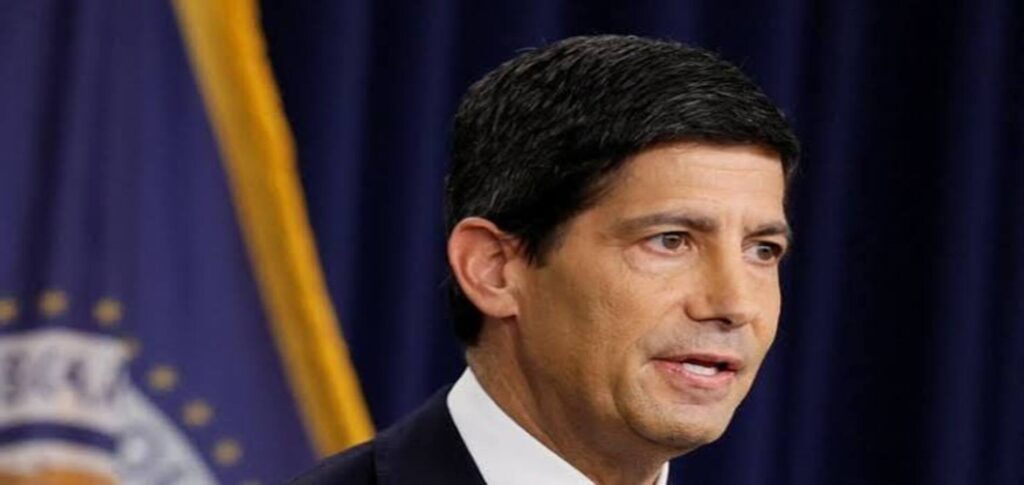
The move marks the first interest-rate increase in three years. It is also the first major policy shift under new Fed Chair Kevin Warsh, who took office in late May after being selected by President Donald Trump.
Fed Signals More Rate Hikes
The Federal Open Market Committee said inflation remains elevated. Therefore, policymakers said the latest rate increase should support a faster return toward the Fed’s 2% inflation target.
At the same time, policymakers expressed broader concerns about price pressures. Most officials now see upside risks to inflation rather than viewing the problem mainly as a temporary result of supply disruptions.
Warsh said the economy had strengthened across several areas. In particular, he pointed to resilient domestic spending, strong productivity and robust capital investment.
He also said employment conditions had contributed to stronger economic activity. As a result, the Fed saw less reason to maintain highly supportive monetary policy.
Warsh described the rate increase as the right decision. He also argued that financial conditions were not sufficiently restrictive to bring inflation down at the desired pace.
Trump Calls for Lower Rates
President Donald Trump responded quickly to the Fed’s decision. He again called for much lower interest rates, arguing that rates should be reduced to around 1% or even lower.
Trump made the comments on Truth Social. Although he did not mention Warsh by name, his criticism echoed his previous pressure on the Federal Reserve to reduce borrowing costs.
However, the Fed’s latest decision points in the opposite direction. Policymakers are concerned that inflation could remain elevated without additional monetary tightening.
The central bank’s projections now show the policy rate reaching between 4% and 4.25% by the end of the year. The projections also show the rate remaining around that level through the end of 2027.
Inflation Forecast Raised
The Fed also increased its inflation forecast. Policymakers now expect the Personal Consumption Expenditures Price Index to rise 3.7% this year, compared with the 3.6% forecast issued in June.
Furthermore, inflation is not expected to return to the Fed’s 2% target until 2029. That is one year later than previously projected.
Economic growth expectations were also revised slightly higher. The Fed now sees growth of 2.3% this year, compared with its earlier estimate of 2.2%.
Meanwhile, the unemployment rate is expected to end the year at 4.1%. The previous projection was 4.3%.
Markets React to Fed Decision
Financial markets responded quickly after the announcement. The US dollar strengthened, while yields on two-year Treasury notes climbed to their highest level in more than two years.
Those shorter-term yields are closely linked to expectations for Fed policy. Consequently, the rise suggested that investors were adjusting to the possibility of further rate increases.
Longer-term Treasury yields were more stable. Meanwhile, futures markets indicated a high probability of another quarter-point increase before the end of the year.
The latest decision also comes as US households face higher borrowing costs. Mortgage rates have been rising, while gasoline prices are also above last year’s levels.
As a result, the Fed’s policy path could remain politically significant. Higher rates can help contain inflation, but they can also increase borrowing costs for households and businesses.
For now, policymakers appear focused on bringing inflation back toward the 2% target. At the same time, the stronger economy gives the central bank more room to maintain tighter monetary policy.