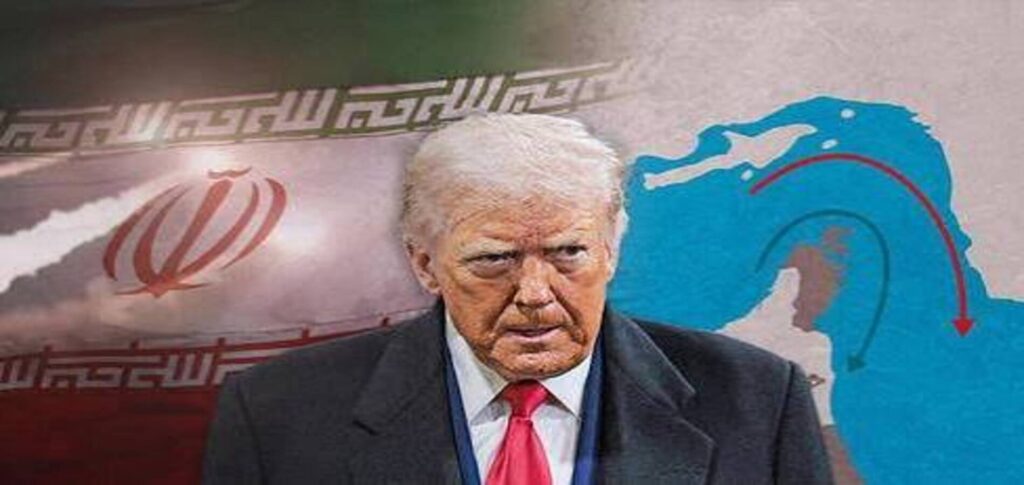
US President Donald Trump has suggested renaming the Strait of Hormuz as “Trump Strait” while tensions with Iran continue to escalate around the crucial waterway.
Trump made the proposal Wednesday in a post on Truth Social. He claimed that the United States now controls the strategic passage and asked whether officials should give it his name.
The proposal adds another unusual chapter to Trump’s approach to geographical names. However, the Strait of Hormuz remains a contested waterway, and Iran disputes Trump’s claims of US control.
Trump Says Waterway Should Become Trump Strait
Trump framed the proposed name change as a reflection of what he described as American control of the waterway.
His latest comment follows other geographical naming proposals from his administration. Therefore, the suggestion has quickly attracted international attention.
The White House also shared Trump’s statement on social media, along with a map that used “Trump Strait” instead of the traditional name.
For now, however, governments and international institutions continue to recognize the waterway as the Strait of Hormuz.
Trump Has Pushed Other Name Changes
The Trump Strait proposal follows several other naming disputes involving Trump.
Last week, Trump ordered federal agencies to use “Lake America” for Lake Ontario. The move came during a trade dispute with Canada.
Earlier, in January 2025, Trump ordered the US government to use “Gulf of America” instead of the Gulf of Mexico.
Mexico and Canada have not accepted those changes. Moreover, Trump’s previous naming proposals sometimes began as provocative remarks before his administration took steps to formalize them.
Strait of Hormuz Remains Central to Iran Conflict
The name dispute comes as the Strait of Hormuz remains at the center of the conflict between the United States and Iran.
Trump has repeatedly claimed that American forces control the waterway. Iran, however, continues to challenge that position.
The strategic passage connects the Persian Gulf with the Gulf of Oman. It also serves as one of the world’s most important routes for energy shipments.
Consequently, any major disruption can affect oil supplies and global markets.
Iran Restricts Shipping Through the Waterway
Iran has sharply restricted traffic through the chokepoint during the conflict.
The Strait of Hormuz normally handles roughly one-fifth of the world’s oil supply. As a result, disruptions can quickly raise concerns about energy security.
Commercial shipping companies also face greater risks when military tensions increase.
Meanwhile, governments and energy traders are closely monitoring developments around the waterway.
US Strikes Increase Pressure Around Hormuz
The Trump Strait proposal also comes after fresh US military strikes near the waterway.
US forces launched the latest strikes after Trump said Iran had attempted new mine-laying operations. Those claims have increased concerns about the safety of commercial vessels.
Mines could pose a serious threat to ships moving through the narrow passage. Therefore, any further military activity could create additional pressure on global shipping.
The United States and Iran have also exchanged attacks as the conflict continues.
Oil Markets Watch Strait of Hormuz
The continuing tensions have also affected oil markets.
Traders closely watch the Strait of Hormuz because of its importance to global energy shipments. Even the threat of prolonged disruption can influence crude prices.
Moreover, shipping companies may face higher insurance and security costs if the conflict expands.
As a result, developments around the waterway could affect consumers and businesses far beyond the Middle East.
Why the Strait of Hormuz Matters
The Strait of Hormuz is a narrow maritime passage between Iran and Oman.
It connects the Persian Gulf with the Gulf of Oman and provides an important route for oil and gas shipments.
Because so much energy moves through the area, the waterway has enormous strategic importance.
Therefore, control over the strait remains a major issue in the confrontation between Washington and Tehran.
Trump Strait Name Has No Immediate Legal Effect
Trump’s proposal does not automatically change the internationally recognized name of the waterway.
A presidential suggestion cannot by itself establish a new global geographical name. Other governments, international organizations and map providers can continue using “Strait of Hormuz.”
Nevertheless, the proposal has political significance because Trump has repeatedly discussed expanding US control over the strategic passage.
His latest statement therefore adds another layer to an already tense dispute.
Global Attention Focuses on Hormuz
The proposed Trump Strait name has drawn attention at a time when military activity around Hormuz remains intense.
The waterway’s importance extends well beyond the United States and Iran. Countries across Asia, Europe and the Middle East depend on stable energy supplies passing through the region.
For that reason, any prolonged closure or disruption could have consequences for the global economy.
Meanwhile, markets will continue to watch military developments and shipping activity closely.
Trump Strait Proposal Adds to Growing Tensions
Trump’s suggestion to rename the Strait of Hormuz may appear symbolic. However, it comes against the backdrop of a serious dispute over control of one of the world’s most important waterways.
The conflict has already disrupted shipping and pushed energy concerns back into focus.
For now, the waterway remains widely known as the Strait of Hormuz. Yet Trump’s “Trump Strait” proposal shows how closely the geographical dispute has become tied to the wider confrontation with Iran.
As tensions continue, developments around Hormuz could remain important for global security, shipping and energy markets.