
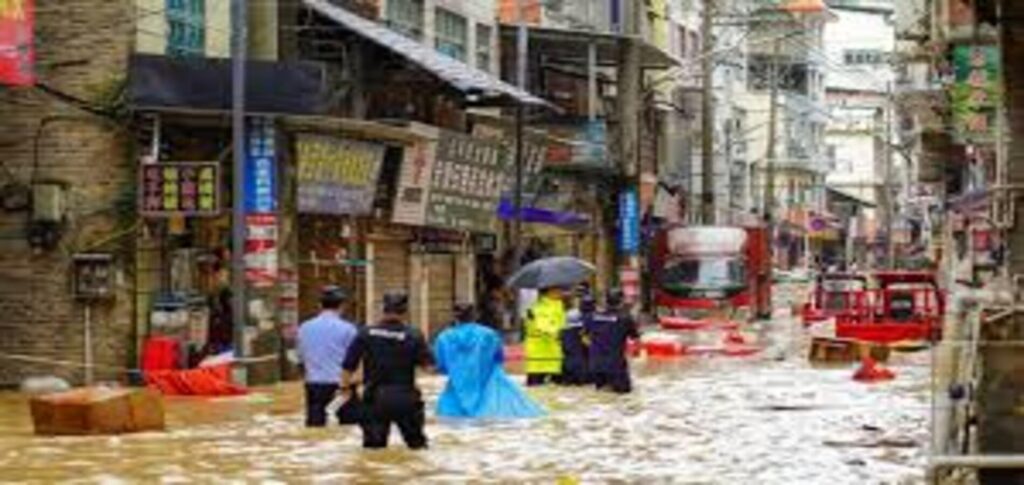
Typhoon Dujuan left at least two people dead and five injured in Japan after bringing torrential rain and strong winds to the Tokyo region.
Authorities said the storm also left more than 46,000 households without electricity. Meanwhile, rescue teams continued searching for people reported missing after landslides.
Typhoon Dujuan Moves Away From Japan
The typhoon moved away from Japan’s coast and into the Pacific by Tuesday morning.
As conditions improved, authorities lifted or downgraded most heavy rain and landslide warnings.
However, the storm had already caused major disruption across the region. It also forced the early closure of a major video game trade fair in Tokyo.
Japan regularly experiences powerful typhoons during late summer and early autumn. This season, several storms have also disrupted events linked to the Asian Games.
Two People Die as Landslides Hit
Japan’s Fire and Disaster Management Agency confirmed one death in Kanagawa prefecture near Tokyo.
A local official also reported another death in Chiba prefecture.
In addition, public broadcaster NHK reported that search teams were looking for four people after landslides caused by intense rainfall.
The heavy rain triggered dangerous conditions in several parts of the Tokyo region.
More Than 46,000 Homes Lose Power
More than 46,000 households in Chiba were still without electricity on Tuesday morning.
Although Typhoon Dujuan weakened as it moved northeast, it produced exceptionally heavy rainfall.
Oshima, an island around 120 kilometres south of central Tokyo, recorded 832 millimetres of rain over 48 hours.
That total exceeded twice the island’s average rainfall for the entire month of September, NHK reported.
Tokyo Records Exceptional Rainfall
Tokyo’s Edogawa Ward also recorded unusually heavy rainfall.
The area received 282.5 millimetres of rain within 24 hours. Officials described the amount as a record for the area.
Consequently, authorities faced increased risks from flooding and landslides as the storm moved away.
Climate Change Can Increase Heavy Rainfall
Scientists say human-driven climate change can increase the risks linked to extreme rainfall.
A warmer atmosphere can hold more moisture. Therefore, storms may have more water available to release as heavy rain.
The impact of each typhoon varies. However, rising global temperatures are making extreme rainfall an increasing concern for communities exposed to powerful storms.
For Japan, the latest storm once again highlights the risks that intense rainfall and landslides can create during the country’s typhoon season.