
US Iran Sixth Night Strikes Expand Military Campaign
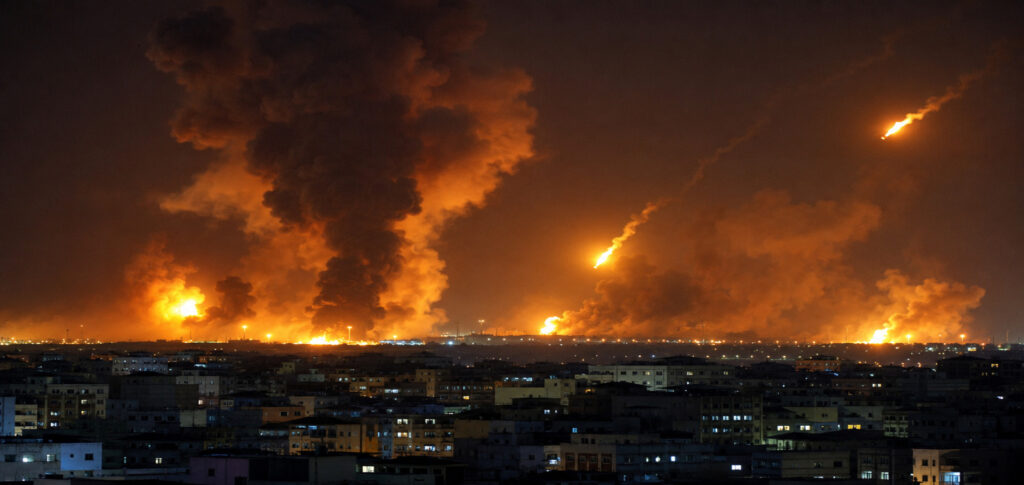
US Iran Sixth Night Strikes continued overnight as the United States launched another wave of military attacks across Iran. The operation marked the sixth consecutive night of US strikes. US Central Command (CENTCOM) said the attacks targeted military facilities and aimed to weaken Iran’s operational capabilities.
Iranian officials, however, claimed the strikes also damaged civilian infrastructure, adding to concerns about the humanitarian impact of the escalating conflict.
The latest escalation comes as Washington and Tehran remain locked in a confrontation involving the Strait of Hormuz, one of the world’s most important maritime trade routes.
Iran Says Civilian Sites Were Hit
Iranian state media reported that several civilian locations were damaged during the overnight attacks, including bridges, a railway station and an airport in southern provinces.
Local authorities in Hormozgan province said at least seven people were killed and several others injured. Officials also reported power outages after electricity infrastructure was damaged.
International media reportedly verified footage showing significant damage to the Gariveh Bridge near Bandar Abbas, with sections of the roadway reportedly collapsing.
The US military has not confirmed targeting civilian infrastructure. American officials maintain that their operations focused on military assets.
Iran Claims Retaliatory Military Action
Iran’s Islamic Revolutionary Guard Corps (IRGC) said it responded by launching attacks against US-linked military positions across the region.
Iranian officials claimed the targets included surveillance facilities in Oman, military-related sites in Kuwait and Bahrain, and a US operations centre near the Syrian border.
Jordan’s military confirmed that it intercepted several incoming missiles but reported no casualties. Kuwaiti authorities also acknowledged damage to power generation and water facilities following reported attacks.
US officials have not confirmed Iran’s claim about an attack on an American military position in Syria.
Strait of Hormuz Remains a Major Flashpoint
The Strait of Hormuz remains at the centre of the confrontation. The narrow waterway carries a significant share of global oil exports and serves as a vital route for international energy shipments.
Military activity around the strait has disrupted commercial shipping and increased concerns about global energy supplies and oil prices.
The International Energy Agency has warned that prolonged instability and shipping disruptions could create serious consequences for international energy markets.
Military Activity Expands Across the Region
The conflict has increasingly extended beyond Iran’s borders.
In Iraq’s Kurdistan region, local officials reported casualties following overnight attacks. Kurdish security forces also said they intercepted multiple drones over Erbil.
CENTCOM additionally confirmed that US forces boarded an oil tanker in the Gulf of Oman. The military said the operation formed part of ongoing maritime activities linked to restrictions on Iranian ports. Officials added that several commercial vessels attempting to enter restricted areas had been redirected.
The expanding military activity has raised concerns that the confrontation could develop into a wider regional crisis.
Diplomatic Efforts Continue Despite Escalation
Despite continued military operations, international calls for diplomacy are growing.
China and Pakistan have urged Washington and Tehran to end the fighting and return to negotiations before the situation deteriorates further.
The White House said President Donald Trump remains open to a diplomatic solution but warned that the United States would continue responding to actions it considers threats to international shipping or regional security.
Iranian officials, meanwhile, have maintained that any future agreement must protect the country’s national interests before meaningful negotiations can resume.
Global Energy Markets Remain Under Pressure
International observers continue monitoring the conflict because further escalation could affect energy supplies, shipping routes and regional stability.
Analysts warn that prolonged military operations could place additional pressure on global oil markets and increase transportation and insurance costs for commercial vessels.
Governments across the Middle East are also assessing potential security risks as military activity spreads across multiple locations.
For now, the US Iran Sixth Night Strikes mark another significant escalation in the confrontation. With fighting continuing and diplomatic efforts facing major challenges, international governments remain focused on preventing the conflict from developing into a broader regional crisis.