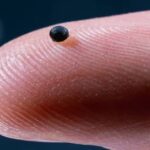


Tiny Medical Robot Could Transform Future Treatments
Scientists have developed a tiny soft robot that could one day help doctors deliver drugs, break down blood clots and monitor certain cancers.
Researchers from the Shenzhen Institute of Artificial Intelligence and Robotics for Society, The Chinese University of Hong Kong and Chinese PLA General Hospital developed the device.
They call it CiliaVine.
The tiny robot uses flexible, hair-like structures called cilia to manipulate blood flow.
Researchers attach the device to a medical guidewire and control its movement with magnetic fields.
The technology could eventually allow doctors to move drugs and cells toward specific areas inside blood vessels.
However, researchers have not yet tested the robot as a treatment or diagnostic device in human patients.
How the Tiny Robot Works
Blood normally moves through vessels in relatively smooth layers.
That flow helps circulation but can make it difficult for drugs, particles and cells to move sideways toward vessel walls.
CiliaVine aims to solve that problem.
Its magnetic cilia can move in different patterns depending on how researchers program the magnetic field.
The movement can push material toward a vessel wall, pull it away or create tiny swirling currents in the surrounding fluid.
These controlled movements could help doctors direct medicines more efficiently inside blood vessels.
Robot Improved Drug Delivery
Laboratory experiments showed promising results.
Researchers tested the robot with a model drug and found that it increased the amount of material reaching the vessel wall.
The amount reaching the wall was 146% higher than when the drug spread naturally.
Researchers also found that 75% more of the material reached a point 1 millimeter beyond the vessel wall.
The findings suggest that CiliaVine could eventually help doctors target medicines more precisely.
Could Help Dissolve Blood Clots
The researchers also tested whether the robot could speed up clot treatment.
They used tissue plasminogen activator, or tPA, a drug commonly used to break down blood clots.
In a laboratory vessel model, the clot dissolved in about 40 minutes while the robot operated.
Without the robot, the process took an average of about 70 minutes.
The results suggest that manipulating blood flow around a clot could help clot-busting drugs work more efficiently.
However, further research will need to establish whether the same benefit occurs in living patients.
Robot Captured Cancer Cells
CiliaVine may also have potential in cancer monitoring.
Researchers coated the tiny robot with antibodies designed to capture circulating tumour cells.
These cells can break away from tumors and travel through the bloodstream.
They are rare, which makes them difficult to detect and collect.
The researchers used CiliaVine to capture circulating tumour cells from blood samples taken from all 23 liver cancer patients included in the study.
That result points to a possible future use in cancer monitoring and diagnosis.
Tests in Rabbits Showed Promise
The research team also tested CiliaVine inside living rabbits with liver tumors.
Researchers inserted the device into a major vein through a catheter.
They then controlled it magnetically for 20 minutes.
The researchers reported no signs of inflammation or tissue damage in the sections of the vessels they examined.
The result provides early evidence that the technology can operate inside a living body.
Human Testing Has Not Started
Despite the promising findings, CiliaVine remains an experimental technology.
Researchers have not yet tested it as a cancer diagnostic tool or medical treatment inside human patients.
The current work involved laboratory models, animal experiments and blood samples from liver cancer patients.
Before doctors could use such a device clinically, researchers would need to establish its safety, effectiveness and reliability through further studies and human clinical trials.
If future research confirms its potential, CiliaVine could offer a new way to manipulate drugs, blood clots and cancer cells directly inside blood vessels.
Rather than relying entirely on natural blood flow, doctors could potentially use magnetic control to guide medical treatments toward specific targets.