

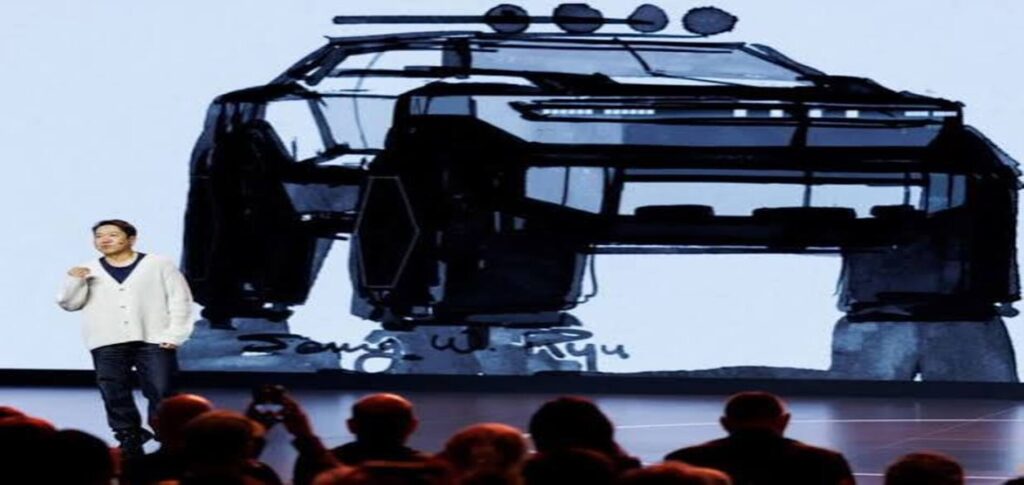
Hyundai Motor is preparing its biggest product expansion yet as it targets stronger profits and greater market share.
The South Korean automaker plans to launch or refresh more than 100 vehicles worldwide by 2030. At the same time, it will significantly expand its Hyundai hybrid lineup in North America.
The company now aims to achieve an operating profit margin above 9% by 2030.
Hyundai Plans Major Global Product Offensive
Hyundai said it plans to introduce 58 models in North America by 2030.
The strategy will target market segments where the company currently has a limited presence. Hyundai believes these areas represent a major opportunity for future growth.
The automaker described the plan as a product offensive across every region.
According to Hyundai, the targeted segments account for around 29% of total automotive sales.
Hybrid Models Take Centre Stage
Hybrids will play a central role in Hyundai’s North American strategy.
The company plans to introduce 10 hybrid models in the region by 2030.
It also expects hybrid vehicles to account for about half of its North American sales by that time.
Demand for fuel-efficient vehicles has increased as gasoline prices have risen.
According to Cox Automotive, 56% of U.S. car buyers said higher gasoline prices made them more likely to consider buying a hybrid.
Hyundai Hybrid Sales Continue to Grow
The company is already seeing strong demand for its hybrid vehicles.
Hybrid sales in the United States increased 19% during the first half of 2026, according to Omdia.
Meanwhile, Hyundai’s own hybrid sales jumped 71% in the second quarter.
Therefore, the company sees an opportunity to build on this momentum with a much broader lineup.
Production Capacity Will Increase
Hyundai also plans to expand its global manufacturing capacity.
The automaker expects to add 1.27 million units of production capacity by 2030.
North America will receive about 500,000 units of that additional capacity.
CEO Jose Munoz said Hyundai’s fundamentals remain strong as the company prepares for the next stage of expansion.
Hyundai Motor and affiliate Kia together rank as the world’s third-largest automaker by sales.
Tariffs Remain a Major Risk
However, Hyundai’s U.S. expansion faces several challenges.
Trade policy remains a major concern, particularly as the United States reviews the U.S.-Mexico-Canada Agreement.
The agreement currently supports duty-free trade in vehicles and parts across North America.
U.S. officials have not committed to automatically extending the arrangement. As a result, future reviews could create uncertainty for automakers investing in regional supply chains.
Hyundai also faces a 15% U.S. tariff on automobiles under an agreement reached between Seoul and Washington last year.
CEO Warns About Tariff Pressure
Munoz acknowledged that tariffs remain a concern for the company.
However, he said Hyundai would work to manage their impact.
He also suggested that higher tariffs would be easier to handle if they applied equally across competing automakers.
The company will therefore continue monitoring U.S. trade policy while expanding its local production capabilities.
Chinese Automakers Increase Competition
Hyundai is also preparing for stronger competition from Chinese carmakers.
Munoz described Chinese automakers as highly capable and said their technology continues to improve.
He said it remains uncertain whether Chinese brands will enter the U.S. market directly.
However, their technology could reach American consumers through partnerships with other automakers.
Hyundai plans to strengthen its position through better technology, design, features and cost efficiency.
Hyundai Expands Into Robotics
The company’s strategy goes beyond traditional automobiles.
Hyundai plans to expand its businesses in robotics, autonomous driving and robotaxis.
The company expects to begin mass production of software-defined vehicles with Level 2+ advanced driver-assistance systems in 2028.
The vehicles will be developed in collaboration with Nvidia.
Waymo Robotaxis to Use Hyundai Vehicles
Hyundai is also entering the growing robotaxi market.
The company said deliveries of IONIQ 5 vehicles to Alphabet’s Waymo will begin in the fourth quarter of 2026.
Waymo plans to use the vehicles for its robotaxi operations.
Meanwhile, Hyundai’s Motional venture is expected to launch driverless commercial services later this year, initially in Las Vegas.
Humanoid Robots Could Enter Hyundai Factories
Robotics will become another important part of Hyundai’s future manufacturing plans.
The automaker plans to begin producing robots in the United States in 2028.
It is targeting annual production capacity of 30,000 robots.
Hyundai also plans to deploy Boston Dynamics’ Atlas humanoid robot at its Georgia Metaplant from 2028.
The company is already testing humanoid robots in vehicle production environments.
Hyundai Raises 2030 Profit Target
Alongside its expansion plans, Hyundai raised its 2030 consolidated operating margin target.
The company now expects the margin to exceed 9%.
Previously, it had targeted a range of 8% to 9%.
However, Hyundai kept its 2026 operating margin guidance unchanged at 6.3% to 7.3%.
The higher long-term target reflects the company’s confidence in its product expansion, cost controls and growing economies of scale.
Electrified Vehicles to Reach 60% of Sales
Hyundai also reaffirmed its goal of selling 5.55 million vehicles globally by 2030.
That would give the company an estimated 6% share of the global automotive market.
Meanwhile, electrified vehicles are expected to account for 60% of Hyundai’s sales by 2030.
That compares with just 23% in 2025.
The target highlights how quickly Hyundai expects its hybrid and electric vehicle businesses to expand.
Hyundai Targets Long-Term Growth
Hyundai’s latest strategy combines new vehicles, hybrid expansion, electric mobility, autonomous driving and robotics.
The broader Hyundai hybrid lineup will be particularly important in the United States, where changing fuel prices and consumer demand are supporting hybrid sales.
At the same time, the company must navigate tariffs, trade uncertainty and increasingly strong competition from Chinese manufacturers.
If Hyundai can deliver its planned products while controlling costs, the automaker could strengthen its position in several key markets before 2030.