
The Riyadh airport smoke raised alarm on Saturday after loud booms were heard in the Saudi capital and authorities issued overnight warnings about possible aerial attacks.
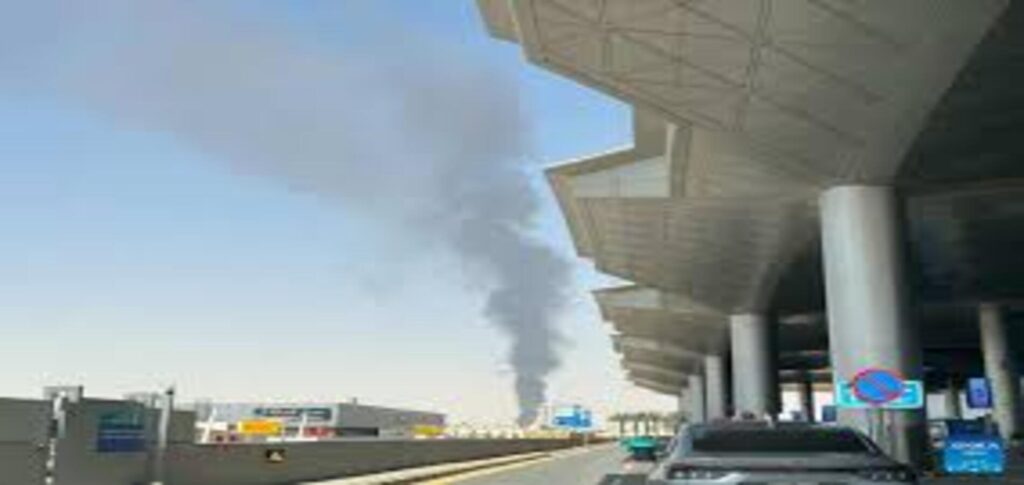
A large column of black smoke rose near King Khalid International Airport. Reuters footage showed flames appearing behind what looked like fuel tanks, with the airport highway and terminal buildings visible in the foreground. However, the exact cause of the fire was not immediately confirmed.
Saudi civil defence had earlier sent phone alerts warning residents in Riyadh and Al-Kharj about possible aerial danger. Authorities later issued an all-clear on Saturday morning.
Meanwhile, a Reuters journalist in Riyadh’s Olaya district reported hearing several booms before the warning was lifted.
Saudi Arabia issues aerial attack warning
The warnings came amid a sharp escalation between Saudi Arabia and Yemen’s Houthi movement.
According to Reuters, the Saudi alerts were the first for Riyadh since the latest escalation with the Houthis began in July. The capital had received other warnings earlier in the year following the start of the wider US-Iran conflict.
For now, Saudi authorities have not publicly provided a detailed explanation for the smoke seen near the airport.
However, Reuters later reported that the Houthis claimed to have launched missile and drone attacks against what they described as “sensitive” targets in Riyadh. Saudi-led forces, meanwhile, said a missile aimed at the capital had been intercepted.
Houthis escalate attacks on Saudi targets
The latest incident follows weeks of growing tensions.
The Houthis control Yemen’s capital, Sanaa, as well as large parts of the country’s north. Since July, the group has intensified attacks against Saudi targets while also declaring a naval blockade.
The attacks have included strikes or attempted strikes involving Saudi cities, energy infrastructure and shipping routes. As a result, the escalation has raised concerns about oil exports and regional maritime traffic.
The situation is particularly significant because Saudi Arabia has been relying on routes around the Red Sea as the conflict has disrupted shipping through the Strait of Hormuz.
In recent weeks, Houthi forces have also advanced along parts of Yemen’s Red Sea coast. Reuters has described the Bab el-Mandeb area as strategically important for regional shipping and energy flows.
Houthi claims follow fighting in Sanaa
Houthi military spokesperson Yahya Saree said on Friday that the group had foiled what he called “criminal attempts” in Sanaa.
He blamed Saudi Arabia and warned of a response.
The Houthis have also accused Saudi forces of carrying out hundreds of airstrikes in Yemen. Those claims have not been independently verified.
At the same time, Saudi authorities have continued to report interceptions of incoming drones and other aerial threats.
Saudi Arabia’s official news agency previously reported that air defences intercepted a Houthi drone near Taif, with falling debris causing casualties and property damage.
UN condemns Houthi escalation
The latest developments have also drawn international concern.
The UN Security Council condemned continued Houthi attacks against Saudi Arabia, particularly attacks affecting civilian and energy infrastructure. The council also condemned the wider Houthi military escalation in Yemen.
Meanwhile, the security situation remains closely linked to the wider regional conflict.
Saudi Arabia has faced attacks on important infrastructure in recent weeks. A separate drone attack also disrupted the East-West oil pipeline, increasing concerns about the country’s ability to move crude to Red Sea export terminals.
For now, the Riyadh airport smoke remains a major focus as authorities assess the incident. However, the wider pattern of aerial attacks and warnings shows that the latest Saudi-Houthi escalation is putting pressure on both civilian infrastructure and vital energy routes.