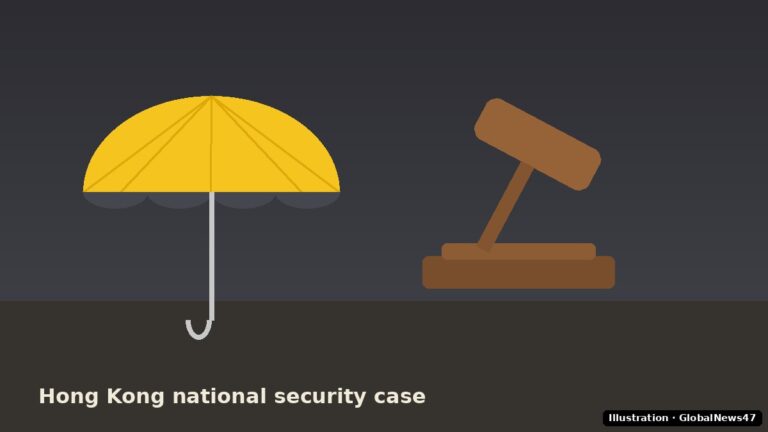
Joshua Wong, once the best-known face of Hong Kong’s pro-democracy movement, was jailed on Thursday for 10 more years. A High Court judge sentenced him after he admitted colluding with foreign forces, an offence under Hong Kong’s national security law. The 30-year-old had been due for release in January after six years behind bars.
Wong pleaded guilty to the charge in September. His new sentence means he could spend most of the next decade in prison.
What the court decided in the Joshua Wong case
Prosecutors said Wong conspired with other activists, including self-exiled campaigner Nathan Law, to lobby foreign countries for sanctions or blockades against China. The court heard that this happened from July to late November 2020.
Judge William Tam said “the punishment must fit the gravity of the crime”, Al Jazeera reported. He took 13 years as a starting point. However, he reduced the term to 10 years because of Wong’s guilty plea and mitigation.
The judge also ruled that two months and two days of the new term will run alongside his current sentence, the BBC said.
Outside the court, dozens of people had queued for hours hoping for a seat in the public gallery, while police were out in large numbers. Inside, Wong nodded to supporters and took notes as the judge read out his reasons.
Reactions from Hong Kong, Beijing and abroad
John Lee, the city’s chief executive, called Wong and Law “among the primary culprits” who had harmed Hong Kong’s stability and prosperity. In addition, China’s foreign ministry said it “firmly supports” the city’s efforts to protect national security.
Critics, by contrast, condemned the ruling. The US consulate in Hong Kong said it “strongly condemns” the sentence and called for Wong’s immediate release. Taiwan’s top China policy body also criticised what it called “endless political persecution” of activists.
Human Rights Watch described the sentence as “cruel and unjust”. Its Asia director, Elaine Pearson, said the government appeared to be “stacking charges” against influential pro-democracy leaders. Similarly, Amnesty International said the case showed how the law is now used to silence critics.
Hong Kong and Beijing officials reject such criticism. They say the city needed the law to restore stability after the 2019 protests, and they deny it has weakened the city’s freedoms.
From student activist to prisoner
Wong began campaigning as a teenager. In 2011, aged 14, he co-founded the student group Scholarism. The following year, the group led large protests against plans for compulsory “patriotic education” in schools. As a result, the authorities shelved the plan.
By 2014, Wong had become one of the leading figures of the “Umbrella Movement”, a mass civil disobedience campaign for democracy. Two years later, he co-founded the political party Demosisto with Nathan Law and Agnes Chow.
Then, in 2019, huge protests broke out over a plan to allow extradition to mainland China. In response, Beijing imposed the national security law in 2020. Demosisto disbanded that year, and Law left for the UK.
Wong stayed in Hong Kong. A court sent him to prison in late 2020 over the 2019 protests. Later, he became one of the “Hong Kong 47”, the largest group prosecuted under the security law. He received a 56-month sentence for conspiracy to commit subversion and was still serving it when prosecutors brought the new charge.
Why the sentence matters
Police have arrested hundreds of activists and ordinary residents under the national security law. The heaviest sentence so far went to former media owner Jimmy Lai, who received 20 years on a similar collusion charge.
For supporters, Wong’s case shows how little space remains for opposition voices in Hong Kong. For the government, it is proof that the courts are applying the law firmly. Either way, the case is likely to add to tension between China and Western governments over the city’s future.
Related on Global News 47: Trump China Arms Sales: Ambassador Says He Asked Xi to Buy · Democrats Win Congress in Sweeping Midterm Defeat for Trump
Sources & References
- BBC News: Joshua Wong, face of Hong Kong’s pro-democracy protests, jailed for 10 years
- Al Jazeera (with AFP, AP and Reuters): Hong Kong democracy activist Joshua Wong sentenced to 10 years in jail
- The Guardian: Hong Kong pro-democracy activist Joshua Wong sentenced to 10 years in prison (headline and summary only; full text not accessed)
- Statements from the Hong Kong government, China’s foreign ministry, the US consulate, Human Rights Watch and Amnesty International, as quoted by the BBC and Al Jazeera