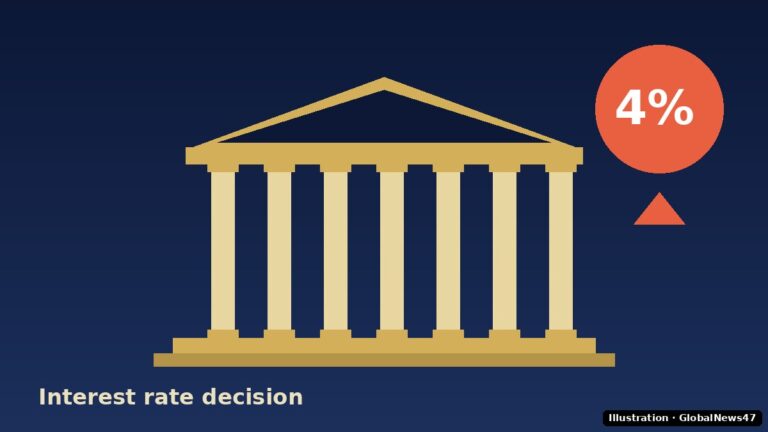

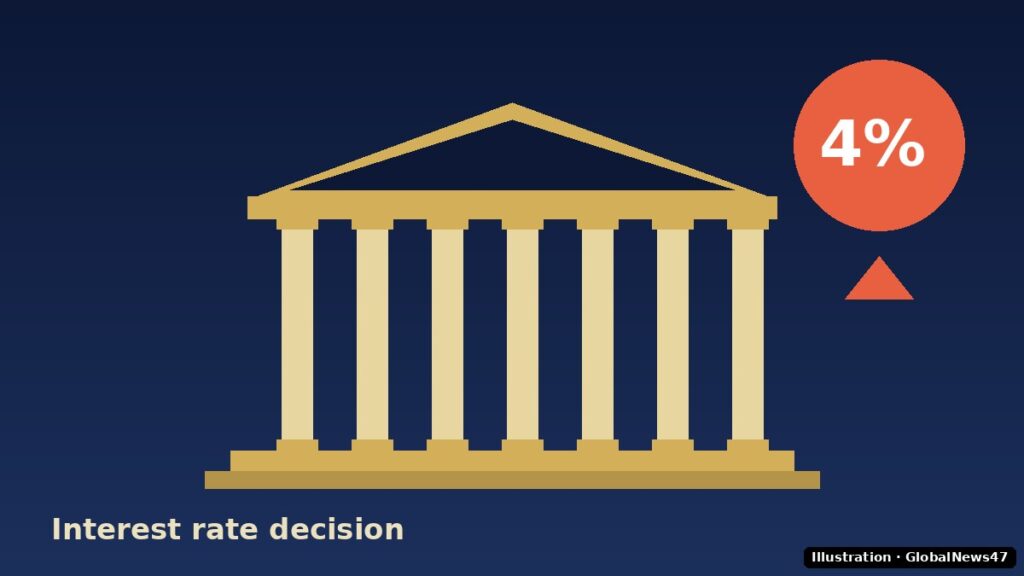
The Bank of England raised interest rates on Thursday, its first increase since August 2023. Its main rate rose by a quarter point, from 3.75% to 4%. The aim is to stop higher energy costs from the Iran war spreading through the wider UK economy.
Governor Andrew Bailey said the move should not be seen as the start of a long run of hikes. However, he warned that it was unlikely to be the last one unless the Middle East conflict ends.
Why the Bank of England raised interest rates now
UK inflation reached 3.5% in the year to September, up from 3.1% in August. That is well above the Bank’s 2% target. The main driver has been the jump in oil and gas prices since US and Israeli strikes on Iran began on 28 February.
Disruption to shipping through the Strait of Hormuz has squeezed global energy supplies. As a result, fuel costs have climbed sharply. Millions of UK households also face a further rise in energy bills in January, the BBC reported.
The Bank cannot control world energy prices. Instead, it is trying to stop those costs from feeding into wages and the prices of other goods. So far, it found only “limited evidence” of that happening. Even so, it judged that enough pressure was building to justify action.
In a statement, Bailey said the rise in energy prices had left enough “inflationary pressure in the pipeline” to warrant a higher Bank Rate.
How the committee voted
All nine members of the Monetary Policy Committee backed a rise. Eight voted for 4%, while one wanted a bigger move to 4.25%.
Members did not agree on what comes next, though. Clare Lombardelli said a further rise could well be needed soon. By contrast, Megan Greene said the path would hinge on what happens to wages, prices and jobs. Meanwhile, Alan Taylor described Thursday’s move as a “one-for-now” insurance hike.
Financial markets had widely expected the decision. In the Bank’s own survey of market participants, the typical expectation was 4% now, rising to 4.25% in February.
New forecasts for inflation and growth
Alongside the decision, the Bank published fresh forecasts. It now sees inflation peaking at 4.9% around mid-2027, according to the BBC. It does not expect inflation to return to 2% until 2028.
The Bank also set out a worse case. If the war escalates and energy costs surge, inflation could hit 6.2% in 2027.
On the other hand, the growth outlook has improved. The Bank now forecasts UK growth of 1.6% in 2026 and 1.3% next year, Euronews reported. In July, it had forecast 1.1% for both years.
What higher interest rates mean for households
The Bank Rate guides what lenders charge for mortgages, loans and credit cards. It also affects what savers earn on their deposits.
About 510,000 households on tracker mortgages will pay around £31 more a month, according to the banking trade body UK Finance. People on fixed-rate deals will see no immediate change. However, new fixed deals may become more expensive. For those on variable rates, the impact depends on how each lender responds.
For savers, meanwhile, the change could bring slightly better returns.
Part of a wider global shift
The UK move comes after recent hikes from the US Federal Reserve and the European Central Bank. Both have also responded to inflation driven by energy prices. Before the war began, UK rates had been coming down from 5.25%, their highest level in 15 years.
For Pakistan and other energy-importing countries, the decision is another sign that the war’s impact on prices is far from over. Separately, the BBC reported on Thursday that the pound had risen to its highest level since the 2016 Brexit referendum.
What comes next
Bailey said the committee would judge the outlook “at each meeting” and respond as needed to bring inflation back to target. In short, real progress towards ending the Middle East conflict is now the key factor for future decisions. Until then, borrowers in the UK should be ready for the chance of another rise early next year.
Related on Global News 47: UK Diesel Prices Hit Record High Amid Iran War · UK-EU Food Deal Settled to Remove Most Brexit Checks
Sources & References
- BBC News: Interest rates hiked to 4% in first increase in over three years
- BBC News: Three ways the interest rate rise could affect you
- Euronews: Bank of England raises key interest rate for first time in over 3 years
- Dawn (AFP): Bank of England lifts rate for first time since 2023 to fight inflation
- BBC News: Pound rises to its highest level since the Brexit referendum (headline only used)