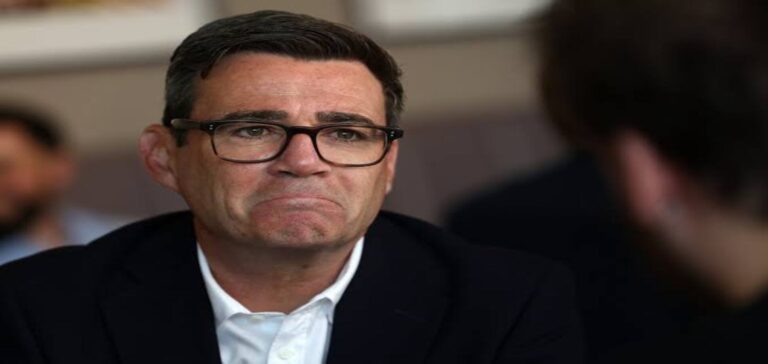

UK Prime Minister Andy Burnham has warned that proposed EU industry rules could hurt UK businesses and disrupt supply chains as he prepares to discuss the issue with European Commission President Ursula von der Leyen.
The European Union wants its proposed “Made in Europe” policy to strengthen European manufacturers and reduce reliance on Chinese components. However, British officials fear the plan could create new barriers for UK companies that supply European industries.
Burnham is expected to raise those concerns during his meeting with von der Leyen in New York, where both are attending the United Nations General Assembly.
Burnham Warns Against Damage to UK Industry
Burnham said Britain should not become an unintended casualty of the EU’s efforts to protect its industries from foreign competition.
He argued that the UK and EU face many of the same economic pressures, particularly in the steel sector.
“We are not your enemies here,” Burnham told reporters while travelling to New York, according to recent reports. He said Britain wants to work with the EU rather than create another source of disruption.
The UK government wants Britain to become a “trusted partner” in the EU initiative. At the same time, officials are seeking arrangements that would allow British companies to compete without facing unnecessary disadvantages.
What Is the Made in Europe Plan?
The proposed policy, formally known as the Industrial Accelerator Act, would encourage the use of European-made products in strategic industries.
The measures target sectors such as electric vehicles, renewable energy, hydrogen and nuclear technology. They would introduce local-content requirements for some public procurement, auctions and subsidy-backed purchases.
For example, Reuters reported that proposed rules could require electric vehicles used in EU public procurement to contain 70% EU-made components and be assembled within the bloc.
However, the exact rules remain under negotiation.
The EU is also considering which non-EU countries could qualify. Current proposals could leave countries such as the UK and Canada outside the scheme unless they secure reciprocal access.
UK Auto Industry Raises Supply Chain Concerns
The British automotive sector has become one of the main areas of concern.
UK manufacturers rely heavily on European supply chains. They also export large volumes of vehicles and components to the EU.
The Society of Motor Manufacturers and Traders has warned that excluding British companies could hurt both sides because the two markets remain closely connected. The organisation says UK-EU automotive trade is worth about €80 billion a year.
Meanwhile, EU carmakers have also called for Britain to receive access to the scheme. They argue that excluding UK suppliers could disrupt established production networks.
As a result, Burnham is pushing for an arrangement that protects those cross-border links.
Brexit Debate Returns to the Spotlight
The dispute has also revived questions about Britain’s long-term relationship with the EU.
Burnham declined to rule out a future Labour commitment to rejoin the bloc. However, he said that issue was for “another day.”
Instead, he stressed that his immediate goal was to rebuild UK-EU relations and reach practical agreements that could support the British economy.
The UK and EU had planned a summit later this year, although the meeting has faced delays following political changes in Britain.
Burnham has previously said he wants closer cooperation with Europe but has also argued that Britain should focus on practical economic benefits rather than reopen old Brexit arguments.
Burnham Seeks a Wider UK-EU Reset
The dispute over the Made in Europe plan comes as Britain tries to deepen ties with the EU after years of strained relations.
Burnham said the UK wants to move beyond political disagreements and focus on areas where both sides can cooperate.
The negotiations could therefore have wider consequences for British manufacturers. They may also shape the next stage of the UK-EU economic relationship.
For now, European officials continue to negotiate the final form of the Industrial Accelerator Act. Meanwhile, Burnham is pressing for Britain to avoid what he describes as unnecessary “collateral damage” from the new rules.