
Pakistan’s government has unveiled a new auto policy that promises cheaper cars, big tax cuts for electric vehicles and a push for exports. The Pakistan auto policy for 2026-31 was announced in Islamabad on Saturday, 7 November. However, it still needs final cabinet approval, and several tax measures depend on clearance from the International Monetary Fund (IMF).
Information Minister Attaullah Tarar and Haroon Akhtar Khan, the prime minister’s adviser on industries and production, presented the plan at a press conference, Dawn reported.
Six pillars of the Pakistan auto policy
The policy rests on six main goals, according to Dawn:
- Cheaper vehicles, especially for middle and lower-middle income families
- Export promotion
- Localisation of parts manufacturing
- Vehicle safety
- Promotion of electric vehicles (EVs)
- Transparency for buyers
Khan told reporters that the prices of all vehicles, except luxury models, would come down. Even so, the government has not announced specific price cuts or dates, Gulf News noted.
How car prices are meant to fall
Customs duties on imported complete cars, kits for local assembly and parts will be cut every year. They are due to reach “competitive” levels after five years. Luxury vehicles are left out of these reductions.
In addition, the policy targets the long-standing “on-money” problem. Carmakers will not be allowed to demand more than 20 percent of the price as an advance at the time of booking. Buyers have often paid large sums upfront and then waited months for delivery.
Earlier estimates from brokerage Topline Securities, cited by Dawn, suggested some petrol cars could become 8 to 10 percent cheaper. Some plug-in hybrids could fall by more than 20 percent. These are projections, not confirmed figures.
Major incentives for electric vehicles
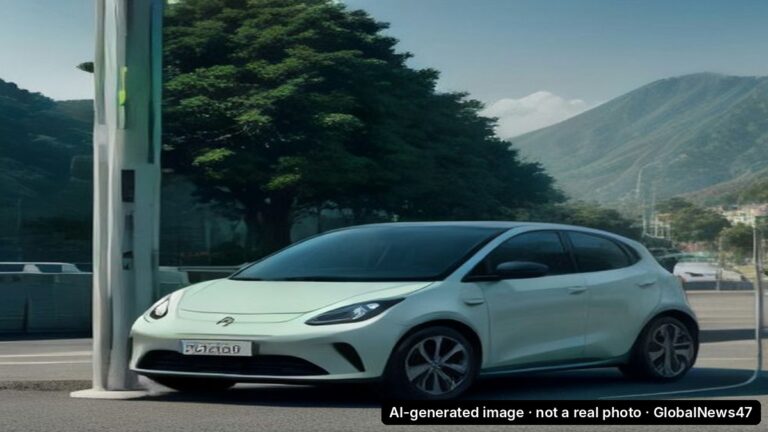
EVs are at the centre of the plan. The government is proposing a sales tax of just 1 percent on fully electric vehicles. Range-extended EVs would pay 6 percent, while hybrids would pay 9 percent. These rates are subject to IMF approval.
Furthermore, EVs priced up to $50,000 would pay no capital value tax, withholding tax or federal excise duty. Pricier EVs would count as luxury goods.
Car loans are also set to change. State Bank financing limits for EVs would rise to Rs10 million, compared with Rs3 million for ordinary cars. The repayment period would also stretch from three years to five. Banks will need regulatory changes before this can begin.
For charging stations, sales tax on equipment would drop to 1 percent, and customs duty would be scrapped. Officials also said the state would support charging projects that are not yet commercially viable.
The policy aims for EVs to make up 30 percent of new vehicle sales by 2030. That goal comes from the existing National Electric Vehicle Policy. Khan suggested it could be reached sooner. Electric two-wheeler sales have already risen to 240,000 in 2025-26, up from 60,000 a year earlier, according to the officials.
Who pays for the EV push?
A new automotive development levy will apply to petrol and diesel vehicles above 1,000cc. Smaller cars of 1,000cc or less are exempt. The money will fund EV incentives, export rebates and research. As a result, the plan is meant to stay revenue-neutral under Pakistan’s IMF programme.
Exports, local parts and safety
The government wants the auto sector to earn $6 billion from exports over five years. Exporters would get a 5 percent duty drawback, plus an extra 10 percent on yearly export growth. However, companies will only qualify if they meet both their export and localisation targets. “If you do not achieve the targets, a penalty will be imposed as well,” Khan said, according to Dawn.
The policy also adds 45 new safety standards aligned with UN vehicle rules. These cover both new and used vehicles. Pakistan currently has 16 car and SUV makers and about 100 two-wheeler manufacturers.
Questions that remain
Critics say key details are still missing. Officials did not publish a year-by-year tariff schedule or firm dates for the price cuts. A Daily Times editorial argued that easier loans for costly cars are not the same as affordable transport for everyone. The real test will be whether showroom prices actually fall in the coming months.
Related on Global News 47: Petrol Price in Pakistan Cut to Rs346 · Tesla to Wind Down Cybertruck Production
Sources & References
- Dawn: Govt announces auto policy with focus on cheaper vehicles, EVs
- Gulf News: Pakistan’s New Auto Policy 2026–31: Cheaper Cars, EV Tax Cuts, and Rs10m Loans Explained
- Aaj English TV: Pakistan unveils new auto policy, targets $6bn in exports
- Daily Times (editorial): Auto Policy