
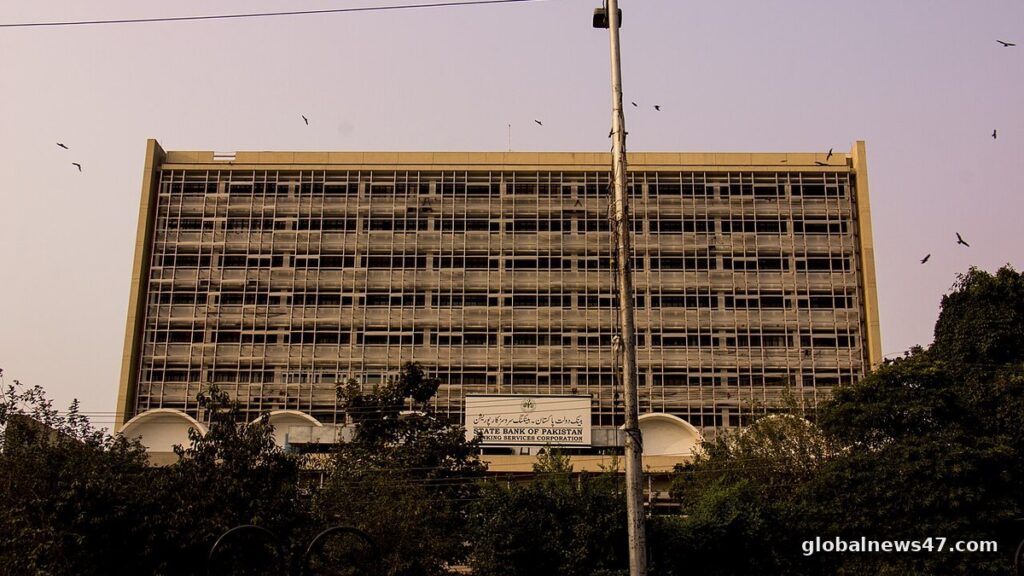
The State Bank of Pakistan expects the economy to grow by 3.5 to 4.5 per cent in the current fiscal year, FY27. The forecast comes in the SBP annual report on the State of Pakistan’s Economy for 2025-26, released on Monday, 16 November 2026.
The central bank says Pakistan held on to its economic stability last year despite several shocks. Even so, it warns that deep structural reforms are needed to create enough jobs for a growing workforce.
Key numbers in the SBP annual report
According to the SBP, real GDP growth picked up in FY26. Much of the push came from a rebound in large-scale manufacturing, which has strong links with farming and services.
At the same time, the current account deficit stayed very small. It was just 0.1 per cent of GDP in FY26, helped by strong growth in workers’ remittances. For FY27, the bank expects the deficit to stay between zero and 1 per cent of GDP.
Inflation was harder to control. Average national CPI inflation stayed close to the top of the SBP’s 5-7 per cent target range in FY26. However, the energy price shock from the Middle East conflict pushed yearly inflation into double digits from April 2026.
Looking ahead, the SBP expects inflation to ease slowly towards the 5-7 per cent range during FY27. Still, it says the global energy shock will first add upward pressure on prices.
Reserves and ratings improve
The report also points to stronger foreign exchange buffers. Large dollar purchases by the SBP and a cut in forward liabilities drove that improvement, the bank said. Eurobond and Panda bond sales, official inflows and steady money into Roshan Digital Accounts also helped.
For FY27, the SBP expects reserves to keep building towards four months of import cover. In particular, it cites the US$3 billion Eurobond raised in September 2026, further dollar purchases and expected official inflows.
On the fiscal side, results improved in FY26. The bank credits continued fiscal tightening and a large fall in interest payments. As a result of these gains, Pakistan’s sovereign credit ratings were upgraded, the report notes.
Shocks the economy faced
The SBP lists three major headwinds in FY26. First, shifting US trade tariff policies hurt the outlook. Second, monsoon floods hit at the start of the year. Third, the Middle East conflict broke out in late February 2026 and sent energy prices higher.
Despite these shocks, the bank says a careful monetary policy, fiscal discipline and reforms under the IMF programme protected the country’s stability.
Why jobs are the big worry
This year’s report includes a special chapter titled “Structural Challenges to Job Creation in Pakistan.” It names weak and volatile growth as a key barrier. It also flags a slow shift towards more productive sectors, along with signs of “premature deindustrialisation.”
Labour market problems make things worse, the SBP says. These include low female participation in the workforce, high youth unemployment and a large informal sector. In addition, trends such as Industry 4.0, the green transition and a more divided global economy create new pressure.
To tackle this, the report suggests several steps. For example, it calls for closing infrastructure gaps and supporting technology and skills. It also recommends simpler taxes and rules-based fiscal and regulatory decisions to cut policy uncertainty.
Outlook for farming and trade
The SBP says worsening El Nino conditions threaten the farm outlook. Even so, early data show higher output of key kharif crops, including sugarcane, rice and maize, compared with last year.
The bank expects stronger farm and industrial output to lift the services sector. Imports are likely to grow with the economy and lower tariffs. Exports, meanwhile, should recover only moderately.
The report also urges early action on climate shocks to protect crops. It suggests that new solar energy plans for farmland could balance clean power with food security.
What it means for households
For ordinary Pakistanis, the message is mixed. Growth and reserves look steadier than a year ago. However, inflation remains above target for now, and the jobs gap is not closing fast enough.
The SBP’s own projection is a range, not a promise. Ultimately, much will depend on energy prices, the weather and how the Middle East conflict develops in the months ahead. The full report is available on the SBP website.
Related on Global News 47: Pakistan Remittances Rise 13.8% to $3.9 Billion in October · Petrol Price in Pakistan Cut by Rs8 to Rs338
Sources & References
- State Bank of Pakistan (press release, 16 November 2026): SBP Releases Annual Report on The State of Pakistan’s Economy
- State Bank of Pakistan: Annual Report 2025-2026: State of the Economy
- The Express Tribune: SBP projects 3.5-4.5% GDP growth for FY27