
Pakistan Iran mediation efforts got a boost this week, as Iran said it still trusts Islamabad’s role in its war with the United States. The message came during Foreign Minister Abbas Araghchi’s visit to Islamabad this week. There, he met Field Marshal Asim Munir and Deputy Prime Minister Ishaq Dar. Meanwhile, Pakistan is still waiting for Washington’s reply to Iran’s latest proposal, as of Tuesday evening, 17 November (PKT).
The talks keep these efforts alive at a tense time. Negotiations have stalled, and the US has sent a third aircraft carrier to the region.
Munir and Araghchi discuss regional security
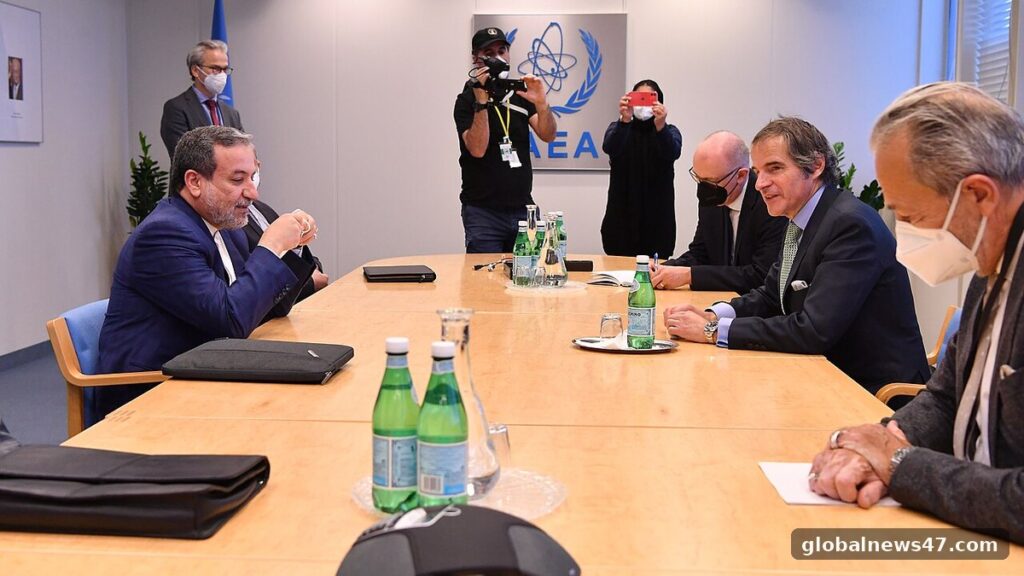
Araghchi met Munir on Monday, according to the military’s media wing, ISPR. Munir is Pakistan’s Chief of Defence Forces and Chief of Army Staff. The two sides talked about regional security and the fast-changing geopolitical picture, the ISPR statement said.
Munir stressed “the importance of sustained engagement, mutual trust and close coordination” between the “two brotherly countries to promote regional peace and stability.” They also exchanged views on how to “address common security challenges.”
For his part, Araghchi thanked Pakistan for its helpful part in keeping the region calm, according to ISPR. He also said Iran wanted to further strengthen bilateral ties.
“We trust Pakistan as a good friend”
Speaking to reporters, Araghchi was even more direct. “We trust Pakistan as a good friend, as someone that is trying its best, and we are satisfied of working with them,” he said, Arab News reported.
Dar, who is also foreign minister, held separate talks with Araghchi on Monday. He described the talks as “very candid, very frank” and wide-ranging.
Importantly, Dar said Iran had speeded up its plan to reopen the Strait of Hormuz. According to Dawn, Tehran shortened an earlier seven-day proposal into a two-day plan. Its detailed terms have not been made public.
“So, the response from the United States is pending,” Dar said. He added: “We have not given up hope or efforts.” He also expressed hope that Washington, now past its midterm elections, would respond “very soon.”
ECO meeting backs mediation
Araghchi was in Islamabad mainly for a meeting of the Economic Cooperation Organization (ECO). Dar chaired its 30th Council of Ministers on Monday. Pakistan holds the ECO chair for 2026-27.
The meeting adopted an Islamabad Communiqué. In it, members backed the mediation by Pakistan and Qatar and welcomed Iran’s recent initiative to end the conflict. They also urged restraint, dialogue and diplomacy.
At the same meeting, Araghchi urged the region to build a dependable joint system to protect energy supplies. He linked the war to disruption on key fuel routes, including the Strait of Hormuz and Bab al-Mandab. “Iran has remained committed to diplomatic engagement and peaceful solutions,” he said. At the same time, he accused the US of aggression, threats and blockades.
Dar, meanwhile, promised that Pakistan would keep pushing for talks, de-escalation and lasting stability in the region. Iran will host the next ECO summit on 3-4 December.
How Pakistan Iran mediation began
The war began with US strikes on Iran on 28 February. Pakistan then helped broker a ceasefire in April and hosted direct US-Iran talks in Islamabad. A later Pakistan-brokered accord in June briefly halted the fighting and set a roadmap for reopening Hormuz, Arab News noted.
However, that truce collapsed, with each side blaming the other. Since then, Qatar and Pakistan have led months of shuttle diplomacy. Munir has also visited Tehran several times, including in August and October.
Iran’s conditions remain tough. According to Arab News, Tehran wants frozen assets released and sanctions eased before the strait reopens. It also wants an end to the US naval blockade of its ports. For background, read our reports on Trump’s Qatar talks on Iran and on Vance being pulled from the Iran talks.
Signals from Washington
The US position is mixed. On one hand, Vice President JD Vance said Trump would not let the conflict become a “forever war.” Anadolu Agency reported his remarks. On the other hand, a third US carrier, the USS Theodore Roosevelt, has arrived in the Middle East.
That leaves Pakistan in a delicate spot. It wants calm on its western border and lower fuel prices at home. Meanwhile, it has to keep the trust of both Tehran and Washington.
For now, the next move belongs to the United States. If it accepts Iran’s two-day Hormuz plan as a starting point, Islamabad could again host talks. If it does not, the risk of wider fighting will grow.
Sources & References
- The Express Tribune – Iranian FM Araghchi meets CDF Munir, discusses regional security and geopolitical developments (ISPR statement)
- Dawn – CDF Munir underscores importance of sustained engagement, mutual trust in meeting with Iran’s Araghchi
- Arab News Pakistan – Iran says it trusts Pakistan’s mediation in war with US
- Dawn – At ECO moot, Dar calls for translating ‘collective commitments into concrete action’
- Anadolu Agency – Morning Briefing: Nov. 17, 2026