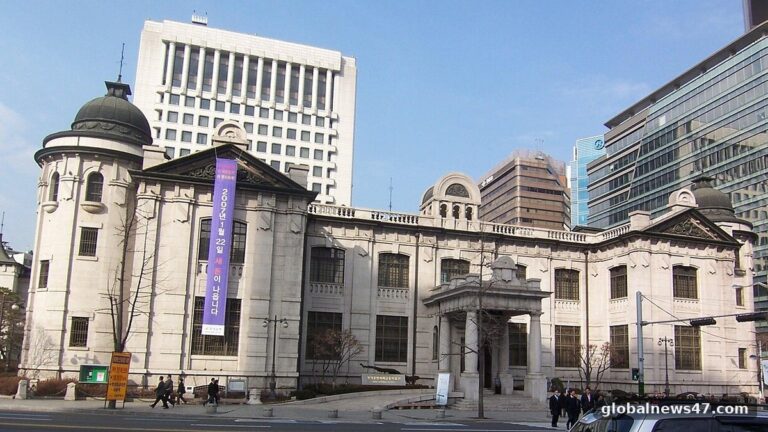

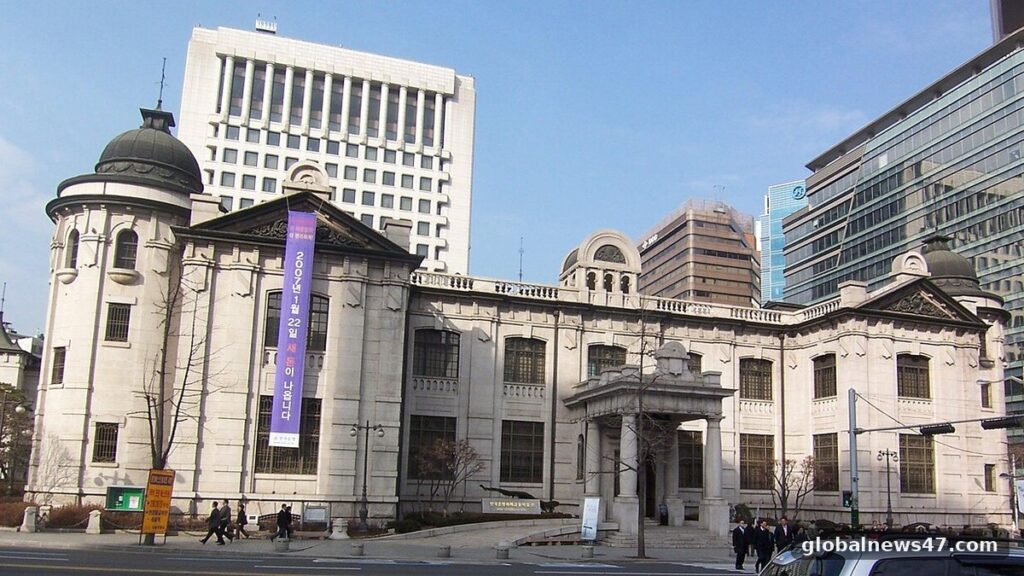
The Bank of Korea has raised its key interest rate by 0.25 percentage points to 3.25%, as a boom in AI chip exports drives South Korea’s fastest growth in years. The central bank announced the Bank of Korea rate hike on Thursday, 26 November 2026. It also sharply raised its growth forecasts for this year and next.
The move ends a pause in October, after rate rises in July and August. The new rate is the highest since October 2024, Yonhap news agency reported.
Why the Bank of Korea rate hike came now
The bank’s Monetary Policy Board pointed to two main reasons: strong growth and stubborn inflation. It said growth at home had “further strengthened”, while inflation would stay above target “for a considerable time”.
Consumer prices rose 2.8% in October from a year earlier. That is down slightly from 2.9% in September, but still well above the bank’s 2% target. Core inflation, which strips out food and energy, also rose to 2.8%.
Higher oil prices are part of the problem. Oil has stayed expensive because of the stand-off between Washington and Tehran. As a result, the bank expects inflation to “stay elevated for some time”, according to Al Jazeera.
Governor Shin Hyun-song described the hike as partly “preemptive” and partly a response to rising prices. He said prices should return to target around 2028.
Not everyone on the board agreed, however. Two of its members wanted to hold the rate at 3%: Hwang Kun-il and Lee Soo-hyung.
An AI chip boom lifts growth
South Korea is home to Samsung Electronics and SK Hynix, two of the world’s biggest memory chip makers. Together, they control about 80% of world supply of the high-bandwidth memory that AI systems use, according to Counterpoint Research.
Demand for these chips has sent exports soaring. In October, exports jumped 94% from a year earlier to $115.3bn. That followed a record $120.9bn in September. Meanwhile, total exports passed $1 trillion for the year last week, Yonhap reported.
Therefore, the bank raised its growth forecast for 2026 to 3.9%, up from 3.3% in August. For 2027, it now expects growth of 4.1%, compared with 2.9% before. Excluding the pandemic years, that would make 2026 the strongest year for the economy since 2010.
According to Shin, chip firms made roughly 700 trillion won in operating profit this year. He said that equals about a fifth of national income. Over time, he added, those profits should reach the rest of the economy via taxes and dividends.
What it means for markets and borrowers
Higher rates make loans more expensive for households and businesses. That can cool spending and help bring inflation down. On the other hand, it can also slow parts of the economy not linked to chips.
Markets took the decision calmly. Seoul’s Kospi index closed up 0.3% on Thursday after a tech-led sell-off the day before. In Tokyo, the Nikkei 225 rose 0.9%, while Taiwan’s Taiex gained 2.5%.
The board also signalled a slightly softer tone for the future. It dropped the word “pace” from its guidance. Now it says only that it will decide the “timing” of any further rises, while watching inflation, growth and financial stability.
Why it matters beyond Korea
South Korea’s chip boom is a clear sign of how AI spending is reshaping trade. Countries that supply the hardware behind AI are seeing big gains. By contrast, energy importers are still feeling the cost of the Middle East conflict.
For Pakistan and other emerging economies, the mix of high oil prices and tighter global money is worth watching. Earlier this month, we reported on a global tech stock sell-off over AI fears. For more, visit our Business section.
Sources & References
- Yonhap News Agency: BOK raises key rate to 3.25 pct amid strong growth, inflation, revises up 2027 forecast to 4.1 pct (26 Nov 2026)
- Al Jazeera: South Korea’s central bank hikes interest rates amid AI chip boom (26 Nov 2026)
- Bank of Korea Monetary Policy Board statement, as quoted by the outlets above