
Pakistan has a citizen in space for the first time. The Shenzhou-24 launch lifted off from the Jiuquan Satellite Launch Centre in north-western China at 5:18am Pakistan time on Wednesday, 25 November 2026. On board was Muhammad Zeeshan Ali, who is now the first Pakistani to travel to orbit.
China’s official news agency Xinhua called the launch “a complete success”. The spacecraft separated from its Long March-2F rocket and entered its planned orbit, the Associated Press reported. This report is accurate as of 6:30am PKT on 25 November.
How the Shenzhou-24 launch unfolded
The rocket left the pad at exactly 8:18am Beijing time (00:18 GMT), on schedule, Reuters said. A few minutes later, the capsule reached orbit.
Ali, 40, is flying as a payload specialist. Next to him are two Chinese astronauts. Tang Hongbo, 51, commands the mission, and Wu Yi, 39, is the flight engineer.
For Ali and Wu, this is a first trip to space. Tang, on the other hand, has flown twice before. National broadcaster CCTV said he will become the first person to board the Tiangong station three times, according to AP.
Hours before lift-off, crowds gathered at a send-off ceremony at the launch site. Many waved flags and held up phones to film the crew as they walked out. Planning Minister Ahsan Iqbal was among the Pakistani delegates present, Geo News reported.
A first for China’s space programme too
The flight is historic for Beijing as well. Never before has China flown its own astronauts together with a foreign crew member. In addition, Ali will be the first foreign astronaut to board Tiangong.
China is now promoting its station as a hub for international work, Reuters noted. That matters because the NASA-led International Space Station faces possible retirement by 2030.
What happens next in orbit
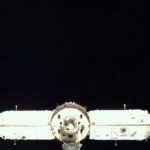
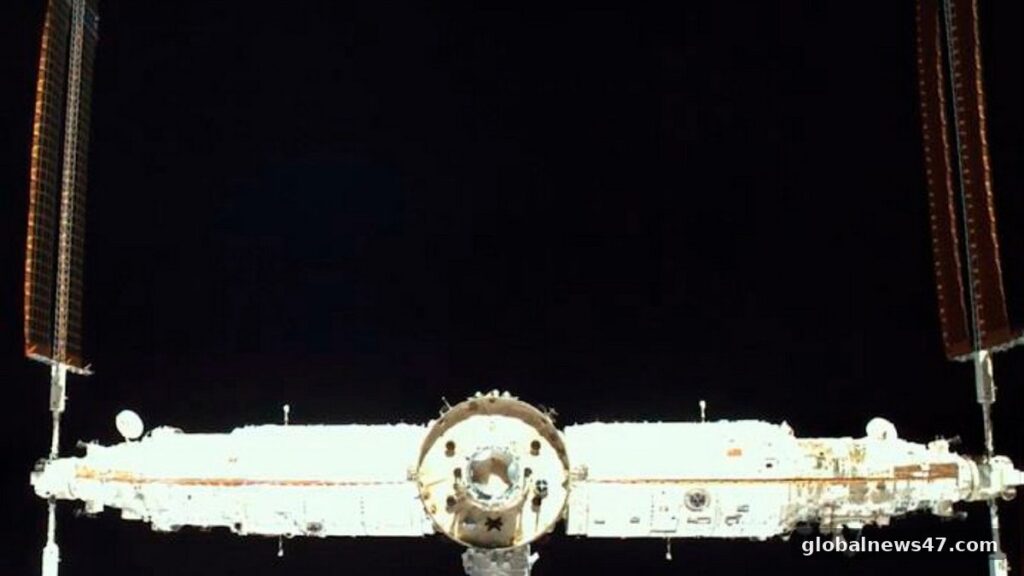
After reaching orbit, Shenzhou-24 is due to dock with the station’s Tianhe core module. Chinese officials said on Tuesday that the automatic approach should take about three and a half hours. As of this report, docking had not yet been confirmed.
Once on board, Ali will spend a short time at the station. SUPARCO, Pakistan’s space agency, has said about a week, while Reuters gave a range of five to 10 days. He will then fly home on the Shenzhou-23 spacecraft, which is already at Tiangong.
Ali’s main job is science. He will install four experiments designed in Pakistan, picked from over 300 ideas sent in by local universities and institutes. They focus on food security and climate resilience. For example, one studies how radiation affects quinoa seeds, while another tests materials that can repair themselves.
He will also run an experiment with photosynthetic cyanobacteria, Xinhua said. Overall, the three-person crew plans more than 90 experiments and technology tests during the mission.
Months of training in Beijing
Getting here took intense preparation. Ali trained for seven months in Beijing, Reuters reported. Alongside flight drills, he took heavy Chinese-language classes. He also learned Chinese songs, read poetry and practised calligraphy.
That effort showed at a news conference on Tuesday. Speaking in Mandarin, Ali quoted a line of Chinese poetry about climbing higher to see further. “It’s like my daily training. Day after day, reaching new heights,” he said, as reported by AP.
Tang admitted the joint crew had faced challenges. Differences in language, culture and psychology made teamwork harder at first, he said. Still, he added that both sides’ efforts were paying off.
Pride at home
In Pakistan, leaders marked the day with strong words. Before the launch, Prime Minister Shehbaz Sharif wrote on X that the friendship between the two nations was “surpassing the heights of the Himalayas in its journey to outer space”.
Meanwhile, President Asif Ali Zardari hailed it as a “landmark achievement” for the country. He hoped it would inspire young Pakistanis to pursue science with confidence.
Ali himself has framed the flight as bigger than one person. “I’m not flying for myself. I carry the name of Pakistan on my shoulder,” he told reporters on Tuesday.
Why this matters
The mission comes from an agreement Pakistan and China signed in February 2025. It moves Pakistan’s space work beyond satellites and robotic probes into human spaceflight.
Looking ahead, Ali has said he hopes for more joint flights, and even trips to the Moon and Mars. China, for its part, aims to land its own astronauts on the Moon by 2030.
For background on the crew and the experiments, read our earlier report: Pakistan’s first astronaut Zeeshan Ali set to fly to China’s Tiangong space station.
Sources & References
- Associated Press via KSAT: China launches Shenzhou 24 spacecraft carrying 2 Chinese and a Pakistani astronaut (25 Nov 2026)
- Reuters via Arab News: China’s Shenzhou-24 space flight takes off with Pakistani national as first foreign astronaut (25 Nov 2026)
- Xinhua: Launch of Shenzhou-24 crewed spaceship a complete success: official (25 Nov 2026)
- Geo News: Pakistan’s first astronaut Zeeshan Ali soars into space, taking nation’s dreams with him (25 Nov 2026)
- Al Jazeera: Pakistan’s Zeeshan Ali set for historic flight to China’s space station (24 Nov 2026, docking timing)