
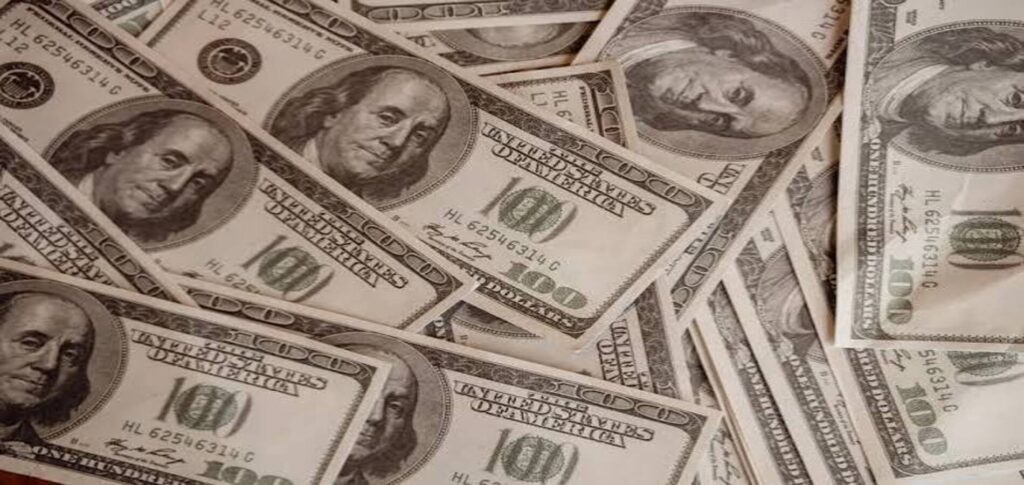
The dollar trading near multi-month lows on Monday as investors focused on rising government debt and long-term bond yields. Traders also awaited details of possible U.S. sanctions on Iran and key policy comments from officials in the United States and Japan.
The Canadian dollar fell 0.2% to C$1.3798 per U.S. dollar in early trading. The decline followed the collapse of trade talks between Canada and the United States. Washington has imposed 50% tariffs on Canadian goods, while Canada has responded with its own measures.
The Australian dollar traded near a three-month high at $0.7171. The New Zealand dollar also remained close to a three-month peak at $0.5979. The euro held above $1.16 at $1.1685, while the yen traded around 159 per dollar.
Dollar Trading Faces Pressure From Bond Markets
Recent U.S. economic data offered some support for the currency. Figures released Friday showed the strongest U.S. services growth in almost two years. The data helped slow dollar selling during early Monday trading.
However, the dollar trading remains under pressure from broader concerns about U.S. debt and bond yields. The currency suffered its largest weekly decline against bitcoin in almost three and a half years.
The dollar also fell sharply against gold. Investors worry that efforts to control long-term U.S. bond yields could weaken the currency further.
Long-term bond yields have climbed across several major economies. Strong economic growth, higher inflation expectations and rising government debt have all contributed to the increase.
Last week, U.S. 30-year Treasury yields reached their highest level in almost two decades. The U.S. Treasury then announced plans to double its long-term bond buybacks to $4 billion per operation.
The amount remains small compared with the roughly $32 trillion U.S. Treasury market. Still, the move sent a strong signal to investors and added pressure to the dollar.
Markets Await Iran Sanctions and Fed Signals
Investors are also watching developments involving Iran. U.S. Treasury Secretary Scott Bessent is due to hold a press conference after warning that Washington could impose some of its toughest sanctions on Iran.
Markets will focus on whether the United States targets China as part of the new measures. Iran’s foreign minister has dismissed the threat of additional sanctions as a sign of desperation.
Attention will then shift to Federal Reserve Chairman Kevin Warsh. He is scheduled to speak in Jackson Hole, Wyoming, on Friday.
Investors want clearer signals about the outlook for U.S. interest rates. Warsh could also face questions about the Treasury’s long-term bond buyback plans.
Yen and Dollar Outlook
Japanese monetary policy will provide another important focus this week. Bank of Japan Deputy Governor Ryozo Himino is scheduled to speak Thursday ahead of next month’s policy meeting.
Investors will look for signs that the central bank could move closer to another interest rate increase. Recent market pricing has pointed toward a faster pace of rate hikes.
A more hawkish message from Himino could put some downward pressure on the dollar against the yen. However, analysts say movements in the U.S. bond market could remain a more important factor for the currency pair.
For now, dollar trading remains sensitive to bond yields, government debt and central bank policy. Fresh comments from U.S. and Japanese officials could determine whether the currency extends its recent decline or finds support in the coming days.