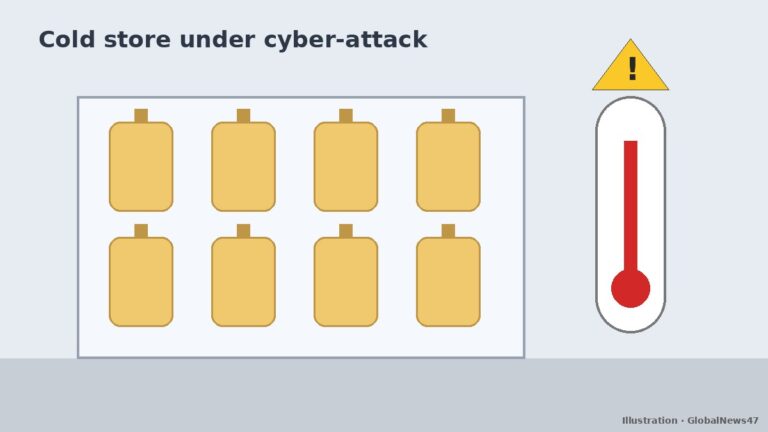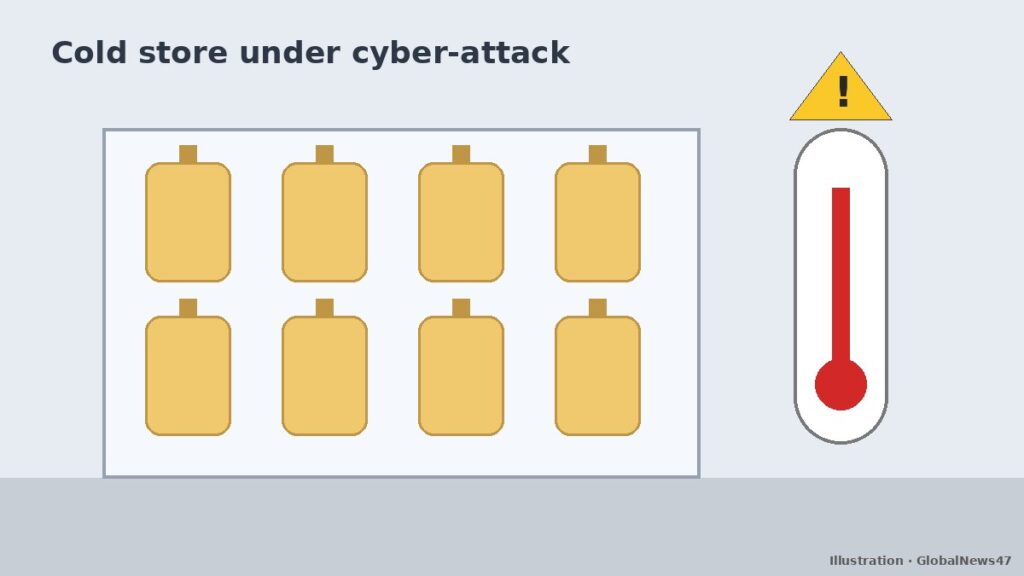
The French blood banks cyber-attack revealed this week has pushed Europe’s recent wave of hacks on cooling systems into the health sector. France’s national blood service, the EFS, said hackers pushed temperature and defrosting settings at three plasma storage rooms to “very high levels”. Alarms went off in time, and the service lost no blood products.
The EFS said the attack took place on Monday, November 2, and it made the incident public late on Tuesday. The service stressed that it was not directly targeted. As of Wednesday evening, nobody has claimed responsibility.
What happened in the French blood banks cyber-attack
The EFS is France’s public blood transfusion service. It collects and tests donations, then supplies more than 1,900 hospitals with blood, platelets and plasma. In total, it supports over a million patients a year, according to The Guardian.
However, the hackers did not break into the EFS’s own systems, the service said. Instead, they reached refrigeration equipment run by a contractor at three sites. Once inside, they changed the settings so the cold rooms would warm up.
Fortunately, monitoring and alarm systems spotted the changes quickly. Staff then moved or secured the stored products. These included plasma bags for transfusions and plasma used to make medicines.
“No health consequences have been identified and no blood products were lost,” the EFS said in a statement quoted by Euronews. Blood collection and supply to hospitals continued as normal.
The EFS alerted the health ministry and ANSSI, the national cybersecurity agency. Both are now looking into the incident, and the EFS says it has stepped up monitoring of all its equipment.
Part of a wider wave across Europe
Meanwhile, the incident follows a string of similar attacks this week. Hackers took remote control of fridges and freezers in supermarkets across several European countries, pushing temperatures as high as 50C, The Guardian reported. The damage to spoiled food runs into millions of euros.
On Monday, problems surfaced in Sweden, the Netherlands, Belgium, Luxembourg, Ireland, Finland and Estonia. Then, on Tuesday, the attacks reached shops in the UK, Germany, Italy and Romania. Last month, up to 700 French supermarkets had their cooling units taken over in an earlier wave.
Separately, a French bank also reported a cyber-attack on Wednesday. Crédit Mutuel Arkéa, based in Brittany, said the attack allowed some fraudulent transactions. However, it said customers would not lose any money. The bank has not confirmed a regional newspaper’s report that hackers stole €118 million, Euronews said. There is no public evidence so far linking the bank incident to the freezer attacks.
Who could be behind it?
Nobody knows the motive yet. The European Union says its agencies are holding urgent talks with national authorities on a joint response.
“These are not isolated incidents,” said EU spokesperson Thomas Regnier. Even so, he declined to name any possible culprits.
Some officials and experts fear state-backed “hybrid” attacks. Western intelligence officials have accused Russia of running a sabotage campaign in Europe since its 2022 invasion of Ukraine. Rafe Pilling of the security firm Sophos told The Guardian that a state showing off its capability, or a lone hacker, were the most plausible explanations. So far, nobody has confirmed either theory.
Why connected devices are a risk
More and more commercial equipment, from fridges to building systems, now connects to the internet, so staff can monitor and control it from afar. That saves time and money. On the other hand, it also creates openings for attackers when software is not kept up to date.
The EFS case shows why this matters. After all, shops can throw away spoiled food and order more. In other words, the loss there is mainly financial. Plasma and medicines, by contrast, are much harder to replace, and losing them could affect patients.
Therefore, for businesses everywhere, including in Pakistan, the lesson is simple. Remote-controlled equipment needs strong passwords, regular updates and alarms that a human can act on quickly.
Related on Global News 47: Supermarket Freezer Cyber-Attack Hits Stores in Nine European Countries · Binance Hack: Record $6.3bn Crypto Theft Linked to North Korea
Sources & References
- The Guardian: French blood banks hacked in latest cyber-attack on Europe
- Euronews: Cyberattack hits French blood banks but no samples compromised, officials say
- Euronews: French bank Crédit Mutuel Arkéa reports cyberattack, says customers face no losses
- Établissement français du sang (EFS), statement as reported by Euronews and The Guardian (original statement not accessed directly)