
Indian Ship Red Sea Attack has become the latest flashpoint in the growing security crisis in the Red Sea after an Indian-flagged commercial vessel sank near Yemen on Tuesday. Fortunately, all 14 crew members were rescued safely following the attack, while India strongly condemned the incident and called it an act of “unprovoked aggression.”
The attack comes as tensions continue to rise across one of the world’s busiest shipping routes. As a result, commercial vessels face increasing security threats.
Crew Rescued After Vessel Sinks
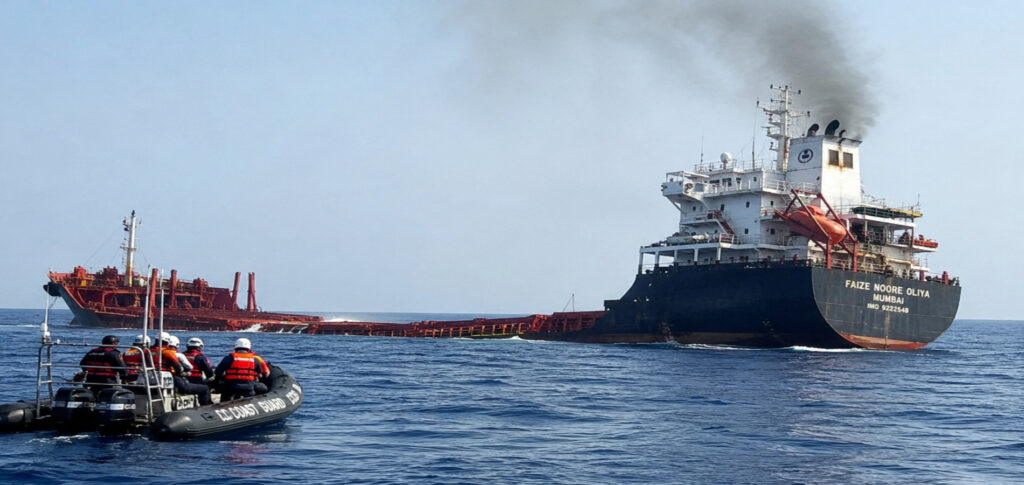
Local officials in the Yemeni port city of Mokha confirmed that coast guards rescued everyone aboard the MSV Faize Noore Oliya after the ship came under attack south of Hodeida.
The rescued crew included 13 Indian nationals and one Yemeni. Afterward, emergency teams brought them to safety before the vessel finally sank.
Thankfully, authorities have not reported any fatalities or serious injuries.
India Condemns the Attack
Indian Shipping Minister Sarbananda Sonowal confirmed the incident in a statement posted on X.
He said the vessel was struck by a projectile near Yemeni waters, causing severe damage before it eventually sank.
Following the attack, India condemned the incident and described it as an unacceptable act against a civilian commercial vessel operating in international waters.
Meanwhile, officials have not identified those responsible, and investigations remain ongoing.
Yemen Blames Houthi Rebels
Yemen’s internationally recognised government blamed the Iran-backed Houthi movement for the attack.
According to Yemen’s state-run Saba News Agency, officials accused the Houthis of targeting commercial shipping operating in the Red Sea.
However, the Houthis have not immediately commented on the latest accusations.
Red Sea Shipping Crisis Deepens
The incident follows the Houthis’ recent declaration of a Red Sea maritime blockade targeting Saudi Arabia.
Since then, the group has claimed responsibility for several attacks involving oil tankers and other commercial vessels operating in the region.
Consequently, the latest attack has increased concerns over the safety of international shipping passing through the Red Sea.
One of the World’s Most Important Trade Routes
The Red Sea remains one of the world’s most critical maritime corridors, linking Europe, Asia and the Middle East through the Suez Canal.
Every year, thousands of cargo ships use the route to transport oil, gas and manufactured goods.
Therefore, any disruption to commercial shipping can affect global trade, insurance costs and energy markets.
Security Concerns Continue to Grow
Maritime security experts have warned that repeated attacks on commercial vessels could force more shipping companies to reroute vessels around southern Africa.
If that happens, shipping companies would face significantly higher transportation costs and longer delivery times.
At the same time, governments across the region continue monitoring the security situation as military tensions remain high.
Investigation Continues
Authorities continue investigating the circumstances surrounding the sinking of the MSV Faize Noore Oliya.
Although all crew members escaped safely, the latest Indian Ship Red Sea Attack highlights the growing risks facing commercial shipping in one of the world’s busiest waterways.
Ultimately, international observers continue calling for stronger protection of civilian vessels as instability in the Red Sea threatens global maritime security.