

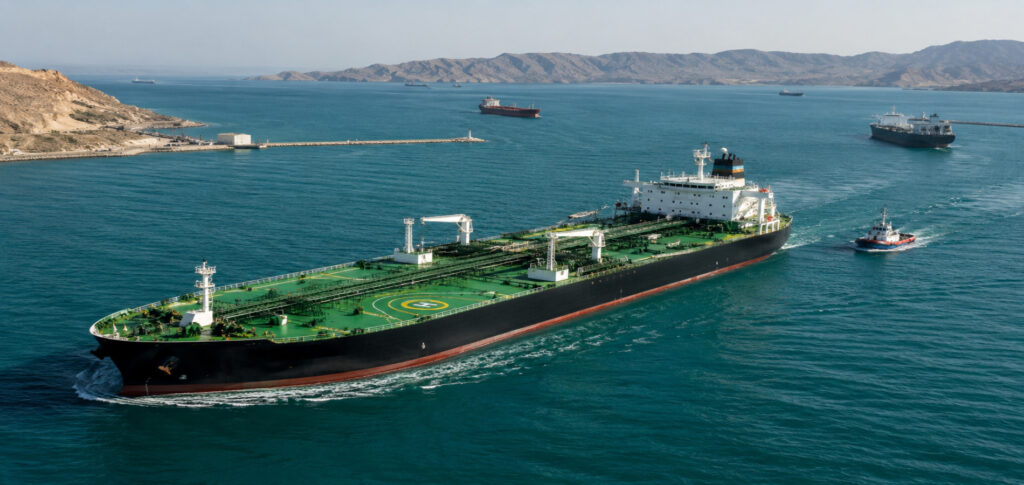
Iraq continued to move large volumes of crude oil through the Strait of Hormuz, with more than 30 million barrels passing through the strategic waterway in one month, according to data from maritime tracking company Kpler.
The figures highlight Iraq’s importance as a major Middle Eastern oil exporter despite ongoing regional tensions and disruptions affecting maritime trade.
Iraq Oil Exports Through Hormuz Stay Strong
Kpler reported that approximately 30 million barrels of Iraqi crude travelled through the Strait of Hormuz between July 4 and August 4.
Before recent tensions affected regional shipping, Iraq produced nearly four million barrels of oil per day. The country typically exported around 105 million barrels per month, with much of its crude leaving through the Basra oil terminal before passing through the Strait of Hormuz.
The latest data indicates that Iraq has continued maintaining substantial export flows through the critical energy corridor.
SOMO Confirms July Export Volumes
Ali Nizar, head of Iraq’s State Organization for Marketing of Oil (SOMO), said Iraq exported between 35.5 million and 37 million barrels through the Strait of Hormuz during July.
He also said approximately seven million barrels were transported through the Iraq-Türkiye pipeline to the Mediterranean port of Ceyhan.
The pipeline provides Iraq with an alternative export route that does not depend on the Strait of Hormuz.
Why the Strait of Hormuz Matters
The Strait of Hormuz remains one of the world’s most important routes for global energy shipments.
Millions of barrels of crude oil and other petroleum products pass through the narrow waterway each day. As a result, any prolonged disruption could affect oil prices, shipping costs and international energy markets.
Iraq is particularly dependent on the route because much of its crude exports originate in the country’s southern oil fields and leave through terminals around Basra.
Iraq Maintains Alternative Export Routes
While the Strait of Hormuz remains Iraq’s primary maritime export route, the Ceyhan pipeline provides an important alternative.
The northern route allows Iraqi crude to reach international markets through Türkiye’s Mediterranean coast. Maintaining multiple export options can help Baghdad reduce some of the risks associated with disruptions in the Gulf.
However, the majority of Iraq’s exports still depend on maritime routes through the Strait of Hormuz.
Iraq Oil Exports Support the Economy
Oil exports remain central to Iraq’s economy and government revenues. Maintaining stable production and reliable access to international markets is therefore a major priority for Baghdad.
Despite geopolitical uncertainty across the Middle East, the latest figures indicate that Iraq oil exports through Hormuz remain substantial.
If shipping routes stay open and production remains stable, Iraq is likely to continue playing a major role in global crude markets and OPEC’s overall supply.