
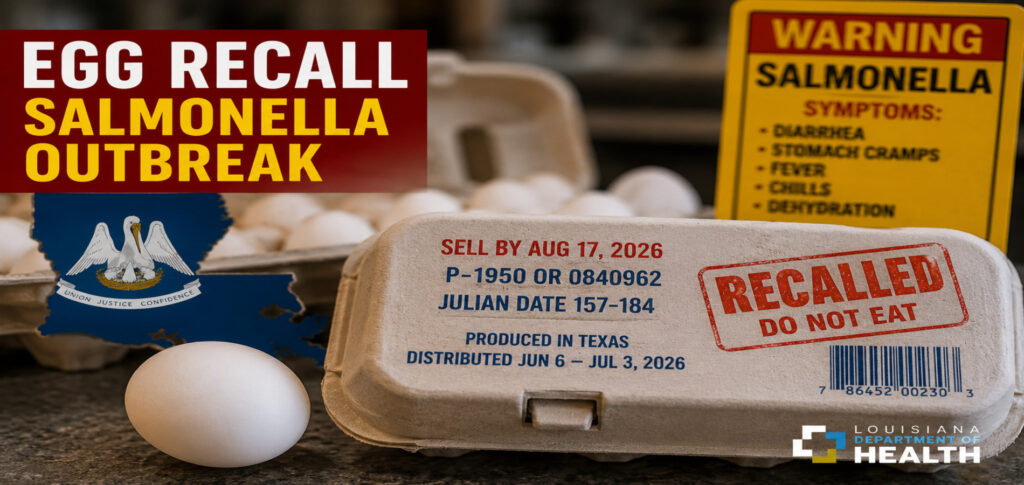
The Louisiana egg recall has prompted a public health warning after state officials confirmed multiple Salmonella infections linked to recalled shell eggs produced by Midwest Poultry Services. The Louisiana Department of Health (LDH) says at least seven people have become ill, while three required hospitalization. No deaths have been reported. Health officials urge consumers to check egg cartons immediately and avoid eating any affected products.
Louisiana Egg Recall: How to Check Your Cartons
Consumers should inspect the side or top of each egg carton for identifying information.
The recall covers eggs carrying plant or lot codes P-1950 or 0840962 with Julian dates between 157 and 184. The company produced the eggs in Texas and distributed them between June 6 and July 3, 2026.
Officials also advise checking the sell-by or best-by dates, which range from July 20 through August 17, 2026.
If your carton matches these details, do not eat or cook the eggs. Return them to the retailer for a full refund or dispose of them safely.
Louisiana Egg Recall: Salmonella Symptoms
Salmonella symptoms usually develop six hours to six days after someone eats contaminated food.
Common symptoms include:
-
- Diarrhea
-
- Stomach cramps
-
- Fever
-
- Chills
-
- Nausea or vomiting
- Dehydration, including dry mouth, dizziness, or reduced urination
Most healthy people recover without medical treatment. However, severe infections can require hospital care.
Who Is Most at Risk?
Health experts say the following groups face a greater risk of serious illness:
-
- Children younger than five
-
- Adults aged 65 and older
- People with weakened immune systems
Anyone who develops severe diarrhea, persistent fever, dehydration, or prolonged illness after eating eggs should seek medical care immediately.
Louisiana Egg Recall: What Consumers Should Do
Health officials continue to monitor the outbreak while working with federal food safety agencies to prevent additional illnesses.
The Louisiana egg recall remains active, and officials encourage residents to inspect egg cartons, follow the recall instructions, and avoid consuming affected products. They also recommend washing hands, kitchen surfaces, and utensils after handling raw eggs to reduce the risk of contamination.