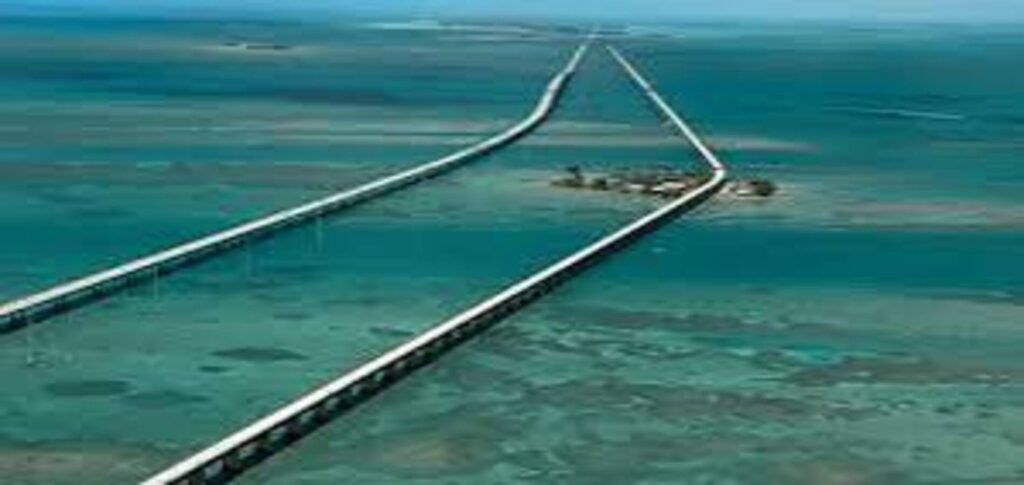
The Overseas Highway is one of America’s most breathtaking road trips, stretching 113 miles (182 kilometres) across the sparkling waters of the Florida Keys. Linking mainland Florida with the tropical island of Key West, the highway crosses 42 bridges and 44 islands, offering drivers an unforgettable journey that feels like floating across the ocean.
Today, millions of visitors travel this scenic route each year, but the highway’s origins tell an extraordinary story of engineering, determination and ambition.
From Impossible Dream to Engineering Marvel
Before the Overseas Highway existed, reaching Key West was a slow and often unpredictable journey by boat.
Everything changed in the early 1900s when American industrialist Henry Morrison Flagler envisioned a railway stretching across the ocean. Already famous for helping build Standard Oil alongside John D. Rockefeller, Flagler believed Key West could become one of America’s most important ports because of its proximity to the Panama Canal.
Despite widespread criticism, he pushed ahead with the ambitious project.
Construction began in 1905 and took seven years to complete. More than 4,000 workers battled hurricanes, dangerous wildlife and harsh weather while building what many called “Flagler’s Folly.”
When the Over-Sea Railroad finally opened in 1912, it was celebrated as the “Eighth Wonder of the World.”
How the Railroad Became a Highway
The historic railway operated until 1935, when a devastating hurricane destroyed large sections of the track.
Instead of rebuilding the railway, engineers transformed many of Flagler’s original bridges into a highway for automobiles. By paving over the old rail line, they created today’s Overseas Highway, officially opening it in 1938.
Many of the original railroad bridges remain standing, allowing modern travellers to drive along one of the world’s longest overwater highways.
A Journey Across Crystal-Clear Waters
Driving the Overseas Highway feels unlike any other road trip.
The route winds across turquoise channels, coral islands and mangrove forests where dolphins, sea turtles and seabirds are frequently spotted alongside the road.
Among its most famous sections is the Seven Mile Bridge, one of the longest bridges in the world when it was completed. The original bridge now serves as a pedestrian and cycling route, offering spectacular panoramic views over the Atlantic Ocean and Gulf of Mexico.
Must-Visit Stops Along the Route
The Overseas Highway offers far more than scenic driving.
Key Largo
Known as the “Diving Capital of the World,” Key Largo is home to North America’s only living coral reef. Visitors can snorkel among colourful marine life or explore the famous underwater Christ of the Deep statue.
Islamorada
This peaceful island community features the Keys History & Discovery Center, where visitors can learn about the remarkable construction of Flagler’s railroad and the history of the Florida Keys.
Pigeon Key
Located beneath the original Seven Mile Bridge, Pigeon Key once housed hundreds of railway workers. Today it is a National Historic Landmark where visitors can tour preserved buildings and discover what life was like during construction.
Key West
The highway ends at iconic Key West, America’s southernmost city. Visitors can explore historic streets, visit the Ernest Hemingway Home or stop at the Sails to Rails Museum, which tells the complete story of the Overseas Railroad and its lasting impact on Florida.
A Road That Changed Florida Forever
Historians believe the Overseas Highway permanently transformed the Florida Keys by connecting the islands to mainland America.
The route boosted trade, encouraged tourism and helped turn Key West into one of the country’s most famous coastal destinations.
More than a century after Henry Flagler first imagined a railway stretching across the sea, travellers continue to experience one of the world’s greatest coastal drives—a highway that remains both an engineering masterpiece and one of America’s most unforgettable journeys.