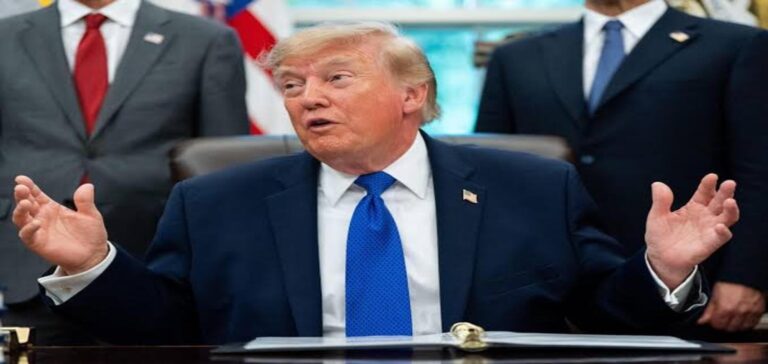


US President Donald Trump has threatened to sharply increase tariffs on Canadian automobiles, adding fresh pressure to an already tense trade relationship between the two North American neighbors.
Trump said tariffs on Canadian cars, trucks, automotive parts and steel could rise to 50 percent from January 1, 2027.
He announced the planned increase Monday on his Truth Social platform.
The move could further disrupt the automotive industry and intensify concerns about higher costs for manufacturers, businesses and consumers on both sides of the border.
Trump Announces Higher Tariffs on Canadian Vehicles
Trump said the new tariffs would cover vehicles of all sizes, as well as automotive parts and steel.
The current US tariff on Canadian automobiles stands at 25 percent on the non-US content of vehicles. Imported steel, meanwhile, generally faces a 50-percent US duty.
If Trump’s latest proposal takes effect, the additional tariffs could put significant pressure on Canada’s automobile sector.
The announcement also signals that Washington is prepared to take a tougher position as trade negotiations with Ottawa continue to stall.
US and Canada Fail to Reach Trade Agreement
The latest escalation follows unsuccessful negotiations between the United States and Canada.
Officials from both countries held extended discussions last week in an effort to prevent new US tariffs on selected Canadian products. However, the talks ended without an agreement.
The United States subsequently imposed new 50-percent tariffs on certain Canadian goods.
The latest duties affect about 5.5 percent of Canadian products entering the US market. The value of those goods is estimated at around $20 billion and includes products such as hockey sticks and cement.
Canada Announces Retaliatory Tariffs
Canadian Prime Minister Mark Carney has responded with tariffs of his own.
Canada plans to target several US industries, including steel and dairy. The measures will also affect agricultural equipment, pulp and paper products and electronics.
The Canadian tariffs are scheduled to take effect on September 8.
Carney said Canada had walked away from what he described as a bad deal. His government has also suspended trade discussions with Washington.
Washington Says Canada Was Offered Concessions
US Trade Representative Jamieson Greer said the Trump administration had offered several concessions during the negotiations.
According to Greer, Washington was prepared to eliminate a 10-percent tariff on Canadian softwood lumber and reduce the existing 25-percent tariff on automobiles.
The US administration was also willing to lower steel tariffs from 50 percent to 25 percent for most Canadian steel, Greer said.
Despite those proposals, negotiators failed to reach an agreement.
Trump Says Canada Needs the United States
Trump has taken an increasingly aggressive tone toward Canada during the dispute.
On Monday, he accused Canada of taking advantage of the United States for years. He also argued that Washington does not need Canada and claimed that Canada depends more heavily on the US market.
His latest comments could make an immediate return to negotiations more difficult.
Canadian officials, however, have continued to emphasize the importance of protecting the country’s economic interests.
USMCA Adds Another Challenge
The tariff dispute is unfolding alongside negotiations over the future of the US-Mexico-Canada Agreement (USMCA).
The trade pact governs much of the economic relationship between the three North American countries. Trump has previously indicated that he does not want to simply renew the agreement in its existing form.
As a result, Washington and Ottawa face a broader challenge beyond the current tariff battle.
The automotive industry could become one of the most important areas of disagreement as both governments consider changes to the regional trade framework.
Political Tensions Are Also Rising
Trade disputes have already damaged relations between the United States and Canada.
Trump’s repeated suggestions that Canada could become the 51st US state have also angered many Canadians.
The combination of higher tariffs, retaliatory measures and political rhetoric has created an increasingly difficult environment for businesses operating across the border.
For now, neither side appears to have found a clear path toward resolving the dispute.
What Comes Next?
The proposed Trump Canada auto tariffs would represent a major increase in costs for vehicles and automotive components traded between the two countries.
With Canadian retaliation already planned and further USMCA negotiations ahead, businesses are watching closely for signs of another round of talks.
Unless Washington and Ottawa return to negotiations, the escalating tariffs could place additional pressure on one of the world’s most closely integrated trading relationships.