
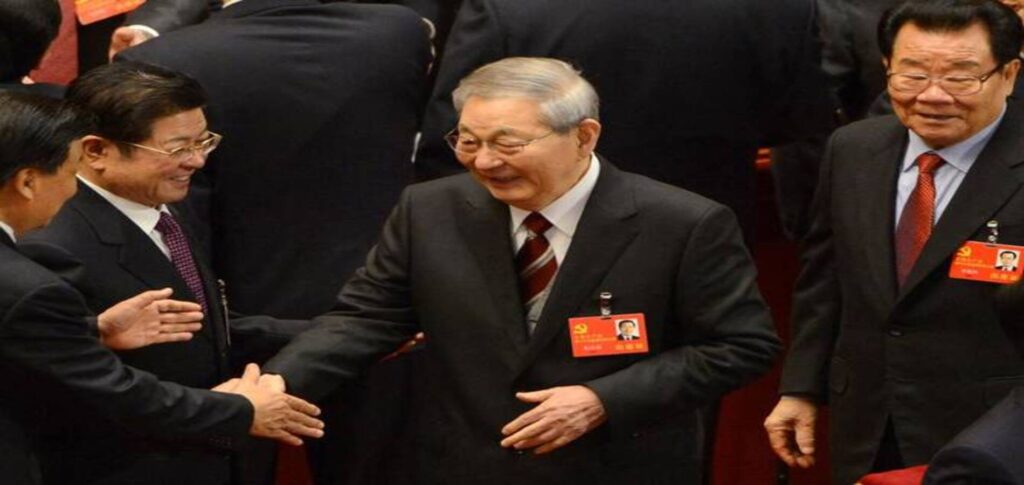
Former Chinese premier Zhu Rongji has died at the age of 98, closing the career of one of the country’s most influential economic reformers. China’s state news agency Xinhua reported that Zhu died in Beijing on Wednesday after medical treatment failed to save him.
Zhu served as China’s premier from 1998 to 2003 and became closely associated with market-oriented reforms that reshaped the country’s economy and strengthened its integration with global markets.
Zhu Rongji Led Major Economic Reforms
During his time as premier, Zhu pursued sweeping economic reforms.
His government restructured struggling state-owned enterprises and promoted reforms that reduced the role of inefficient state companies. He also supported urban housing reform, helping accelerate the development of private home ownership.
The changes contributed to China’s rapid economic transformation, although they also produced significant social disruption and contributed to widening inequality.
China’s Property Market Expanded Rapidly
Housing reforms during Zhu’s era helped accelerate China’s property and construction boom.
The real estate sector eventually became a major component of the Chinese economy. However, decades of rapid expansion also produced significant levels of corporate and household debt.
The property crisis that emerged years later exposed some of the vulnerabilities that developed during China’s long period of construction-led growth.
Nevertheless, Zhu’s supporters credit his reforms with helping modernize the economy during a crucial period of development.
Zhu Helped China Navigate the Asian Financial Crisis
Zhu also played an important role during the 1997 Asian financial crisis.
China avoided the severe financial turmoil experienced by several neighbouring economies, while Beijing maintained economic stability and continued pursuing reforms.
His handling of the crisis strengthened his reputation as a pragmatic and disciplined economic policymaker.
China Joined the WTO Under Zhu’s Leadership
One of Zhu’s most significant achievements came in 2001, when China joined the World Trade Organization.
Zhu played an important role in the negotiations surrounding China’s accession.
WTO membership accelerated China’s integration into international trade and investment networks. It also helped create conditions for the country’s emergence as a global manufacturing and trading powerhouse.
Zhu’s Reform Era Left a Complicated Legacy
Zhu Rongji’s economic legacy remains complex.
His government pushed China further toward a market-oriented economy and helped establish the foundations for decades of rapid growth.
At the same time, the reforms brought substantial changes to employment, housing and wealth distribution.
Later governments under President Xi Jinping adopted a different economic emphasis, placing greater attention on state oversight, financial stability and what Beijing describes as more balanced development.
China Pays Tribute to Former Premier
Following Zhu’s death, China’s official institutions described him as an important Communist Party leader who made significant contributions to the country.
His death has also prompted widespread discussion among Chinese internet users, with many remembering his reputation as a tough and direct economic policymaker.
For many Chinese citizens, Zhu remains associated with a pivotal period when China was rapidly opening its economy and becoming increasingly connected to the global market.
Zhu Rongji Leaves Lasting Economic Legacy
Zhu Rongji leaves behind a complicated but highly consequential legacy.
His reforms transformed state-owned industries, accelerated housing-market development and helped prepare China for deeper participation in global trade.
His role in China’s WTO accession was particularly important, helping establish the country as a central player in the international economy.
Zhu Rongji’s death marks the end of an era for one of China’s most influential economic reformers.