

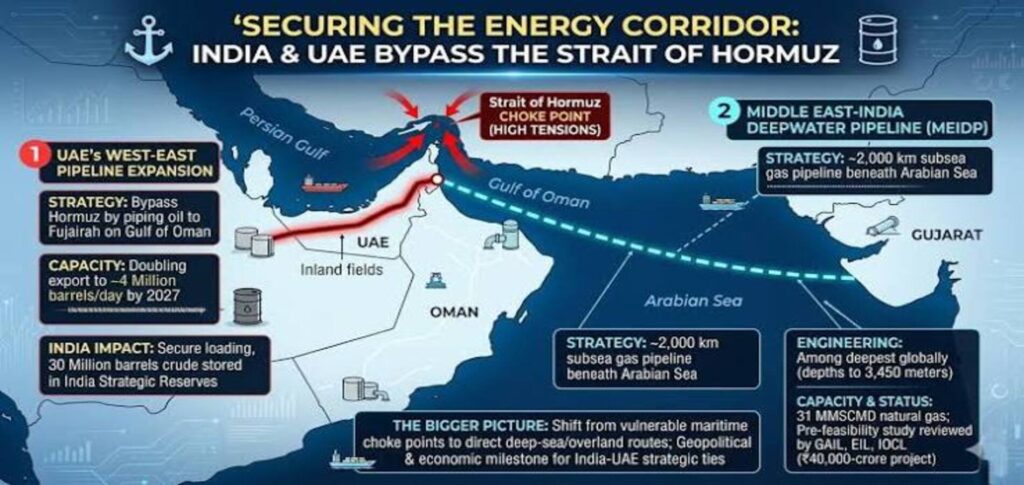
Engineers India Middle East business could gain from new energy infrastructure projects planned by Gulf countries to reduce their reliance on the Strait of Hormuz.
Engineers India Chairman Atul Gupta said the company is already discussing projects with the United Arab Emirates and Saudi Arabia. The plans include pipelines, oil terminals and marine infrastructure that could provide alternative routes for energy exports.
The Strait of Hormuz has faced major disruption during the Iran war. As a result, Gulf energy producers are exploring ways to keep oil and other energy supplies moving if the strategic waterway remains difficult to use.
Middle East orders have slowed
Gupta said Engineers India has seen a slowdown in new orders from the region during the conflict. However, he also sees fresh opportunities as Middle Eastern countries plan infrastructure upgrades.
“There has been a slowdown in order inflows from the region,” Gupta said. He added that the conflict had opened new opportunities for the company.
Engineers India currently has an order book worth about 170 billion rupees, or roughly $1.77 billion. Gupta expects that figure to increase as conditions in the Middle East improve.
The company therefore sees the current disruption as both a challenge and a potential source of future projects.
UAE plans more oil storage
The United Arab Emirates also plans to expand energy infrastructure at Fujairah, according to Gupta. The country is considering additional underground oil storage facilities in the area.
Fujairah sits outside the Strait of Hormuz and serves as an important hub for energy storage and shipping. New facilities could help Gulf producers build more flexibility into their supply networks.
At the same time, regional infrastructure projects could create opportunities for engineering and consultancy companies such as Engineers India.
Saudi Arabia and UAE remain key markets
Engineers India has already strengthened its presence in the Gulf. The company opened an office in Saudi Arabia in February and also operates a branch in the UAE.
That regional presence could help the state-run company compete for new energy projects. However, the timing of major investments will depend on security conditions and the wider Middle East situation.
For now, Engineers India continues to monitor opportunities in Saudi Arabia and the UAE. The company expects infrastructure spending to increase as the region works to reduce its exposure to disruptions around Hormuz.
The Strait remains a critical energy route, but recent disruption has encouraged Gulf producers to consider alternative infrastructure. That shift could create new business opportunities for Engineers India in the years ahead.