
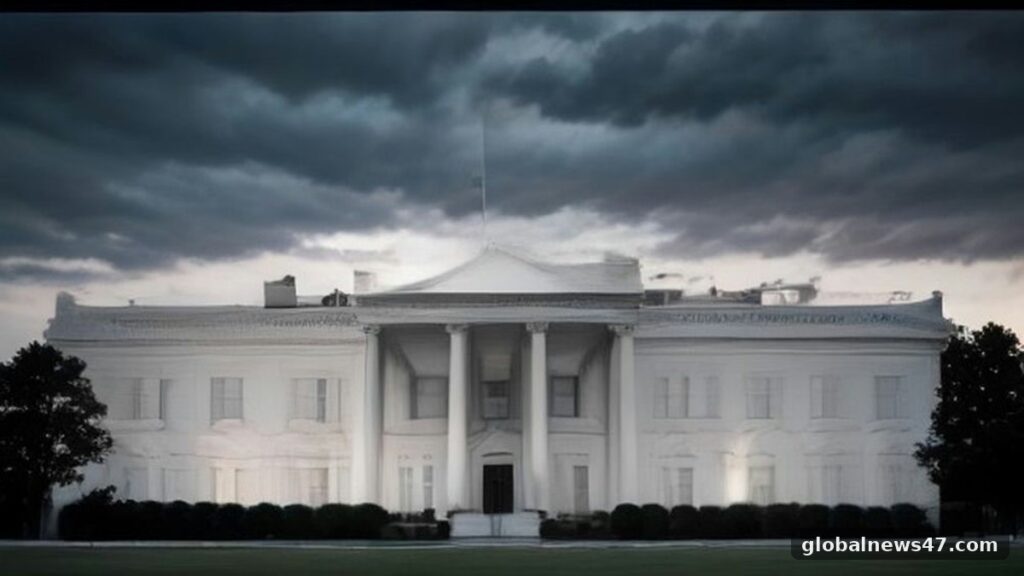
Trump pulls Vance from Iran talks and says the United States no longer needs a deal with Tehran. The president made the announcement on Truth Social on Thursday, 12 November 2026. He told Vice President JD Vance, who had led the negotiations, to focus instead on what Trump called crime and corruption in places run by Democrats.
“We don’t need a deal with Iran,” Trump wrote. “Those days have long since passed.” He added: “We’ve got their money, Hundreds of Billions of Dollars, and we’ve got their Strait!”
The move marks a sharp turn from recent weeks. Only days earlier, Trump had suggested Iran might be more willing to deal after the US elections.
Why Trump pulls Vance from Iran talks now
The timing is closely tied to last week’s midterm elections. Republicans suffered heavy losses on 3 November. Democrats will hold more than 250 House seats in January and at least 55 in the Senate, according to Roll Call.
The day after the vote, Vance publicly blamed the conflict. “The reason we lost is the war,” he wrote on social media. Trump later said he agreed with that view. Still, he added that he would make the same decision again on joining Israel in striking Iran.
Meanwhile, on Wednesday, The Wall Street Journal said Vance was weighing face-to-face talks with a senior Iranian security official. Trump’s directive came the following day. Vance’s office did not respond to requests for comment, ABC Australia reported.
Polls also show the war has become a political burden. A Reuters/Ipsos survey released this week found that 71% of Americans would back a bill to end the conflict. Even among Republicans, 51% supported such a law.
Iran holds firm on its demands
Tehran has given no sign of softening. Hossein Taeb heads Iran’s Basij force. He said Tehran would “decide on the manner and agenda of any negotiations” only after its conditions are met, CBS News reported. Their conditions include lifting the US naval blockade, releasing frozen assets and easing oil sanctions. Washington, by contrast, wants Iran to give up its enriched uranium stockpile first.
Iranian officials have also dismissed Trump’s claims about seized funds and control of the Strait of Hormuz as false. In fact, the waterway remains contested and dangerous for merchant ships.
On the same day, Iran’s Revolutionary Guards claimed that two oil tankers “exploded” in the strait late on Wednesday. They said the ships had ignored warnings and used an “unauthorized” route. Anadolu Agency, which carried the claim, cited no independent confirmation, and the vessels were not named.
Israel prepares as tension rises
The shift in Washington comes as Israel signals readiness for new action. Israel’s security cabinet told the military on Wednesday evening to get ready for a possible strike on Iran, according to Israeli media.
Iran responded with a stark warning. Mohsen Rezaei, secretary of Iran’s Supreme National Security Council, said any base involved in a new attack would be a target. “No safe distance. No safe haven. No immunity,” he wrote.
Israeli opposition leader Gadi Eisenkot, who has been asked to form the next government, urged caution. He called on caretaker Prime Minister Benjamin Netanyahu not to deploy forces “without a direct and immediate threat.”
What it means for the war and oil
The conflict began in February with US airstrikes. Since then, it has killed 23 US service members and disrupted Middle East oil supplies, according to reporting carried by Yahoo News. A tentative peace deal brokered with Vance’s help in June later collapsed.
Trump has argued that the US blockade and sanctions are working. On 9 November, he said Iran “militarily, is effectively over.” Even so, it is not yet clear whether all contacts with Tehran have formally ended.
For energy markets, the uncertainty matters. Global oil prices are still more than 40% higher than before the war began, according to CBS News. Consequently, fuel-importing countries, including Pakistan, will be watching closely.
For now, the path forward looks less like diplomacy and more like pressure. Whether that brings Iran back to the table, or pushes the region closer to a wider war, remains the key question.
Related on Global News 47: Trump Meets Qatar’s PM on Iran War Talks · Hormuz Tanker on Fire After Hitting Mine · Eisenkot Asked to Form Israel’s Government
Sources & References
- Roll Call: Trump says no Iran deal needed after conflict drove GOP’s midterm losses
- ABC News (Australia): Trump says US does not ‘need’ Iran deal and tells Vance to focus on Democratic fraud
- Yahoo News: Trump says deal with Iran not needed, pulls Vance off negotiations
- Al Jazeera: Iran warns of expanded retaliation as Israel reportedly readies to attack
- CBS News: Live updates: Trump says “we don’t need a deal with Iran,” as Tehran sticks to its demands
- Anadolu Agency: Iran’s Revolutionary Guard says 2 oil tankers exploded in Strait of Hormuz