
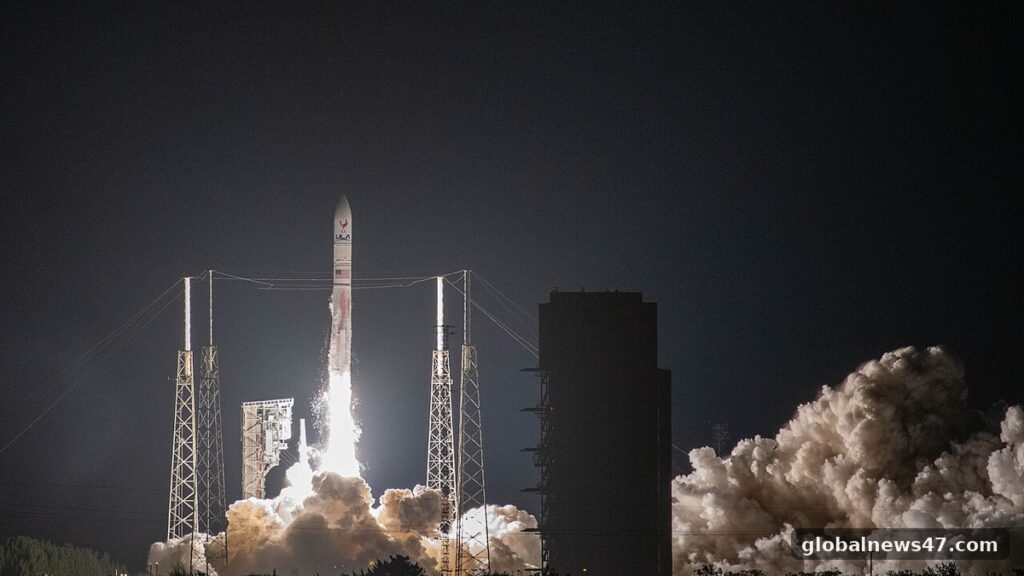
A United Launch Alliance (ULA) Vulcan rocket failed to reach orbit on Sunday, 15 November 2026, destroying 40 Amazon Leo internet satellites. The Vulcan rocket failure is the first outright mission loss for ULA since the company was formed in 2006.
ULA, a joint venture of Boeing and Lockheed Martin, said it did not yet know what went wrong. An investigation is expected to keep Vulcan grounded for months, Reuters reported.
How the Vulcan rocket failure happened
The rocket lifted off from Space Launch Complex 41 at Cape Canaveral Space Force Station in Florida at 12:40pm ET. That was 10:40pm in Pakistan. At first, the flight looked normal. Its six Northrop Grumman strap-on boosters burned out after about one minute and 40 seconds, CBS News reported.
However, the first stage’s BE-4 engines appeared to fire for longer than planned. As a result, stage separation came later than expected. The Centaur upper stage was then due to fire for 12 minutes and 15 seconds.
About 10 minutes into the flight, something went wrong. Telemetry showed the Centaur making unusual changes to its orientation early in its burn. ULA later said the rocket “failed to deliver the Amazon mission to orbit.”
The company gave few details. “We don’t have any specific data yet to understand what occurred today,” ULA said, according to Reuters. It promised to work with its customer to find the cause and to return to flight “as quickly as possible.”
A difficult road to launch
The mission, called LV-01, had already faced several delays. A gas nitrogen plant outage forced a scrub on Friday. Then, on Saturday, network problems pushed the launch back again.
On Sunday, the countdown also paused at 20 seconds before liftoff for an unexplained technical issue. It is not yet known whether that hold played any part in the failure.
This was only the fifth Vulcan flight and its first in nine months. Two earlier flights, in 2024 and February 2026, suffered problems with booster nozzles. In February, the rocket still reached orbit, but the issue kept it grounded until now. ULA chief executive Mark Peller had said three likely causes were fixed before this launch.
What it means for Amazon Leo
The loss is a serious setback for Amazon’s satellite internet plans. Amazon Leo is meant to compete with SpaceX’s Starlink, which already has more than 11,000 satellites in orbit.
By contrast, Amazon has put close to 400 Leo satellites into space since 2025. That is only around 12 per cent of the more than 3,200 it needs for global coverage, according to Reuters.
Amazon has also bought 38 Vulcan launches, CBS News reported. It has booked rides on other rockets too, including Blue Origin’s New Glenn, Europe’s Ariane 6 and SpaceX’s Falcon 9. Even so, a long Vulcan grounding could slow its rollout.
Amazon took a calm tone in public. “There is risk with any launch, and that’s especially true for inaugural missions like LV-01,” Amazon Leo said on X. Meanwhile, NASA Administrator Jared Isaacman offered to help with the investigation.
Wider impact on US launches
The failure could also add to a bottleneck in US launches. Reuters reported that the Pentagon had been waiting on this mission before approving Vulcan for more national security payloads.
In addition, attention is likely to turn to the BE-4 engines, which Blue Origin builds. These engines also power Blue Origin’s own New Glenn rocket. That rocket has been grounded since an explosion on its launch pad.
Blue Origin had retrofitted the BE-4 engines on this Vulcan to fix a valve problem, CBS News said. So far, however, there is no evidence that the engines caused Sunday’s failure. Investigators will need to study the flight data first.
What happens next
ULA now faces a lengthy technical review. Amazon had hoped a second Vulcan mission could follow within weeks. Instead, that timeline now depends on what investigators find.
For now, the cause remains unknown. As of Monday evening, 16 November (PKT), ULA had not released any findings.
Related on Global News 47: Google AI Chips in Space: SpaceX Launch Set for October · Tesla to Wind Down Cybertruck Production in 2027
Sources & References
- CBS News: United Launch Alliance loses Vulcan rocket and 40 Amazon Leo internet satellites in launch mishap
- The Express Tribune (Reuters): Rocket from Boeing-Lockheed firm fails mid-flight, destroys payload of Amazon satellites
- Spaceflight Now: ULA delays to Sunday Vulcan rocket launch of 40 Leo satellites for Amazon