
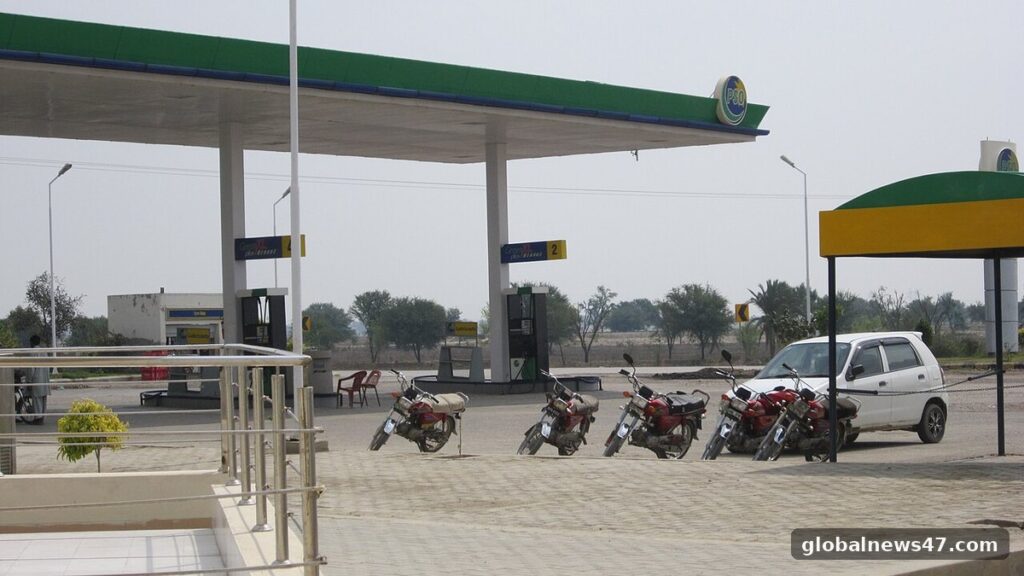
The petrol price in Pakistan has fallen by Rs2 a litre to Rs328 from Tuesday, 17 November 2026. High-speed diesel has also been cut by Rs2, to Rs358 a litre, according to a notification from the Oil and Gas Regulatory Authority (Ogra).
The new rates were announced late on Monday night and apply across the country. Daily Times described it as the tenth straight cut in fuel prices.
New petrol price in Pakistan at a glance
- Petrol: Rs328 per litre, down from Rs330
- High-speed diesel: Rs358 per litre, down from Rs360
- Effective: 17 November 2026
The cut is small, but it adds to a steady run of relief. Earlier this month, petrol stood at Rs338 a litre, as we reported in our story on the Rs338 petrol price. A few days ago it was reduced to Rs330, while diesel was left unchanged at that time.
How far prices have come down
To understand the cut, it helps to look back at the start of the war in the Middle East. The US-Iran conflict began on 28 February 2026. Before that, petrol cost about Rs266 a litre and diesel about Rs281, according to Daily Times.
Prices then shot up as oil markets panicked. On 3 April, petrol peaked at Rs458.41 a litre and diesel at Rs520.35.
Since then, the picture has improved a lot. By our calculation, petrol is now about Rs130 a litre, or roughly 28 per cent, cheaper than its April peak. Diesel has dropped by about Rs162, or around 31 per cent.
Even so, fuel is still far more expensive than before the war. Petrol remains about Rs62 a litre above its pre-war level, while diesel is still about Rs77 higher.
Why prices are falling
Ogra’s notification did not give a detailed reason for the latest change. However, global oil prices have eased. Daily Pakistan reported Brent crude at about $93 a barrel, down $2.75, when the cut was announced.
Government measures also play a part. Under an arrangement announced on 2 November for 30 days, refineries agreed to absorb a combined Rs15 billion impact on the petroleum levy, Daily Times reported. The government said this would allow a Rs14.71 reduction in the consumer price of petrol.
Meanwhile, taxes remain heavy. The government still collects about Rs114 a litre in taxes and duties on petrol and about Rs100 a litre on diesel, according to Daily Times. That means a large share of every litre still goes to the treasury.
What it means for households and transport
For a motorcyclist who buys 20 litres of petrol a month, the latest cut saves about Rs40. That is modest on its own. Taken together, though, the series of cuts has brought meaningful relief since April.
Diesel matters even more for the wider economy. It powers trucks, buses, tractors and many generators. Therefore, lower diesel prices can slowly ease transport fares and the cost of moving food and goods.
Whether that relief reaches consumers is another question. In the past, transporters have often been slow to cut fares after fuel price reductions. Provincial governments may again need to step in.
Other support measures are still in place. The Prime Minister’s Fuel Relief Scheme, launched on 17 September, covers owners of motorcycles, rickshaws and cars up to 800cc. In addition, austerity steps include closing markets by 9pm and cutting fuel allowances for official vehicles by half for three months.
What to watch next
Recent price changes have come only days apart. As a result, the next revision could also come soon.
The direction will depend mostly on global oil prices and the exchange rate. Tension in the Gulf remains a major risk. Any new disruption in the Strait of Hormuz or the Red Sea could push crude prices up again.
For now, the petrol price in Pakistan stands at Rs328 a litre, and diesel at Rs358.
Sources & References
- Daily Pakistan – Petrol price drops to Rs328, diesel to Rs358 in fresh fuel price cut
- Daily Times – Petrol and diesel prices slashed by Rs 2 per litre