African languages are gaining fresh attention as young people across the continent and abroad reconnect with their heritage. From online classes to television shows, a new generation is finding creative ways to learn languages that colonial-era systems pushed into the background.
In Lagos, Nigeria, one television game show has a simple rule: contestants must not speak English. For Tomi Adeshokan, a U.S.-based millennial learning Yoruba, the unusual format offers both entertainment and a chance to strengthen her connection with her family’s culture.
Thousands of miles away, 15-year-old Nyashadzashe Machingura is learning Shona from a teacher in Zimbabwe. The teenager lives in Canada but has become increasingly determined to speak the language of her parents and communicate more easily with relatives.
During a recent lesson, she greeted her teacher with “Mhoroi,” a traditional Shona greeting. Her Canadian accent was noticeable, but her growing confidence was clear.
Young Africans Reconnect With Their Roots
Africa is home to more than 1 billion people and roughly one-third of the world’s languages. UNESCO estimates that between 1,500 and 3,000 languages are spoken across the continent’s 54 countries.
However, many African languages have long struggled for recognition. English, French and Portuguese became dominant in education, government and business across many countries.
Now, social media and online learning are helping change that. Entertainment platforms are also giving young people new opportunities to hear and use their ancestral languages.
For Nyashadzashe, learning Shona has already changed her relationship with her family. She said she once felt excluded when relatives spoke the language around her.
She could enjoy Zimbabwean food and wear traditional clothing. Yet, she still felt disconnected because she could not understand conversations around her.
That is beginning to change. Her conversations with her grandparents in Zimbabwe have become longer, and she says speaking Shona has made her feel proud of her heritage.
Online Lessons Create New Opportunities
The renewed interest is also creating business opportunities.
Shungu Chidovi, a Zimbabwe-based language teacher, left her banking career in January to work full time on ZimbOriginal. Her online platform teaches Shona through storytelling, book clubs and language exchanges.
She now teaches about two dozen students in several countries. Her learners include people in Zimbabwe, Canada, Australia, South Africa, Ireland and Scotland. The service costs about $50 a month.
The idea began with a blog. Chidovi started writing about Zimbabwean traditions in 2016. Readers soon began asking whether she offered Shona lessons.
At first, she did not realize how closely her writing connected to the language. Eventually, however, the growing interest showed her that people wanted more than cultural stories. They wanted a way to speak the language themselves.
African Languages Face a Digital Challenge
Despite the growing interest, major obstacles remain.
In many African countries, Western languages still dominate education, government and commerce. Linguistics lecturer Believe Mubonderi of Zimbabwe Open University says African languages were often left out of modern areas such as science and technology.
That exclusion can create a serious long-term risk. Languages with little official or digital use can become endangered over time.
Technology could help reverse that trend. The African Union has taken steps to raise the profile of African languages. In 2022, it adopted Kiswahili as an official working language.
The United Nations has also declared 2022-2032 the International Decade of Indigenous Languages.
Furthermore, the African Union and UNESCO support projects that document and revitalize African languages. Some initiatives use artificial intelligence to create and translate children’s books and teaching materials.
Yet the digital gap remains substantial. UNESCO says only a small number of languages dominate the global internet ecosystem. Less than 2% of African languages have a meaningful online presence.
That lack of digital material also creates problems for artificial intelligence systems. Many languages simply do not have enough data available for training.
Diaspora Communities Help Drive the Revival
Much of the new momentum is coming from Africans living abroad.
Social media platforms such as Facebook and TikTok allow diaspora communities to share lessons, music, stories and cultural traditions. Younger people can now access material that was once difficult to find outside their home countries.
Mubonderi said people of African descent are increasingly embracing their cultural identities. He noted that younger diaspora Africans are making active efforts to revive and use ancestral languages.
Chidovi sees the same demand among her students and their families.
“When people are away from home, they long for home more than when they are home,” she said.
Nigerian Game Show Puts Yoruba in the Spotlight
Nigeria offers another example of the cultural revival.
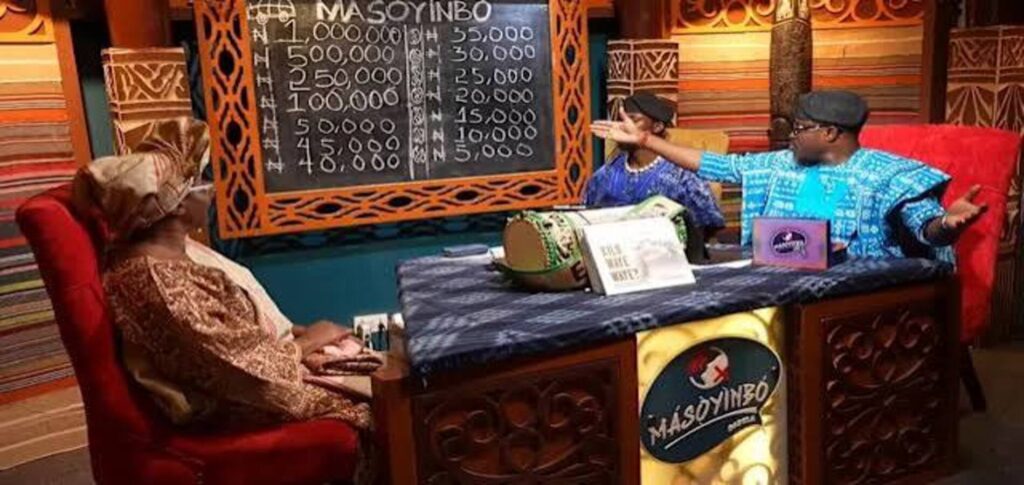
The television game show “Masoyinbo,” which means “Do not speak English,” has turned Yoruba language and culture into prime-time entertainment.
Contestants, including Nigerians from the diaspora, face challenges based on their knowledge of Yoruba and Nigerian culture. Winners can receive prizes worth thousands of dollars.
Host Olalekan Fabilola launched the show in 2024. He believes its popularity reflects a wider desire among Nigerians to reconnect with their roots.
Tomi Adeshokan, who lives in New Jersey, is among those working to improve her Yoruba. She began taking lessons after losing regular exposure to the language.
During the COVID-19 pandemic, she joined Clubhouse sessions simply to hear people speaking Yoruba. She later started formal lessons and continued studying the language.
Now, while visiting family in Nigeria, she has returned to an environment where Yoruba surrounds her.
For Adeshokan, learning the language is about more than communication. She believes immersion in African culture can help younger generations maintain a strong connection to their heritage.