
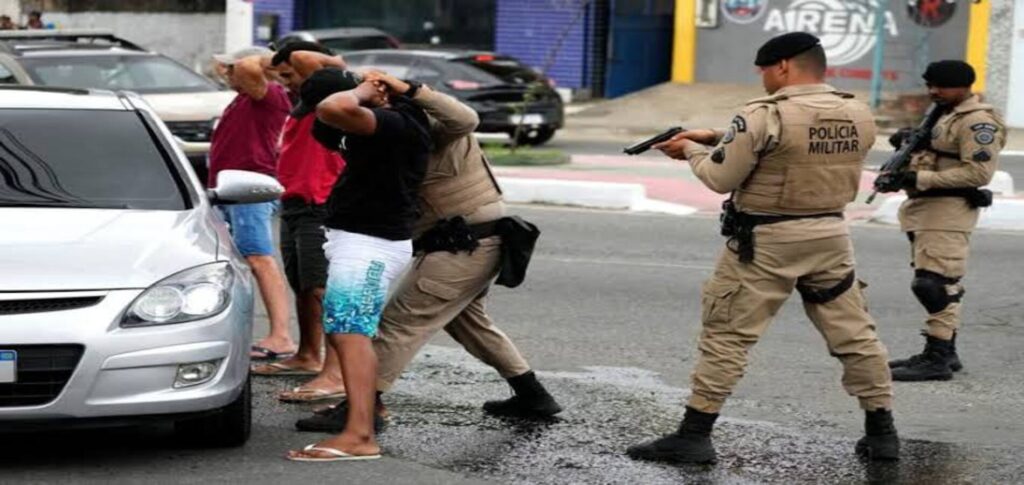
Bahia violence has become a major public security issue ahead of Brazil’s October 2026 presidential election.
The state remains an important political base for President Luiz Inácio Lula da Silva. However, growing concerns about crime and police violence have placed security high on the political agenda.
Lula won about 72% of the vote in Bahia during the 2022 presidential runoff. This time, voters are also weighing security, the economy and government social programs.
The issue is particularly sensitive in Salvador, Bahia’s capital, where armed conflicts between criminal groups have affected many communities.
Killing Highlights Public Safety Crisis
The death of 33-year-old Evilásio Santos da Silveira Júnior has highlighted the uncertainty surrounding violence in Salvador.
Júnior went out to buy groceries but never returned home. He later died after suffering a gunshot wound while inside an abandoned favela property.
Police officers said he became caught in a confrontation between rival criminal groups. His family disputes that account and says he had no connection to gangs.
His sister, Magnólia Nascimento, said the family wants stronger public safety measures while also expressing concerns about police conduct.
The conflicting accounts show how difficult it can be for residents to distinguish between gang violence and police operations in areas affected by armed conflict.
Bahia Remains One of Brazil’s Most Violent States
Official security data underline the scale of the problem.
The Brazilian Public Security Forum reported that Bahia recorded 40.6 intentional violent deaths per 100,000 residents in 2024. That was among the highest state rates in Brazil.
The 2026 Brazilian Public Security Yearbook also highlights a complicated national picture. Brazil recorded its lowest rate of violent deaths since 2012 in 2025, but police lethality reached a record level.
Bahia continues to face pressure from both organized crime and deadly police operations.
Research from the Fogo Cruzado Institute has also documented the heavy presence of police activity in shootings around metropolitan Salvador.
Criminal Groups Fight for Territory
Several criminal organizations have expanded their influence in Bahia.
Competition over territory and drug trafficking has contributed to armed conflicts in poorer communities.
Maria Isabel Couto of Fogo Cruzado has described the connection between organized crime disputes and police responses as an important factor behind rising exposure to armed violence.
As criminal networks expand their operations, residents can become trapped between rival groups and security forces.
Consequently, public safety has become a daily concern for many families.
Lula Faces Security Pressure in Bahia
The violence creates a political challenge for Lula in a state where his Workers’ Party has maintained a strong electoral presence.
The president has proposed creating a federal public security ministry and increasing federal resources to combat organized crime if reelected.
At the same time, Lula’s administration continues to emphasize social programs such as Bolsa Família.
The government increased the minimum Bolsa Família payment from 600 reais to 691 reais in 2026. Reuters reported that the increase came as Brazil approached the October election.
However, supporters and critics continue to debate whether welfare programs can address the security problems affecting Bahia.
Flávio Bolsonaro Focuses on Crime
Senator Flávio Bolsonaro has also made public security a central part of his political message.
His proposals include tougher measures against crime and the construction of large prison facilities based partly on policies associated with El Salvador.
The senator is challenging Lula in the October presidential election.
Recent polling has shown a closely contested race. A Datafolha survey released September 17 showed Lula at 46% and Flávio Bolsonaro at 44% in a hypothetical runoff. Other recent surveys have also shown the two candidates within their respective margins of error.
Those polls measure national voting intentions and do not by themselves determine how Bahia voters will vote.
Residents Want Safer Communities
For many residents, however, the election debate is closely connected to everyday life.
People in poorer neighborhoods face risks from shootings, criminal groups and police operations.
Some residents blame organized crime for the worsening security situation. Others argue that governments have not done enough to control police violence or address social conditions.
Júnior’s sister, Nascimento, remains a Lula supporter despite her concerns about public safety.
She receives Bolsa Família and has participated in government programs aimed at improving her employment opportunities.
Her experience reflects the broader debate in Bahia: voters are considering both the benefits of social policies and their concerns about violence.
Public Security Becomes Key Election Issue
Bahia violence is unlikely to disappear from Brazil’s political debate as the October election approaches.
The state faces pressure from organized crime, drug trafficking and police violence. At the same time, voters continue to consider welfare programs, employment and economic conditions.
For Bahia residents, the election debate is therefore not limited to national politics.
It also involves a basic question about security: how governments can protect communities while reducing the violence that has become part of daily life.