
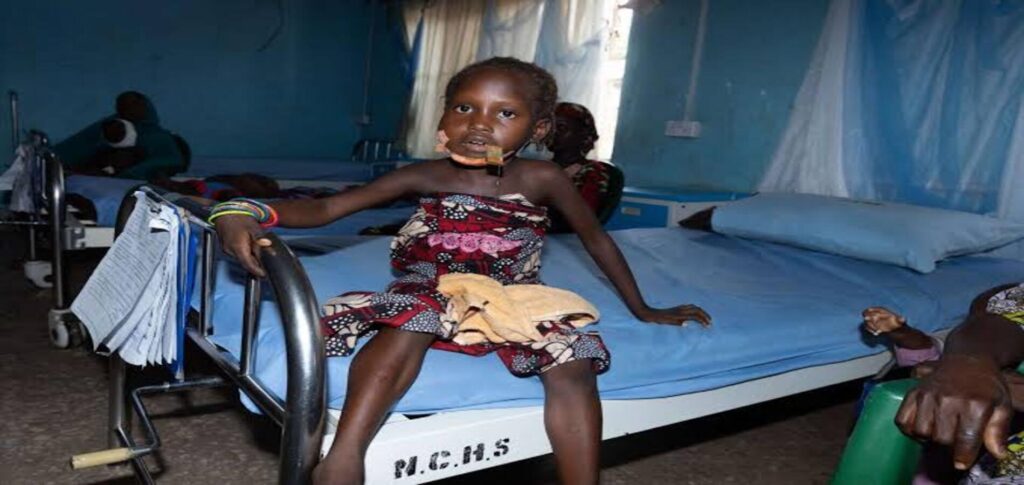
Free reconstructive surgery is giving children affected by noma a chance to rebuild their lives in northern Nigeria, where doctors are seeing more cases of the devastating disease.
Noma is a rapidly progressing infection that attacks the mouth and face. It can destroy soft tissue and bone within a short time. The disease mainly affects young children living in conditions linked to severe poverty and malnutrition.
For children who survive noma, the physical effects can last for years. However, treatment provided by humanitarian medical teams is helping some patients eat, speak and live more normally.
Six Operations Help Young Noma Survivor
Ibrahim Dalhatu was only 3 when he developed noma. His first reconstructive operation took place in 2021 at the Noma Children Hospital in Sokoto state.
Now 8, Ibrahim has undergone six operations as doctors work to repair the damage caused by the disease. His recovery has allowed him to eat and speak normally after surgery to repair a nasal fistula.
His father, Muhammad Dalhatu, said the family initially feared they could not afford treatment.
“I was very excited because I thought there was no solution to the disease,” he said. The family later learned that the treatment was available free of charge.
The operations are being carried out by Doctors Without Borders, also known as MSF. The organisation provides multi-stage reconstructive procedures for children whose health allows them to undergo surgery.
Noma Is Closely Linked to Poverty
The World Health Organization classifies noma as a neglected tropical disease. The organisation says early treatment can greatly reduce the impact of the disease.
Noma often begins with inflammation of the gums. In severely malnourished children, the infection can then spread rapidly through the tissues of the face and mouth.
WHO has not updated its global noma estimates since 1998. At that time, it estimated about 140,000 cases each year, with a fatality rate of around 90%.
A study published in The Lancet Global Health in July reported more than 50,000 noma cases across 12 northern Nigerian states between 1999 and 2024. The study relied on data from the specialist hospital in Sokoto.
Experts say the disease is difficult to track globally. A region known as the “noma belt” stretches across parts of Africa, from Senegal and Mauritania in the west to Ethiopia in the east.
Northern Nigeria Sees Growing Concern
Doctors and humanitarian workers say northern Nigeria is facing a worrying trend. Poverty, malnutrition, economic hardship and the effects of armed violence have made healthcare difficult for many families.
MSF said some children arrive for treatment only after the disease has already caused severe tissue damage. Greater awareness could encourage parents to seek help sooner.
“We are seeing more acute noma cases,” said Bukola Oluyide, MSF’s Nigeria medical coordinator. She said earlier treatment could prevent major tissue loss and reduce the need for reconstructive surgery later.
WHO technical officer Yuka Makino said Nigeria may report more cases than other countries partly because it has specialist hospitals, a large population and a government response that helps identify patients.
Hundreds of Children Need Treatment
More than 500 children with noma received treatment at the Sokoto hospital between 2023 and 2025, according to data reviewed by The Associated Press.
MSF holds three surgical sessions each year for children who are medically able to undergo the procedures. However, many others remain on waiting lists.
Dr. Abubakar Abdullahi Bello, chief medical director of the Noma Children Hospital, described the situation as worrying. He said the disease can destroy mouth tissue rapidly when patients do not receive treatment.
Nigeria currently has only two specialist noma hospitals. One is in Sokoto, while another was built in Abuja in 2023.
For some families, waiting remains difficult. The 4-year-old son of Maryam Sabiu developed noma in 2024. The disease left a large opening in his left cheek that extends toward his eye.
The boy is still too young for surgery. His mother says he remains in pain and often cries. She also described the stigma her family faces when people stare at her child.
For survivors such as Ibrahim, however, reconstructive treatment has provided a path toward a more normal childhood. For families still waiting, access to early treatment and surgery remains critical.