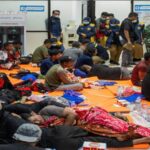


Saudi Arabia and seven other Arab and Muslim countries have strongly condemned comments by Israeli National Security Minister Itamar Ben-Gvir about forcibly displacing Palestinians and establishing settlements in Gaza.
The foreign ministers of Saudi Arabia, Jordan, the United Arab Emirates, Indonesia, Pakistan, Qatar, Egypt and Türkiye issued a joint statement on Sunday.
They described Ben-Gvir’s remarks as provocative proposals that violate international law and international humanitarian law. The ministers also said the comments threaten the rights of the Palestinian people.
Countries reject forced displacement
The eight countries firmly rejected any attempt to remove Palestinians from their land.
They opposed both individual and collective displacement from the occupied Palestinian territories. They also rejected any attempt to move Palestinians outside those territories.
The ministers warned that turning such calls into official policy or practical action could have serious consequences.
They said forced displacement would also undermine international efforts to end the conflict and achieve a lasting peace.
The statement referred to US President Donald Trump’s plan to end the Gaza conflict. According to the ministers, the plan explicitly rejects the forced displacement of Palestinians.
Gaza settlements raise regional concerns
The ministers also warned that efforts to impose a new reality on the ground could increase violence and instability across the region.
They stressed that Gaza remains an integral part of the occupied Palestinian territory.
The countries called for an end to settlement activity in Gaza and the West Bank. They also included East Jerusalem in their call for an end to what they described as illegal settlement activity.
The ministers said any future peace agreement must protect Palestinian rights and address the status of the occupied territories.
Eight countries back two-state solution
The foreign ministers reaffirmed their support for the two-state solution as the way toward a just and lasting peace.
They called for the establishment of an independent Palestinian state based on the borders of June 4, 1967. They said East Jerusalem should serve as its capital.
The ministers said this approach should follow relevant international resolutions.
They also urged the international community to respond to calls for forced displacement.
In particular, they called on the permanent members of the United Nations Security Council to meet their legal and moral responsibilities.
Call for immediate international action
The eight countries urged governments to take serious and immediate steps to prevent attempts to create a new geographic or demographic reality in the Palestinian territories.
They stressed the importance of respecting international law and protecting Palestinian rights.
The ministers also reaffirmed their support for Palestinians remaining on their land.
They rejected efforts to displace Palestinians or weaken what they described as their legitimate national rights.