
Disney Theme Parks Outperform Universal as Summer Travel Trends Shift
Disney theme parks continue to attract strong crowds during the busy summer travel season, while rival Universal Parks reported weaker financial results despite opening its highly anticipated Epic Universe attraction.
The contrasting performances highlight changing consumer spending habits as higher travel costs and economic uncertainty influence vacation decisions across the United States.
Disney Theme Parks Report Strong Summer Attendance
The Walt Disney Company delivered another successful quarter, reporting higher attendance at both Disneyland Resort in California and Walt Disney World Resort in Florida.
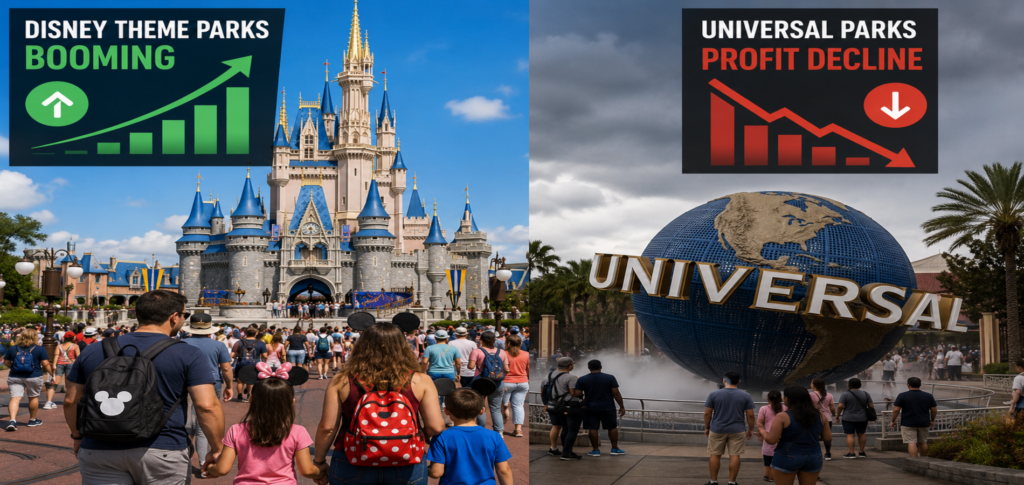
According to Disney’s latest earnings report, visitor numbers at its domestic parks increased by 3% compared with the same period last year.
Disney World in Orlando enjoyed particularly strong growth, fueled by domestic travelers and annual pass holders returning throughout the summer.
Company executives described the quarter as one of the resort’s strongest performances in recent years.
Universal Parks See Profit Decline
While Disney celebrated growth, Comcast reported a more challenging quarter for Universal Parks.
During the company’s latest earnings call, Comcast Co-Chief Executive Officer Michael Cavanagh revealed that Universal’s theme park division experienced a 5% decline in quarterly operating profit.
The disappointing results came despite the successful opening of Epic Universe in Florida last year.
Cavanagh explained that several economic factors contributed to the slowdown.
Higher Travel Costs Affect Visitor Demand
Universal executives pointed to rising travel expenses as one of the biggest challenges facing the tourism industry.
Higher fuel prices, more expensive airline tickets, and reduced consumer confidence have discouraged some families from planning vacations.
Cavanagh also noted that Orlando has experienced a broader decline in tourism demand, affecting multiple attractions throughout the region.
However, he expressed confidence that attendance would recover once economic conditions improve.
“We fully expect that once economic conditions and consumer demand stabilize, we’ll be getting that attendance back and thrilling our fans,” Cavanagh said.
Disney Continues to Gain Market Share
Disney executives believe the company is attracting a larger share of theme park visitors.
Chief Financial Officer Hugh Johnston suggested Disney is outperforming competitors by offering strong entertainment experiences and maintaining customer loyalty.
“Obviously, we’re gaining share,” Johnston said during the earnings presentation.
Many analysts interpreted the comment as a reference to Disney drawing visitors who might otherwise choose Universal Parks.
Disney Revenue Climbs Double Digits
Disney’s parks, experiences, and cruise businesses generated $7.12 billion in revenue during the quarter ending June 27.
That represents an impressive 11% increase compared with the same period one year earlier.
The growth reflects healthy demand across Disney’s domestic parks, resort hotels, and cruise operations.
Strong spending on tickets, hotels, dining, and merchandise also contributed to higher overall revenue.
Epic Universe Still Faces Early Challenges
Universal’s Epic Universe remains one of the largest theme park investments ever made in Florida.
Although the new park has attracted considerable attention since opening, analysts say major expansions often require time before generating maximum financial returns.
Universal continues investing heavily in new attractions while working to recover attendance levels affected by broader economic conditions.
Executives remain optimistic that Epic Universe will become a long-term growth driver.
Summer Theme Park Competition Intensifies
The competition between Disney theme parks and Universal Parks continues to shape the U.S. tourism industry.
Both companies are investing billions of dollars in new rides, immersive lands, entertainment experiences, and resort expansions.
However, current economic conditions appear to favor companies with stronger brand loyalty and repeat visitors.
Disney’s large base of annual pass holders has helped maintain stable attendance during periods of slower travel demand.
What This Means for Travelers
For vacation planners, both Disney and Universal continue offering world-class attractions.
However, travelers may find different pricing strategies as competition increases.Universal could introduce more promotional offers to encourage attendance, while Disney may continue expanding premium experiences for loyal guests.
Industry analysts expect both companies to remain major players in the global theme park market despite current economic challenges.
Outlook for the Theme Park Industry
Although Universal reported weaker quarterly results, analysts believe demand will improve as inflation eases and travel costs stabilize.
Meanwhile, Disney theme parks appear well-positioned to maintain momentum through the remainder of the year.
The battle between America’s two biggest theme park operators is likely to intensify as each company continues introducing new attractions designed to capture the growing family vacation market.