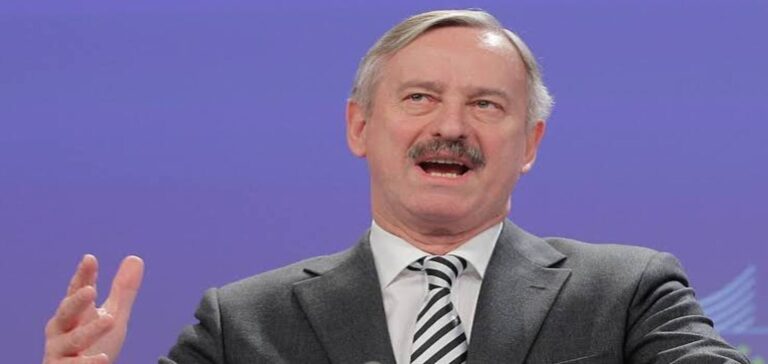

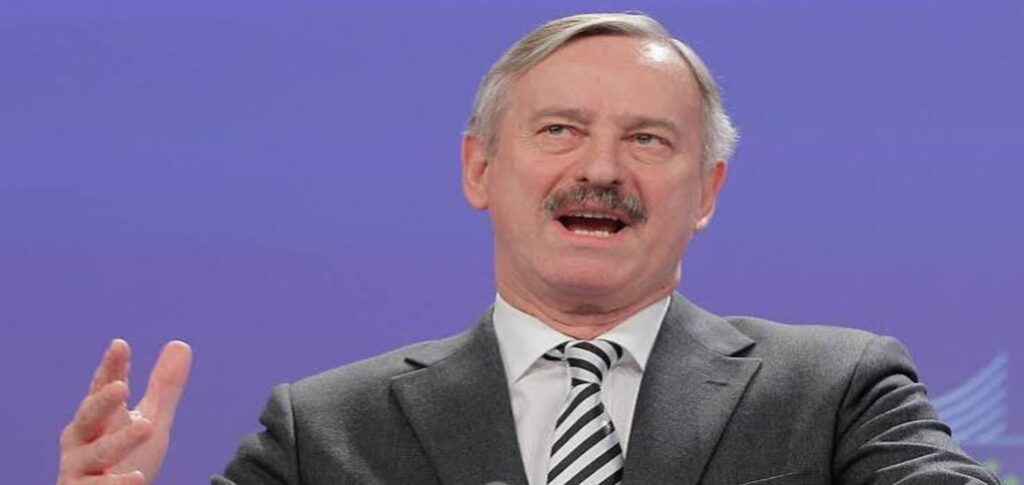
Former Estonian Prime Minister and European Commission Vice-President Siim Kallas has died at the age of 77, prompting tributes from European leaders. His daughter, EU foreign affairs chief Kaja Kallas, announced his death on Saturday.
Kaja Kallas shared the news on Instagram, saying her father had died the previous night. European Parliament President Roberta Metsola later expressed her condolences to the Kallas family and praised his contribution to Estonia and Europe.
Siim Kallas Remembered for Estonia’s Independence Era
Siim Kallas played an important role in Estonia’s development after the country regained independence. He served as president of the Bank of Estonia from 1991 to 1995 and helped establish the country’s national currency, the kroon.
Metsola said Kallas showed courage while helping rebuild Estonia during the early 1990s. She also highlighted his work in shaping European policies after he moved into European politics.
Estonia’s first European commissioner began serving in the role in 2004. He later became European Commissioner for Transport and Vice-President of the European Commission from 2010 to 2014.
Metsola Pays Tribute to Former EU Commissioner
Metsola said she was saddened by Kallas’ death and praised the determination he brought to both Estonia and Brussels.
She also offered her condolences to Kaja Kallas and the wider family. The European Commission separately expressed its sympathy and paid tribute to the former commissioner.
Kallas also served as Prime Minister of Estonia and remained an influential figure in the country’s political and economic development.
Kaja Kallas Announces Father’s Death
Kaja Kallas, who currently serves as the EU’s High Representative for Foreign Affairs and Security Policy, announced her father’s death in a personal message.
Her announcement prompted condolences from European officials and political figures.
Siim Kallas was born in 1948 and trained as an economist. His career spanned Estonia’s transition after independence and several senior positions within the European Union.
His legacy includes helping establish Estonia’s post-Soviet financial system and contributing to European policymaking during his years in Brussels.