Belgium has rejected a renewed effort to use frozen Russian assets to provide more financial support to Ukraine, warning that the move could create major legal and financial risks.
The European Union holds about €210 billion in immobilised Russian Central Bank assets. Most of the money is held by Euroclear, a major securities depository based in Brussels.
EU foreign ministers discussed the issue at an informal meeting on Tuesday. Sweden, the Netherlands, Spain and Poland are leading the latest push. The Baltic states have also expressed support for the idea.
However, Belgium remains firmly opposed.
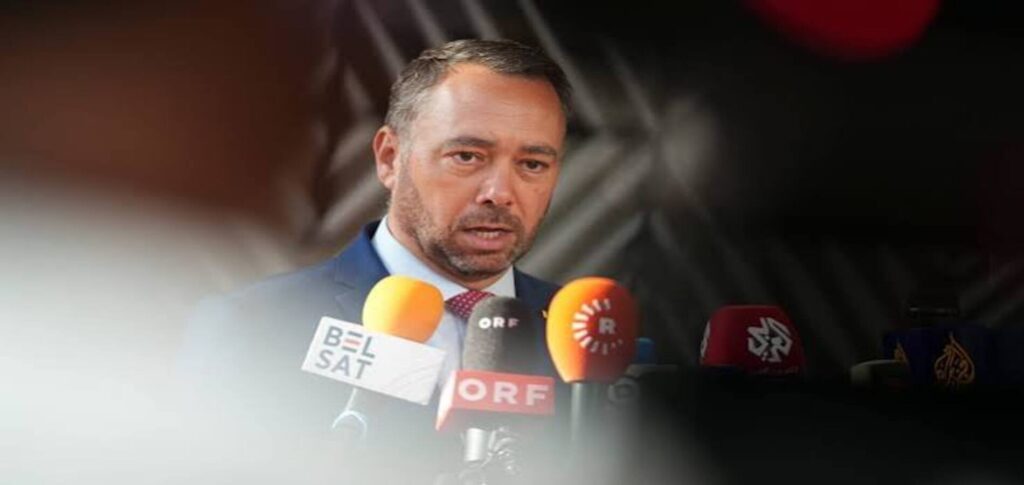
Belgian Foreign Minister Maxime Prévot said the discussion attracted little support during the meeting. He also made clear that Belgium’s position has not changed.
Prévot said the risks that led Belgium to oppose the plan last year remain in place.
He warned that using the assets could effectively amount to confiscation. In his view, such a move could expose Belgium and the wider eurozone to significant legal and financial risks.
Belgium warns of legal and financial risks
Belgium raised similar concerns last year when the European Commission considered using the frozen Russian assets to back a zero-interest credit line for Ukraine.
The Belgian government demanded strong guarantees before it would support the proposal. It wanted EU countries to share the risks and provide uncapped guarantees against possible Russian retaliation.
Belgium also warned that the plan could create financial and reputational risks for the eurozone.
The proposal eventually collapsed during a difficult EU summit in December. European leaders instead agreed to use joint borrowing to finance a €90 billion loan for Ukraine.
Around the same period, Russia’s Central Bank launched legal action against Euroclear.
Belgium continues to argue that the Russian assets should remain frozen until peace negotiations take place.
Prévot said keeping the money immobilised could give the EU greater leverage during future negotiations. He also pointed to the existing understanding that Russia should ultimately compensate Ukraine for the damage caused by the war.
EU support for Ukraine faces growing pressure
The renewed debate comes as concerns grow over the long-term funding available to Ukraine.
Several EU countries now believe the €90 billion loan may not be enough to cover Ukraine’s needs through the end of 2027.
Sweden, the Netherlands, Spain and Poland highlighted the problem in a joint letter last week. They warned that the continuing war is increasing the financial cost of supporting Kyiv.
Russia has continued to launch attacks across Ukraine. Drone strikes have also targeted economic activity and critical infrastructure.
At the same time, attacks in the Black Sea have created additional challenges for Ukraine’s trade.
Kyiv says it faces a funding gap of about €23 billion for its defence ministry. The money would help cover military salaries and weapons purchases.
Ukraine has suggested that the EU could bring forward part of the €45 billion planned for next year. However, doing so would leave less money available during 2027.
The European Commission has not formally received that request.
Ukraine backs the frozen-assets plan
Ukraine supports the renewed effort to use the Russian assets.
Ukrainian Foreign Minister Andrii Sybiha said the proposal deserves serious discussion. Kyiv argues that using the frozen funds could provide a major source of financial support without placing the full burden on European taxpayers.
Supporters of the plan also believe the assets could give Europe greater financial capacity to help Ukraine.
However, some EU countries remain cautious.
Italian Foreign Minister Antonio Tajani said Italy is not opposed to the idea in principle. He stressed that the legal questions must be resolved before any decision.
The issue is particularly sensitive for Belgium because Euroclear holds most of the Russian assets in question.
Belgium wants assets kept frozen
Belgium’s position has not changed despite the growing pressure from several EU governments.
Prévot said European support for Ukraine remains essential. He also acknowledged that public opinion in some countries is becoming increasingly tired of providing assistance.
Despite that pressure, he argued that Europe’s security situation makes continued support necessary.
The debate is likely to continue as Ukraine’s financial needs increase and EU governments prepare for difficult budget negotiations.
For now, Belgium wants the Russian assets to remain immobilised. The country believes they should remain available as a potential bargaining tool until Russia agrees to compensate Ukraine for wartime damage.
The dispute highlights a difficult choice for the European Union: how to provide Ukraine with more financial support while avoiding legal disputes, financial risks and possible Russian retaliation.