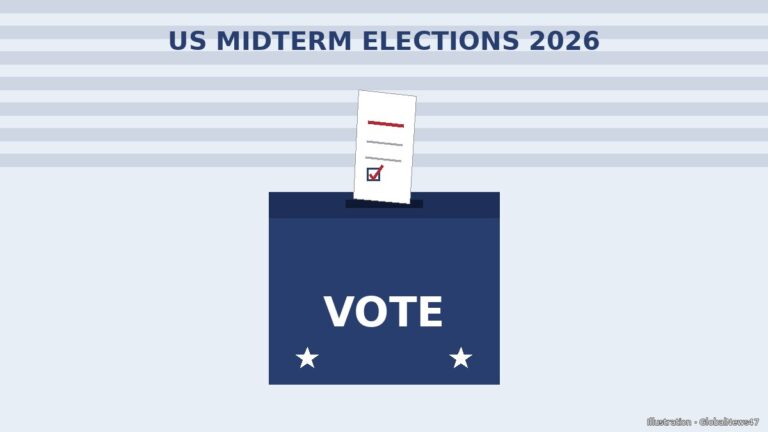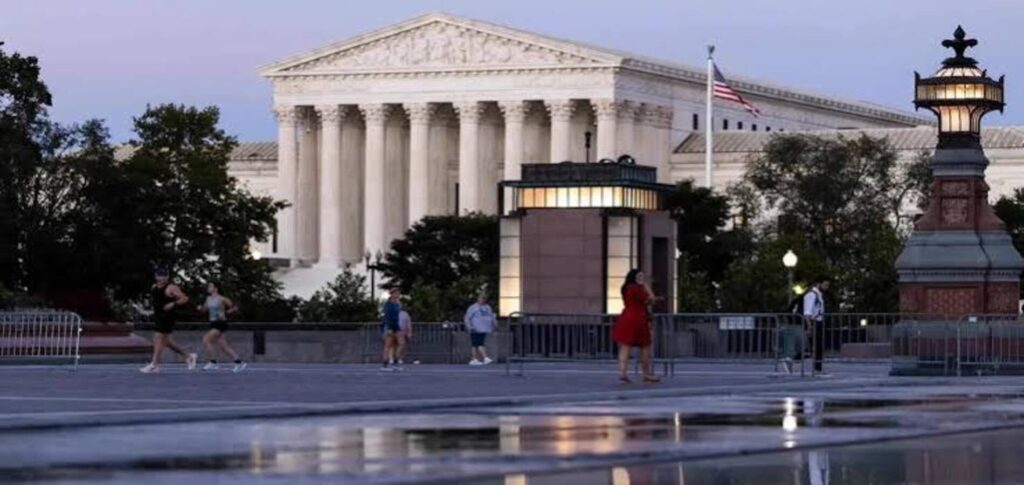
The US Supreme Court has dealt a major setback to President Donald Trump’s effort to restrict mail-in voting ahead of the November midterm elections.
The justices rejected the Trump administration’s request to allow new US Postal Service rules to take effect. As a result, the restrictions will remain blocked while the broader legal fight continues.
The decision came as several states had already started preparing and sending mail-in ballots to voters.
Trump Mail-In Ballot Restrictions Face Supreme Court Setback
Trump issued an executive order in March that sought major changes to federal election procedures.
The order directed the USPS to develop rules requiring states to provide voter information and meet new requirements for mail-ballot envelopes.
The administration argued that the measures would strengthen election security. However, several Democratic-led states challenged the plan in court.
They argued that the federal government had overstepped its authority and interfered with powers traditionally handled by states.
Supreme Court Keeps Mail Voting Rules Blocked
The Supreme Court’s latest decision keeps a lower court injunction in place.
The justices did not give the administration permission to enforce the new USPS restrictions before the November election. The ruling therefore allows states to continue using their existing mail-ballot systems for now.
Justice Brett Kavanaugh agreed with the outcome while suggesting that some of the administration’s arguments could receive a different assessment later.
However, he noted that election officials did not have enough time to implement major changes safely before the election.
That timing issue became especially important as states moved closer to Election Day.
States Warned of Election Disruption
Election officials had warned that last-minute changes could create confusion.
The proposed system would require election officials to work with new USPS procedures and voter lists. It would also introduce new barcode and envelope requirements.
Critics said those changes could disrupt legitimate ballots if officials could not complete the new process on time.
A USPS whistleblower also raised concerns about the agency’s preparations. The warning added to fears that rushed implementation could create problems for voters.
Mail-In Voting Rules Spark Political Fight
The Supreme Court decision immediately triggered strong reactions from both sides of the political divide.
Voting-rights groups welcomed the ruling. The American Civil Liberties Union called it a major victory for voting rights and election administration.
Democratic leaders also praised the decision and accused Trump of trying to make voting more difficult.
Meanwhile, Trump has repeatedly attacked mail-in voting.
He has claimed for years that widespread mail voting creates opportunities for fraud, although extensive evidence has not supported his broader claims about fraudulent voting. He has also used mail voting himself, including in Florida.
Trump Has Long Criticized Mail-In Ballots
Trump’s opposition to mail voting dates back to the 2020 presidential election.
He repeatedly claimed that widespread fraud cost him that election, despite courts, election officials and multiple reviews finding no evidence of fraud on a scale that could have changed the result.
His latest effort targets the rules governing how federal mail ballots move through the postal system.
The legal battle has therefore become another major confrontation over election administration ahead of the 2026 midterms.
Midterm Elections Raise the Stakes
The Supreme Court ruling comes at a critical moment for both parties.
The November 3 midterm elections will determine control of Congress. Republicans currently hold narrow majorities, while Democrats hope to make significant gains.
Mail voting remains an important part of the US electoral system. All states allow some form of mail voting, although the rules differ from state to state.
Consequently, election officials have little room for major last-minute changes.
Legal Battle Is Not Over
Although the Supreme Court blocked the new USPS restrictions from taking effect before the midterms, the broader legal dispute continues.
The ruling does not necessarily settle every constitutional question surrounding the administration’s election policies.
Instead, it prevents the contested restrictions from disrupting the upcoming election while the courts consider the underlying legal issues.
For voters, the immediate result is clearer.
States can continue preparing their mail ballots under the rules already in place rather than rushing to adopt the Trump administration’s proposed system.
Trump Mail-In Ballot Restrictions Face an Uncertain Future
The ruling represents a significant political and legal setback for Trump.
At the same time, the administration can continue pursuing its broader election policies through other legal and regulatory avenues.
For now, however, the Supreme Court has stopped the new mail-ballot restrictions from taking effect before the November midterms.
With Election Day approaching, the fight over voting rules is likely to remain one of the most closely watched political battles in the United States.