
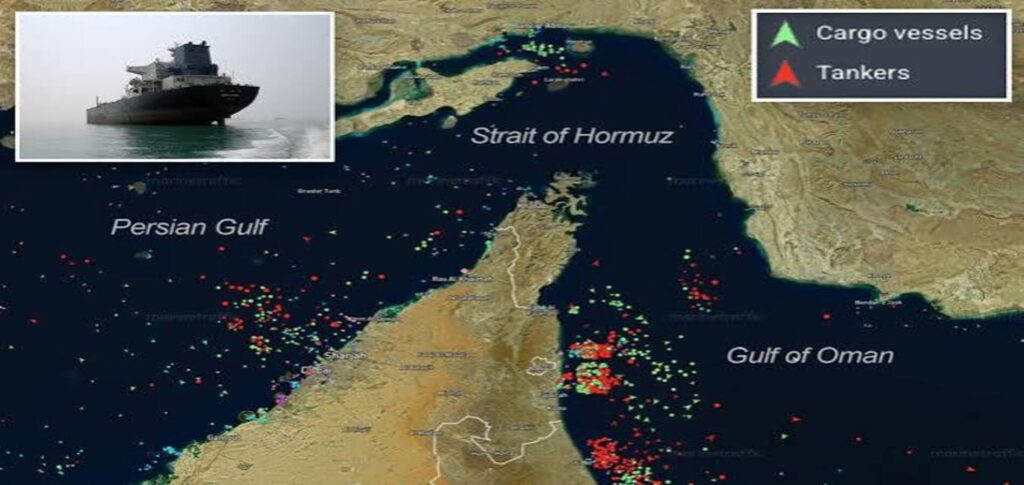
Only a small number of commercial vessels passed through the Strait of Hormuz over the weekend as the Middle East conflict continued. Shipping data showed that about 12 commodity vessels crossed the strategic waterway.
That figure was well below the 35 vessels recorded during the previous weekend. The decline highlights the sharp drop in shipping activity through a route that normally carries a major share of global oil and liquefied natural gas supplies.
Despite the lower traffic, Middle Eastern producers continue to move oil by tanker. Some vessels have switched off their tracking transponders, making their movements harder to monitor.
Few Vessels Cross Strait of Hormuz
Data from shipping analytics firm Kpler showed that four vessels left the strait on Sunday. Two carried refined oil products, while two others were empty bulk and gas carriers.
Two smaller oil tankers also entered the Gulf on Sunday.
On Saturday, five vessels left the Gulf. They carried agricultural products, liquefied petroleum gas and fertiliser. An empty very large gas carrier also entered the Gulf.
The current traffic remains far below normal levels. Before the US-Israeli war with Iran began on February 28, the Strait of Hormuz handled about 125 large commercial vessels each day.
Those vessels included oil tankers, gas carriers, bulk carriers and container ships.
Saudi Arabia Increases Oil Shipments
Saudi Arabia has increased oil exports through the Strait of Hormuz after attacks on its East-West pipeline disrupted some shipments through Yanbu.
The change has helped Saudi crude exports recover. Kpler data showed that shipments rose above 4 million barrels per day in September.
That compares with about 2.4 million barrels per day in August. The August figure was the lowest Saudi export level recorded since at least 2013.
Kpler data also showed that 13 tankers left the strait during the week of September 13. Most were very large crude carriers carrying a combined 34 million barrels of oil.
Saudi Arabia accounted for about half of those exports. Iraq supplied another 35%.
Oil Flows Remain Strong Despite Disruptions
JPMorgan analysts said Middle Eastern oil flows remained stronger than expected despite disruption to Saudi Arabia’s East-West pipeline.
The analysts said oil flows averaged 17.1 million barrels per day during the previous 10 days. That was about 6.1 million barrels per day below the 2025 average.
Saudi Arabia has made the most notable shift in its export routes. Satellite data cited by JPMorgan showed Saudi oil shipments through the Strait of Hormuz averaged 2.9 million barrels per day over six days.
That was a significant increase from about 700,000 barrels per day in August.
The figures show that shipping through the Strait of Hormuz has slowed sharply. However, oil continues to move through the waterway despite the wider regional conflict and disruptions to alternative export routes.