
A senior adviser to Iran’s Supreme Leader has said the United States has no lasting role in West Asia and argued that Iran should help shape the region’s future security arrangements.
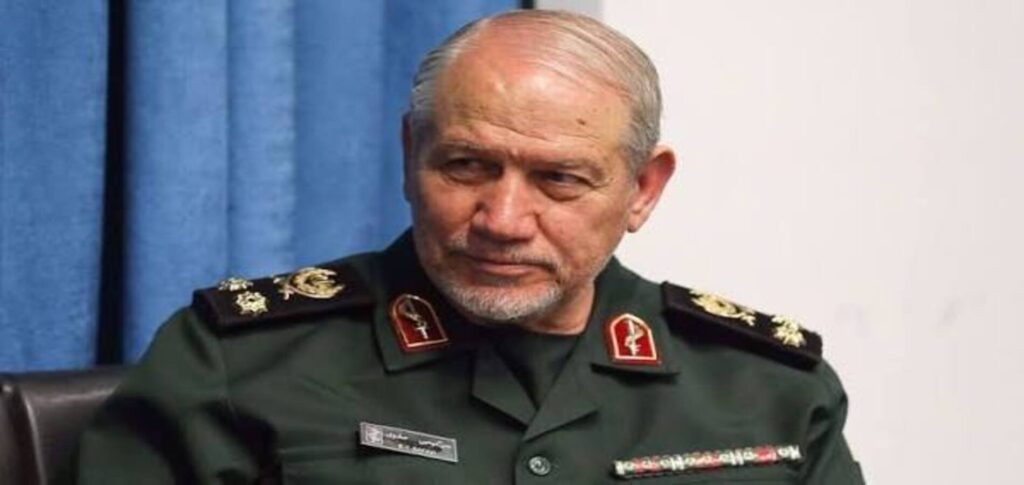
Major General Yahya Rahim Safavi, a military adviser to Ayatollah Seyyed Mojtaba Khamenei, made the comments in remarks reported by Iranian state media.
Safavi accused the United States of committing what he described as numerous crimes and “wicked acts” across the region. He also claimed that Washington had spent hundreds of billions of dollars without achieving its strategic goals.
“The Americans are on their way out and cannot remain in the region,” Safavi said.
He said lasting regional stability could instead be achieved through cooperation among countries in West Asia without a US military presence.
Iran Highlights Strait of Hormuz
Safavi also discussed the strategic importance of the Strait of Hormuz, one of the world’s most important energy shipping routes.
He said Iran’s management of the waterway had played an important role during the recent conflict and described the strait as a major lever over global oil and gas supplies.
A significant share of internationally traded oil and gas passes through the Persian Gulf and the Strait of Hormuz. Safavi claimed that restrictions on maritime traffic had affected energy production and exports in countries including Saudi Arabia and Qatar.
“The Strait of Hormuz has turned into a weapon more dangerous than a nuclear weapon,” he said.
Safavi also said Iran could expand energy cooperation with neighbouring countries. At the same time, he stressed that Iran’s armed forces remained prepared for another possible conflict.
Tehran Questions Future US Talks
Iranian President Masoud Pezeshkian has also questioned the prospects for further negotiations with Washington.
According to Iranian reports, Pezeshkian said Tehran had lost confidence in US negotiations after previous diplomatic efforts were followed by military action and additional sanctions.
Iran has also linked the future of the Strait of Hormuz to the terms of an agreement that Tehran says ended the recent conflict.
Iranian state media said restrictions on transit through the strait began during the war that started on February 28 and ended with a ceasefire in early April.
The report also referred to Article 5 of the Islamabad MoU, which it said assigns responsibility for reopening and managing the waterway to Iran.
Iran has maintained that the strait will only fully reopen after the United States meets its obligations under the agreement.
Safavi Says Iran Will Resist Future Conflict
Safavi also used his remarks to stress Iran’s readiness to respond to any future military confrontation.
He accused the US president of pursuing actions against Iran and claimed that Washington and Israel had attempted to weaken the country through military attacks.
According to Safavi, those efforts failed to achieve their stated objectives. He said Iran’s government, armed forces and population should remain united to prevent another conflict.
He also highlighted the Bab al-Mandab Strait, another strategically important waterway linking the Red Sea with the Gulf of Aden.
Safavi argued that control of the waterway by Yemeni forces would further weaken US influence in the region.
His comments reflect Tehran’s broader position that regional security should be shaped primarily by countries in West Asia rather than by outside military powers. The United States, meanwhile, maintains a significant military presence and longstanding security partnerships across the region.