
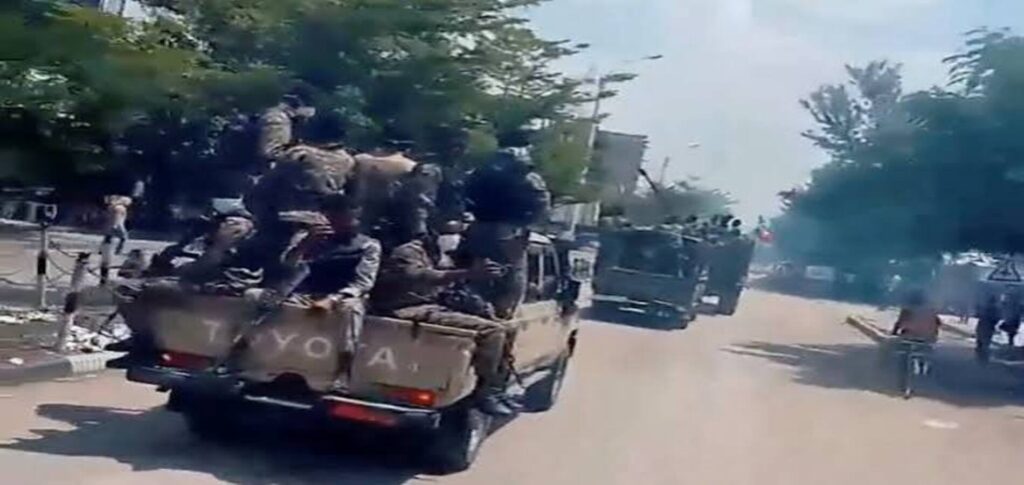
Pro-government forces in Ethiopia say they have taken control of Alamata in southern Tigray after several days of fighting with Tigrayan forces.
The town sits along a major highway leading into Tigray. Its reported capture would represent a setback for the Tigrayan forces, which launched attacks on several fronts last week.
The latest fighting has renewed fears that Ethiopia could return to the devastating civil war that lasted from 2020 to 2022. That conflict killed an estimated 600,000 people, according to widely cited estimates.
Alamata Changes Hands Amid Heavy Fighting
The Tigray Peace Force, a Tigrayan splinter group aligned with Ethiopia’s federal government, announced the reported capture of Alamata on Facebook.
Conflict monitoring organization ACLED also confirmed reports that federal forces had seized the town.
Alamata is strategically important because of its location on a major transport route. Control of the town could affect the movement of people and supplies between Tigray and other parts of northern Ethiopia.
The reported development follows a series of Tigrayan offensives that have opened several new fronts in the region.
TPLF Opens New Fronts in Afar and Amhara
The Tigray People’s Liberation Front, or TPLF, launched attacks last Wednesday in the neighboring regions of Afar and Amhara.
The group reportedly made gains in Afar on Sunday after capturing the town of Erebti and advancing farther east.
The move could have strategic significance because Ethiopia relies heavily on the route through Djibouti for international trade. Djibouti handles most of Ethiopia’s imported and exported cargo.
Any disruption along routes connecting Ethiopia with Djibouti could therefore create additional pressure on the federal government.
Fighting has also intensified in Amhara. The TPLF has been operating alongside the local Fano militia in some areas, adding another layer to the conflict.
Fears of a Wider Ethiopian Conflict
The renewed violence has raised concerns about a return to the large-scale war that devastated northern Ethiopia between 2020 and 2022.
The previous conflict involved federal forces, Tigrayan fighters and regional forces. It caused widespread displacement and a severe humanitarian crisis before a peace agreement brought major fighting to an end in November 2022.
The latest clashes have again placed northern Ethiopia under pressure.
Fighting has reportedly taken place near Lalibela, a UNESCO World Heritage site known for its historic rock-hewn churches. Any prolonged conflict in the area could raise concerns about civilians, access to humanitarian assistance and the protection of cultural sites.
The situation remains fluid, with forces from both sides continuing to operate across multiple areas. Further developments in Alamata, Afar and Amhara could determine whether the latest escalation remains limited or develops into a broader conflict.